


Blog
Watch Mechanism Types: Understanding How Watches Keep Time

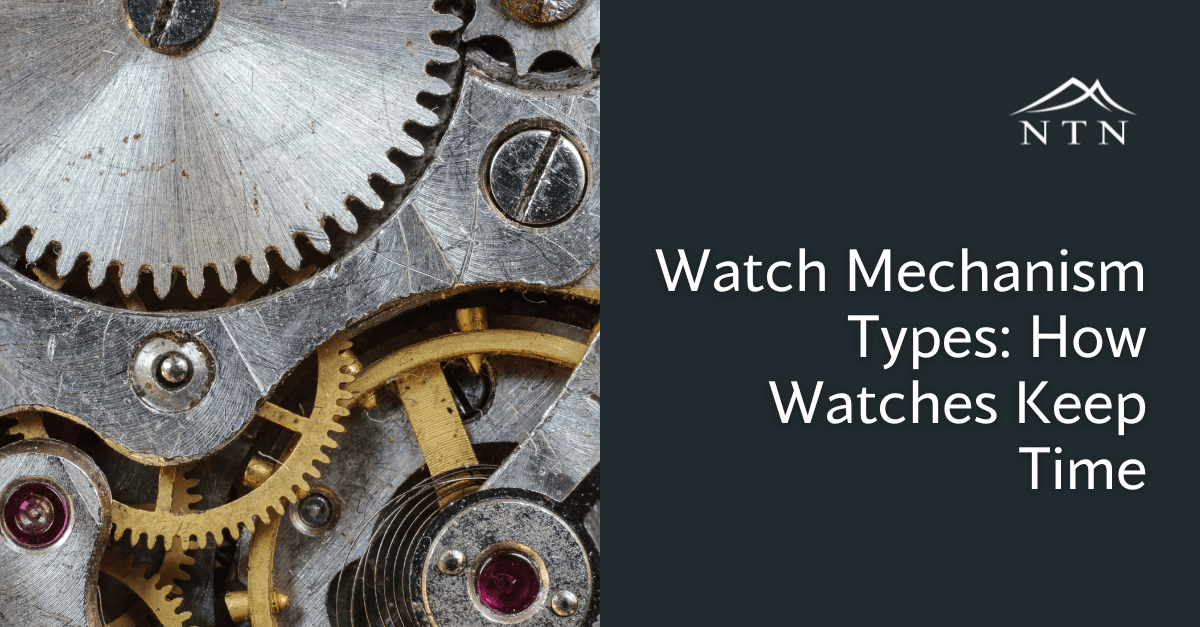
Watches might look simple on the outside, but inside, they’re powered by intricate systems that bring time to life. These internal systems are known as watch mechanisms or movements, and they determine how a watch functions, how it’s powered, and even how it feels to wear.
If you’ve ever wondered what separates a quartz watch from an automatic or mechanical one, this guide will walk you through the key watch mechanism types, how they work, and what makes each special. Understanding these differences helps you choose a watch that fits your lifestyle, habits, and appreciation for craftsmanship.
What Is a Watch Mechanism?
A watch mechanism—often called a “movement”—is the engine inside a watch. It’s the system that drives the hands, powers features like date or chronograph functions, and keeps time ticking accurately.
Without the mechanism, a watch is just a shell. The dial and case may define its look, but the movement defines its soul.
There are three main watch mechanism types:
- Mechanical (Manual)
- Automatic (Self-winding)
- Quartz (Battery-powered)
Each has its own method of generating and regulating power. Let’s look at what makes them different.
Mechanical Watches: Tradition in Motion
A mechanical watch is the oldest form of timekeeping technology still in use today. It doesn’t rely on batteries or electronics. Instead, it runs purely on mechanical energy stored in a coiled metal spring called the mainspring.
When you wind the crown, you tighten that spring. As it slowly releases, it drives a series of gears and levers that move the hands at a steady pace. The energy flow is regulated by an escapement and balance wheel—essentially the “heartbeat” of the watch.
Mechanical watches are admired for their craftsmanship. Every tick you hear comes from real physical motion, not electricity or software.
They’re not the most accurate—usually gaining or losing a few seconds per day—but that’s part of their charm. They’re a connection to centuries of watchmaking tradition, built for those who appreciate precision as an art rather than a science.
Key Traits of Mechanical Watches
- Require manual winding every day or two
- No battery or electronics involved
- Slightly less accurate than quartz watches
- Long-lasting if maintained regularly
- Often chosen for heritage, craftsmanship, and tactile appeal
A well-crafted mechanical watch can last generations. With occasional servicing, the movement keeps working year after year, making it a timeless heirloom rather than a disposable accessory.
Automatic Watches: Self-Winding Engineering
An automatic watch is also mechanical, but with an important upgrade—it winds itself.
Instead of relying on manual winding, automatic watches use a small weighted rotor inside the movement. As you move your wrist, the rotor spins, winding the mainspring automatically.
This design makes automatic watches more convenient than purely manual ones. As long as you wear the watch regularly, it stays powered. If you leave it unworn for a few days, it will stop, but can easily be restarted with a few quick winds.
Automatic movements are often prized for their balance between tradition and practicality. They maintain the artistry of mechanical watchmaking while offering everyday ease.
Key Traits of Automatic Watches
- Self-winding through wrist motion
- No battery needed
- Slightly thicker than quartz models due to the rotor
- Require servicing every few years
- Offer smooth hand movement (“sweep”) rather than ticking
Automatic watches are often chosen by enthusiasts who value craftsmanship but prefer convenience. They represent the evolution of mechanical engineering—elegant, self-sufficient, and enduring.
Quartz Watches: Precision Through Technology
Quartz watches marked a major technological shift in the 20th century. Instead of storing energy mechanically, they use a tiny battery to send an electrical current through a quartz crystal.
That crystal vibrates at a precise frequency of 32,768 times per second. The movement counts those vibrations and converts them into consistent timekeeping. The result is extraordinary accuracy—usually within 15 to 20 seconds per month.
Quartz watches are known for reliability, affordability, and minimal maintenance. They don’t require winding or regular servicing like mechanical watches. Replace the battery every few years, and they’ll keep exceptionally accurate time for decades.
Key Traits of Quartz Watches
- Powered by a small battery
- Extremely accurate
- Lightweight and slim
- Minimal maintenance
- Recognizable one-second “tick” hand movement
Quartz movements are ideal for daily wearers who value accuracy and simplicity. They’re also the foundation for most modern digital and analog-digital hybrid watches.
How Quartz, Automatic, and Mechanical Movements Compare
All three watch mechanism types serve the same purpose—keeping time—but they do it in very different ways.
| Feature | Mechanical | Automatic | Quartz |
| Power Source | Hand-wound mainspring | Wrist motion (rotor) | Battery |
| Accuracy | ±15 seconds/day | ±10 seconds/day | ±15 seconds/month |
| Maintenance | Regular winding & servicing | Servicing every few years | Battery change every 2–5 years |
| Longevity | Can last decades | Can last decades | Typically 20–30 years |
| User Appeal | Traditional craftsmanship | Balanced convenience | Everyday precision |
Each type suits different lifestyles. Mechanical and automatic watches appeal to collectors and enthusiasts, while quartz is favored for precision and practicality.
Understanding Hybrid Movements
In recent years, watchmakers have experimented with combining technologies. These hybrid movements integrate mechanical design with quartz precision.
For example, some watches feature automatic winding paired with a quartz-regulated oscillator. Others use mechanical energy to power electronic features like GPS or solar charging.
These hybrids aim to bridge tradition and innovation—offering accuracy without losing the mechanical heart that enthusiasts love.
They’re less common but represent an exciting direction for modern horology, where craftsmanship meets contemporary technology.
The Importance of Movement Quality
A watch’s movement defines not just how it runs, but how it feels. A well-made mechanism offers smooth hand motion, consistent performance, and a reassuring sense of reliability.
Manufacturers test movements for accuracy, temperature stability, and durability. Quality control ensures that even the smallest gear or spring operates precisely.
The movement’s quality also affects servicing needs. A finely built mechanical movement can be disassembled, cleaned, and reassembled for decades of use. Quartz movements, on the other hand, are often replaced rather than repaired, though high-end versions can be serviced too.
Choosing a watch with a reputable movement means choosing long-term dependability.
How to Choose the Right Watch Mechanism Type
The best watch mechanism depends on your lifestyle and what you value in a timepiece.
If you admire craftsmanship and don’t mind occasional maintenance, a mechanical watch offers unmatched tradition and tactile satisfaction.
If you prefer ease of use but still enjoy the charm of gears and springs, an automatic watch is the perfect middle ground—it keeps itself wound as you wear it.
If your priority is precision, practicality, and low upkeep, a quartz watch is hard to beat.
Each choice has its own personality. It’s less about “better” or “worse,” and more about which fits your rhythm.
What Makes Mechanical and Quartz Movements Feel Different
Beyond accuracy, the two main movement families—mechanical and quartz—create very different experiences.
A mechanical movement produces a continuous “sweep” motion of the seconds hand, the result of hundreds of tiny parts working in harmony. It feels alive, almost breathing.
A quartz movement, on the other hand, moves in distinct one-second ticks. It’s clean, precise, and efficient.
Neither is inherently better; it simply depends on what you enjoy. The smooth sweep of a mechanical watch connects you to centuries of tradition, while the crisp tick of quartz represents modern precision.
Maintenance and Longevity
Whichever mechanism you choose, proper care goes a long way.
Mechanical and automatic watches benefit from servicing every 3–5 years to keep the oil and gears in balance. Avoid strong magnets, extreme temperatures, and moisture beyond the watch’s rating.
Quartz watches need far less attention. Replacing the battery every few years is usually enough. However, letting a dead battery sit too long can cause leakage, so timely replacement is important.
If stored correctly and serviced when needed, any of these mechanisms can last decades. A well-maintained automatic or mechanical watch can even outlive its first owner.
Final Thoughts
Understanding watch mechanism types helps you look beyond the dial and appreciate what makes a timepiece truly tick.
Mechanical and automatic watches celebrate heritage and mechanical artistry. Quartz watches deliver unmatched accuracy and convenience. Hybrid movements blend the best of both worlds.
The right choice depends on what kind of relationship you want with your watch. Whether you seek simplicity, precision, or craftsmanship, there’s a movement that fits your personality.
And if you’re curious to see how timeless design meets reliable engineering, explore NTN’s curated watch collection—a reflection of how thoughtful watchmaking continues to evolve.


