


Blog
The Story of Diving Watches

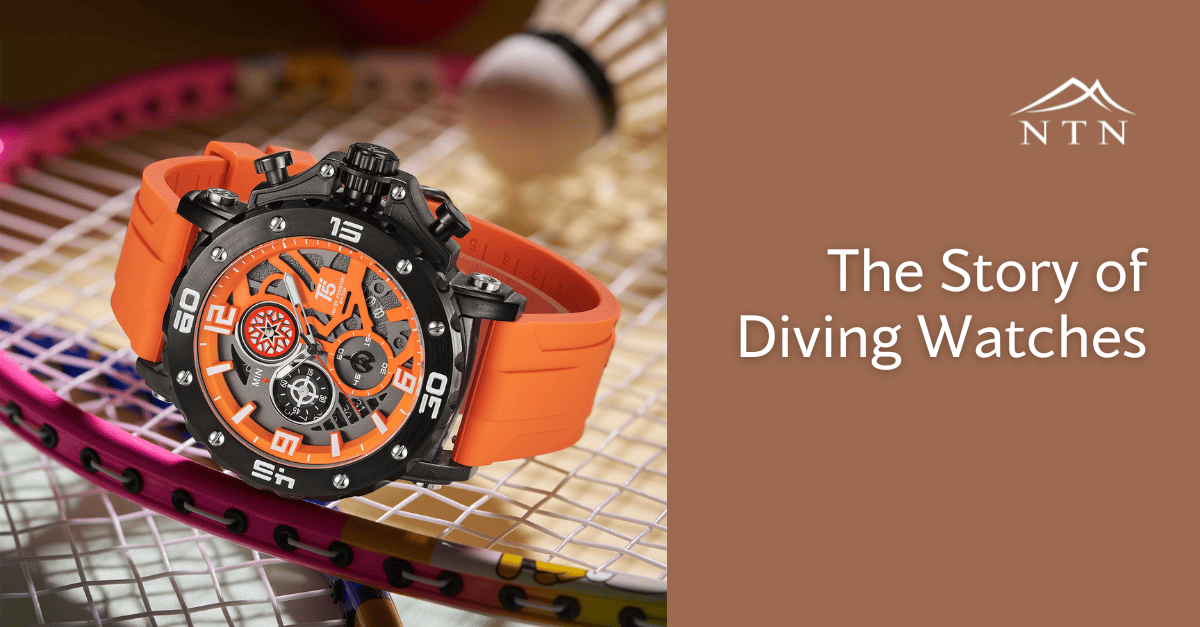
If there’s one category of watches that blends utility, endurance, and unmistakable style, it’s the diving watch. Originally built for survival under pressure, diving watches have since risen above their aquatic origins to become cultural and design icons.
Their story is not just about waterproof cases and rotating bezels—it’s about engineering precision meeting timeless aesthetics. Let’s explore how diving watches became symbols of performance and design, and why their appeal continues to run deeper than the ocean itself.
The Origins: Built for Survival, Not Style
The first diving watches were purely functional instruments. In the early to mid-20th century, professional divers and military personnel needed reliable timekeeping underwater. Standard wristwatches couldn’t handle the immense pressure or moisture, which led to the creation of purpose-built dive watches.
These early models focused entirely on durability, legibility, and water resistance. Thick crystal glass, sealed crowns, and luminous markers ensured the watch remained readable and operational even in dark, high-pressure environments.
But as diving became both a profession and a sport, these rugged tools began to capture the imagination of people outside the water too. What started as a necessity quickly evolved into an aesthetic—one that stood for resilience, precision, and adventure.
Engineering the Perfect Companion Underwater
Every serious diving watch shares a common DNA: performance under extreme conditions. Water resistance is, of course, the foundation. But beyond that, a dive watch must handle cold, salt, and pressure while maintaining absolute accuracy.
The most critical features were developed from real-world needs:
- Rotating bezel: To track dive times safely.
- Luminous hands and markers: For visibility in dark conditions.
- Robust case and screw-down crown: To prevent leaks and damage.
Over time, these functional elements became stylistic hallmarks. The knurled bezel edge, thick case profile, and bold indices turned into signature visual cues that instantly conveyed toughness. Even people who never dive wear them because of what they represent—dependability you can feel.
The Design Evolution: From Tool to Timeless Icon
By the 1960s and 70s, diving watches had moved beyond the wrists of professionals. They became everyday companions for explorers, pilots, and urban professionals alike.
The reason was simple: a diving watch looked good anywhere. Whether paired with a wetsuit or a tailored jacket, it carried a sense of purpose. Its design language—clean dials, balanced proportions, and a focus on legibility—spoke to both aesthetics and practicality.
This balance between form and function became its enduring strength. Even as watch technology advanced, the basic silhouette of a dive watch remained remarkably consistent. Modern interpretations might use new materials like ceramic or titanium, but the essence is unchanged.
That’s why, decades later, the diving watch still feels fresh. It’s not just a retro accessory—it’s an icon built on authenticity.
Performance That Outlasts Trends
A diving watch’s appeal goes beyond style—it’s about reliability. The same qualities that made it a professional tool now make it a trustworthy everyday companion.
Modern diving watches undergo rigorous testing for shock resistance, magnetism, and pressure. Many exceed industry standards, offering water resistance of up to hundreds of meters. Even if most owners never dive that deep, knowing their watch can handle it provides a sense of assurance.
This reliability has helped diving watches transcend fleeting fashion cycles. They aren’t seasonal accessories; they’re lifetime companions. A well-made dive watch can last for decades with minimal care, often becoming a piece passed down through generations.
The Psychology of the Dive Watch Appeal
Part of what makes diving watches iconic is what they symbolize. They represent exploration, endurance, and self-reliance. Wearing one is less about timing a dive and more about carrying that spirit of capability.
There’s also something inherently grounding about a mechanical or high-performance quartz watch. In a world driven by digital screens and constant connectivity, a diving watch feels reassuringly analog—something that works purely on craftsmanship and physics.
Its tactile nature—the turning of the bezel, the weight on the wrist, the smooth glide of the seconds hand—creates a connection between wearer and machine. That bond explains why so many people remain loyal to their dive watches for life.
Craftsmanship Meets Modern Innovation
Today’s diving watches combine traditional craftsmanship with advanced technology. Precision machining, improved gaskets, and corrosion-resistant alloys have elevated both performance and longevity.
Even quartz-powered dive watches benefit from innovations like high-torque motors and extended battery life, while automatic versions use advanced lubricants and shock absorption systems.
The result is a perfect blend of heritage and innovation—a watch that honors its roots yet performs flawlessly in the modern world.
Everyday Versatility
One of the reasons diving watches remain so popular is their incredible versatility. Few watches can transition as seamlessly from outdoor exploration to formal settings.
The combination of a clean dial, metallic case, and durable strap options—rubber, steel, NATO, or leather—makes it adaptable to almost any occasion. It’s a watch that works hard but never looks out of place.
That’s why even people who have never dived in their lives still choose diving watches. They project quiet confidence and understated strength.
The Cultural Moment
Diving watches have also earned a place in popular culture. From explorers and naval officers to filmmakers and adventurers, the dive watch became part of a visual language that signals reliability and character.
It’s not just a timepiece—it’s a symbol. Something about its solid form and practical design resonates with the idea of timeless masculinity and endurance. But it’s also evolved beyond gendered appeal; today, many women appreciate dive watches for their robustness and minimalist design.
This cultural shift shows how diving watches have transcended their original purpose. They’re no longer just about measuring oxygen time—they’re about measuring moments that matter.
The Details That Define a True Dive Watch
While design and symbolism are vital, the technical criteria still matter. To be considered a true dive watch, certain standards—like those defined by ISO 6425—must be met.
These include:
- Minimum water resistance of 100 meters
- A unidirectional bezel for timing
- Legible markers visible in darkness
- Resistance to magnetic fields, shocks, and saltwater corrosion
Many modern dive watches exceed these requirements, offering deeper depth ratings and improved materials. But the essence remains the same: clarity, precision, and toughness.
The beauty of a diving watch lies in how these rigorous standards have shaped its design language. Every curve and component serves a purpose, creating a harmony of function and form.
Why Diving Watches Endure
After more than half a century, the diving watch has become more than just a timekeeping tool—it’s a statement of craftsmanship, reliability, and enduring design.
Few things in modern life combine purpose and beauty so seamlessly. A diving watch doesn’t shout for attention; it earns it quietly, through precision and presence.
Its design has barely changed because it doesn’t need to. The fundamentals were right from the beginning. And that’s the hallmark of true engineering excellence—when form and function align so perfectly that the result becomes timeless.
Whether you wear one for its technical capability, its design purity, or simply its story, a diving watch remains one of the most complete expressions of what a watch can be.
If you value watches that embody both performance and understated elegance, discover the latest collections at NTN’s website.
Final Thoughts
The journey of diving watches from utilitarian tools to symbols of performance and design is one of continual refinement. Each generation adds subtle improvements, yet the core idea remains untouched—a watch that can handle pressure, literally and figuratively.
Their appeal lies in that perfect balance: strength without bulk, elegance without pretense, and engineering that feels almost poetic.
Owning a diving watch isn’t just about keeping time—it’s about keeping a connection to craftsmanship, exploration, and endurance. It’s a reminder that good design is never loud; it’s simply built to last.


