


Blog
The Story Behind Automatic Winding Mechanisms

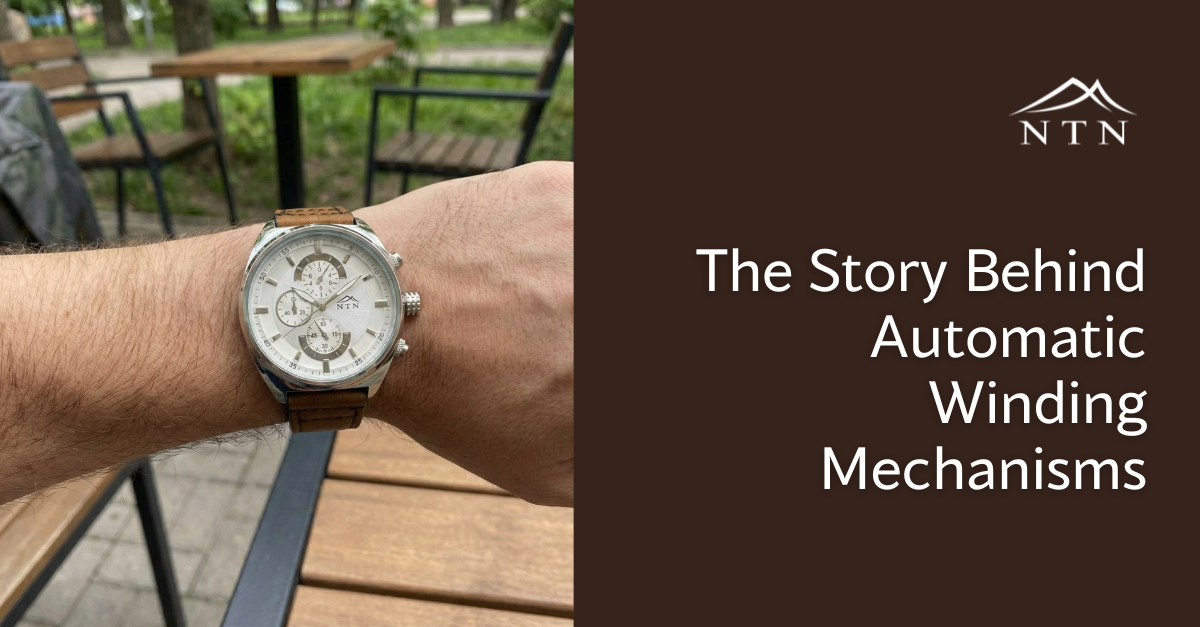
Automatic watches are a quiet triumph of human ingenuity. They capture motion—the simple act of wearing a watch—and turn it into energy. This self‑sustaining elegance is part of what makes them so fascinating. But how did this idea come about, and how does it actually work?
Let’s take a closer look at the story behind automatic winding mechanisms, tracing their origins, evolution, and enduring appeal to watch enthusiasts and everyday wearers alike.
The Origins
Before automatic watches existed, timepieces relied entirely on manual winding. Each day, the wearer had to turn the crown to tighten the mainspring, storing energy that powered the watch. If you forgot, your watch simply stopped.
The idea of a watch that could wind itself wasn’t new—it had been imagined as far back as the 18th century. Early inventors experimented with tiny oscillating weights that used gravity and movement to keep the mainspring wound. These early attempts were clever but often unreliable or too bulky for everyday use.
It wasn’t until the 1920s that automatic winding truly became practical. Engineers refined the mechanism, using a central rotor that could swing freely with wrist motion. This innovation transformed watchmaking. For the first time, a mechanical watch could stay wound simply by being worn.
The Principle: Motion Becomes Power
At the heart of every automatic watch is a deceptively simple idea—convert motion into stored energy.
Inside the case, a semicircular weight called a rotor moves as the wearer’s wrist moves. The rotor swings back and forth, winding the mainspring through a small series of gears. That mainspring stores potential energy, which is gradually released to power the watch’s movement.
This design means that as long as the watch is worn regularly, it stays wound. Even when left off the wrist, most automatic watches have a power reserve—the amount of time they continue running on stored energy—typically between 36 and 80 hours.
In essence, every turn of your wrist keeps your watch alive. It’s a tiny ecosystem of motion, physics, and precision engineering working in harmony.
How Automatic Winding Mechanisms Work
To understand the mechanism more clearly, imagine four key components working together:
- The Rotor: A freely rotating weight, usually shaped like a semicircle, that moves with wrist motion.
- The Winding System: A miniature gear train that translates the rotor’s movement into tension for the mainspring.
- The Mainspring Barrel: The container that holds the coiled mainspring, storing energy as it winds.
- The Escapement and Balance Wheel: These regulate the release of energy, ensuring steady, accurate timekeeping.
When you move your wrist, the rotor spins in one or both directions, depending on the design. The gear system captures that motion and winds the mainspring.
Some watches use unidirectional winding, where the rotor winds the mainspring in only one direction, while others use bidirectional winding, capturing energy from both clockwise and counter‑clockwise motion.
This efficiency ensures that even small daily movements—like typing, driving, or walking—are enough to keep your watch running perfectly.
From Experiment to Excellence: The Evolution of Automatic Winding
The earliest automatic mechanisms were limited by materials and design. Early rotors could only move within a narrow arc, and the winding systems were inefficient. As watchmaking advanced, so did the mechanics.
By the mid‑20th century, innovations like full‑rotor designs, improved bearings, and reverser gears made automatic watches smoother and more dependable. These refinements allowed rotors to rotate freely through 360 degrees, dramatically increasing winding efficiency.
Advancements in materials—like the use of durable alloys and low‑friction lubricants—further improved reliability. Modern automatic movements can endure decades of daily use with minimal servicing.
Today, automatic winding mechanisms are not just practical—they’re beautifully designed. The sight of a rotor swinging inside a transparent case back is often one of the most mesmerizing details of a mechanical watch.
Why Automatic Watches Captured the World’s Imagination
Automatic watches occupy a unique place in horology because they blend mechanical complexity with human simplicity. You don’t need batteries, charging cables, or digital screens—just motion.
They represent craftsmanship that feels alive. Every movement of the wrist powers the mechanism, creating a tangible connection between wearer and watch. This sense of interaction gives automatic watches an emotional appeal that quartz or digital models rarely match.
People often describe wearing an automatic watch as having a small heartbeat on the wrist. It’s a reminder of both the passage of time and the artistry that captures it.
Efficiency and Engineering: The Modern Automatic
Today’s automatic winding systems are marvels of precision. Engineers continue to refine how rotors transfer motion to the mainspring, using advanced geometry and materials to reduce friction and increase efficiency.
Some modern mechanisms incorporate ceramic ball bearings for smoother rotor movement, while others use micro‑rotors—smaller winding weights integrated into the movement itself—to reduce thickness without sacrificing performance.
These innovations mean that automatic watches can now be slimmer, more accurate, and more robust than ever before. Many also include enhancements like anti‑magnetic components and shock resistance, ensuring that the movement remains stable even in challenging environments.
The Beauty of Energy Conservation in Motion
What makes automatic winding mechanisms so satisfying is their quiet efficiency. They waste nothing. Every flick of the wrist, every small gesture, contributes to keeping the watch alive.
This self‑sufficiency gives automatic watches a poetic quality. They remind us that timekeeping doesn’t always need to rely on external energy sources. Instead, it can be sustained by something as natural as movement.
It’s a beautiful metaphor—time powered by life itself.
Automatic vs. Manual: The Subtle Distinction
While both automatic and manual watches share the same mechanical heart, their winding systems differ fundamentally.
A manual watch requires the wearer to wind it regularly using the crown. This direct engagement connects the wearer to the mechanism in a tactile way, but it also demands consistency. Forget to wind it, and the watch stops.
An automatic watch, by contrast, takes care of itself. As long as you wear it, it keeps running. Some enthusiasts still enjoy giving their automatic watch a gentle hand‑wind every now and then—it’s not necessary, but it’s part of the ritual.
The difference lies not in superiority but in experience. Manual winding celebrates tradition; automatic winding celebrates motion. Both express a devotion to mechanical artistry.
Common Myths About Automatic Watches
Because of their intricate design, automatic watches often attract misconceptions. One of the most common is that they’re fragile or overly complex. In reality, most are built to withstand everyday bumps and shocks with ease.
Another myth is that automatic watches stop running too quickly when not worn. While they do eventually rest once the power reserve is depleted, a few turns of the crown or a few minutes of wear are all it takes to bring them back to life.
Some also assume that automatic mechanisms are less accurate than quartz. While it’s true that quartz movements keep stricter time, the small variations in mechanical watches are part of their charm—they’re living instruments, not sterile machines.
Caring for an Automatic Watch
Automatic watches are designed for longevity, but a little care goes a long way. Regular wear keeps the movement lubricated and the mainspring active. If you rotate between multiple watches, a watch winder can keep unused ones running smoothly.
Every few years, a professional service helps maintain accuracy and prevents wear. Basic precautions—like avoiding strong magnetic fields, extreme temperatures, and hard impacts—also preserve the mechanism’s health.
When stored, keep your watch in a dry, cushioned space to prevent moisture or dust buildup. These small habits ensure that your automatic watch continues ticking faithfully for decades.
The Lasting Appeal of Automatic Winding
Even in a world dominated by smart devices, automatic watches hold their ground effortlessly. They embody something digital timepieces can’t replicate—mechanical life.
Each movement inside the case is a tribute to centuries of engineering progress and artistic refinement. The gears, springs, and levers work together with precision that borders on poetry.
For many, an automatic watch isn’t just a tool for telling time—it’s a quiet expression of appreciation for craftsmanship, patience, and timeless design.
If that philosophy speaks to you, take a closer look at NTN’s curated watch collection through their official website.
Final Thoughts
The story behind automatic winding mechanisms is ultimately a story about human creativity. What began as a technical challenge—keeping a watch wound without effort—became an enduring symbol of self‑sufficiency and precision.
Automatic watches have changed little in principle since their invention, yet they remain deeply relevant. Each one is a reminder that even in an age of automation, there’s something profoundly satisfying about a mechanism that depends on your own motion to live.
It’s not just about timekeeping. It’s about connection—the kind that links craftsmanship, movement, and time into one elegant rhythm.


