


Blog
The Origins of Quartz Technology and Its Global Impact

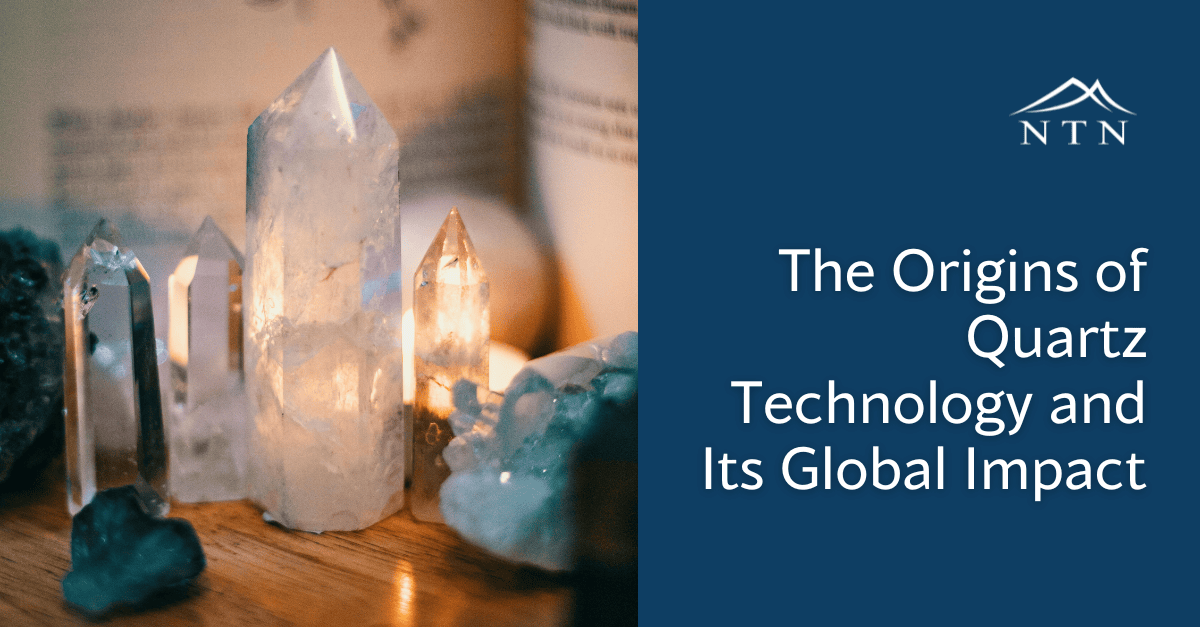
Few inventions in watchmaking have reshaped the world of timekeeping as profoundly as quartz technology. It transformed precision, accessibility, and the way people interact with time itself. From its beginnings in scientific research laboratories to its dominance in modern wristwatches, quartz technology marked a turning point that democratized accuracy and redefined the global watch industry.
Understanding the origins of quartz technology and its global impact reveals how a simple crystal changed centuries of tradition and ushered in a new era of precision.
The Early Search for Precision
For centuries, watchmakers pursued one goal above all others: accuracy. Early mechanical clocks and pocket watches, though beautiful, were prone to errors caused by temperature, humidity, and mechanical wear.
In the 18th and 19th centuries, innovations like the balance spring, lever escapement, and marine chronometer improved precision dramatically. Yet, even the finest mechanical watches could drift by several seconds each day.
Scientists began to wonder—could time be measured without relying entirely on mechanical motion? This question laid the foundation for what would become quartz timekeeping.
The Discovery of Quartz Oscillation
Quartz, a naturally occurring crystal made of silicon dioxide, has an extraordinary property: when subjected to an electric current, it vibrates at a highly stable frequency.
This phenomenon, known as the piezoelectric effect, was discovered in 1880 by French physicists Pierre and Jacques Curie. They found that applying pressure to certain crystals generated an electric charge—and conversely, that applying an electric charge caused the crystal to vibrate.
This discovery was pivotal. It meant that quartz could act as a consistent oscillator—a natural “heartbeat” that could regulate timekeeping far more precisely than any mechanical balance wheel.
The First Quartz Clocks
The first quartz timekeeping devices appeared in the 1920s. At Bell Telephone Laboratories in the United States, researchers Warren Marrison and J.W. Horton built the world’s first quartz clock in 1927.
It was large—about the size of a wardrobe—but astonishingly accurate for its time. The quartz oscillator vibrated at a frequency of tens of thousands of times per second, keeping time with an error margin of less than a second per year.
Though impractical for daily use, this invention proved the potential of quartz as a revolutionary timekeeping technology. Over the next few decades, quartz clocks became the standard in laboratories, observatories, and broadcasting stations—anywhere absolute precision was required.
The Miniaturization Breakthrough
The challenge for engineers was clear: how to shrink a room-sized quartz clock into something small enough to wear on the wrist.
By the 1950s and 1960s, advancements in electronics—particularly transistors and integrated circuits—made miniaturization possible. Scientists and watchmakers began exploring ways to use quartz oscillators in portable devices.
The goal was simple but ambitious: combine the reliability of quartz with the convenience of a wristwatch.
The Birth of the Quartz Wristwatch
In 1969, the first commercial quartz wristwatch was introduced to the world. It was a technological marvel, combining a tiny quartz crystal with a battery-powered circuit that replaced traditional mechanical gears.
Inside, a small electronic circuit sent current through the quartz crystal, causing it to vibrate at an exact frequency of 32,768 times per second—a rate chosen because it could easily be divided down by electronic circuits to drive the seconds hand precisely.
This innovation delivered unmatched accuracy: deviations of only a few seconds per month compared to several seconds per day in mechanical watches.
More importantly, quartz watches required no winding, minimal maintenance, and were far more affordable to produce once manufacturing scaled.
The Quartz Revolution
The global watch industry entered what historians call the Quartz Revolution (or “Quartz Crisis,” depending on perspective).
Throughout the 1970s and 1980s, quartz watches rapidly gained popularity worldwide. They were inexpensive, reliable, and accurate—qualities that appealed to consumers across all markets.
Traditional mechanical watchmaking, which had dominated for centuries, suddenly faced an existential challenge. Many established watchmakers struggled to compete with the precision and affordability of quartz models.
But this period wasn’t just one of disruption—it was also one of innovation. The quartz revolution accelerated research into new materials, compact electronics, and automated manufacturing, laying the groundwork for the modern watch industry.
How Quartz Technology Works
The principle behind quartz timekeeping is elegantly simple yet scientifically profound.
A tiny quartz crystal, cut into a tuning-fork shape, is placed in an electronic circuit. When electricity from the battery flows through it, the crystal vibrates at a consistent frequency. These vibrations—exactly 32,768 per second—are then converted into regular electric pulses.
A microchip counts these pulses and drives a small motor that moves the watch hands (in analog models) or updates a digital display.
This method eliminates most mechanical errors, temperature variations, and frictional wear—making quartz watches both highly accurate and durable.
The Global Impact of Quartz Technology
Quartz technology didn’t just change watches—it changed how the world measures time.
1. Precision Becomes Universal
Before quartz, atomic-level precision was reserved for specialized institutions. Quartz watches brought that accuracy to ordinary people. For the first time, anyone could own a timepiece that kept near-perfect time.
2. Timekeeping Became Democratic
Mechanical watches were expensive to produce and required skilled labor. Quartz technology made accurate timekeeping accessible to the masses. It turned watches from luxury goods into everyday essentials.
3. Industries Transformed
Beyond wristwatches, quartz technology revolutionized aviation, telecommunications, and computing. Quartz oscillators became the standard timing element in everything from airplanes to personal computers.
4. The Foundation for Digital Innovation
Quartz paved the way for digital watches, calculators, and eventually smartwatches. It bridged the gap between traditional craftsmanship and electronic innovation—a synergy that continues today.
The Cultural Shift in Watchmaking
The rise of quartz watches also changed the meaning of timepieces.
In the mechanical era, watches were symbols of craftsmanship and artistry. In the quartz era, they became symbols of practicality and precision. Mass production made them accessible, while design trends shifted toward minimalism and functionality.
Yet, rather than replacing mechanical watchmaking entirely, quartz technology expanded the definition of what a watch could be. It created two parallel worlds: one driven by tradition, the other by technology.
The Evolution of Quartz Technology
Quartz technology didn’t stop evolving after its debut.
Engineers developed solar-powered quartz watches, which used light to recharge their batteries, extending lifespan and reducing waste. Others introduced radio-controlled quartz watches, synchronized daily with atomic clocks for absolute precision.
Hybrid systems began merging quartz accuracy with mechanical artistry—combining the best of both worlds.
Each new generation of quartz innovation reaffirmed the same principle that started it all: precision through simplicity.
Quartz and the Environment
Quartz watches also contributed to sustainability by reducing the frequency of maintenance and extending product lifespan. Unlike mechanical watches that require regular servicing, quartz models typically run for years with minimal intervention.
Modern advances in rechargeable and solar-assisted quartz movements continue to make timekeeping more energy-efficient and environmentally conscious.
The Enduring Legacy of Quartz
More than half a century after the first quartz wristwatch debuted, its influence remains profound.
Quartz movements still dominate the global market, powering the majority of watches sold today. Their legacy is evident not only in their ubiquity but also in how they shaped consumer expectations for reliability and precision.
Even as mechanical watches regain popularity among enthusiasts, quartz remains the quiet standard—the invisible heartbeat behind countless timekeeping instruments worldwide.
How Quartz Technology Influenced Modern Timekeeping
What began as a scientific curiosity became a technological revolution. Quartz technology’s consistency and reliability became the foundation for nearly every modern timekeeping system.
From GPS satellites to smartphones, quartz oscillators maintain synchronization across global networks. They ensure that digital systems, financial markets, and transportation grids operate seamlessly.
In essence, quartz technology is not only the backbone of modern watches—it’s the heartbeat of modern civilization.
Final Thoughts: The Crystal That Redefined Time
The story of quartz technology is one of precision, accessibility, and quiet transformation. It bridged science and craftsmanship, reshaped economies, and redefined our relationship with time.
Every tick of a quartz watch is a reminder of human ingenuity—a legacy that continues to inspire innovation in both technology and design.
If you admire watches that embody this harmony of precision and artistry, NTN’s official collection reflects the same timeless balance.


