


Blog
Screw-Down Pushers: What They Are and Why They Matter in a Watch

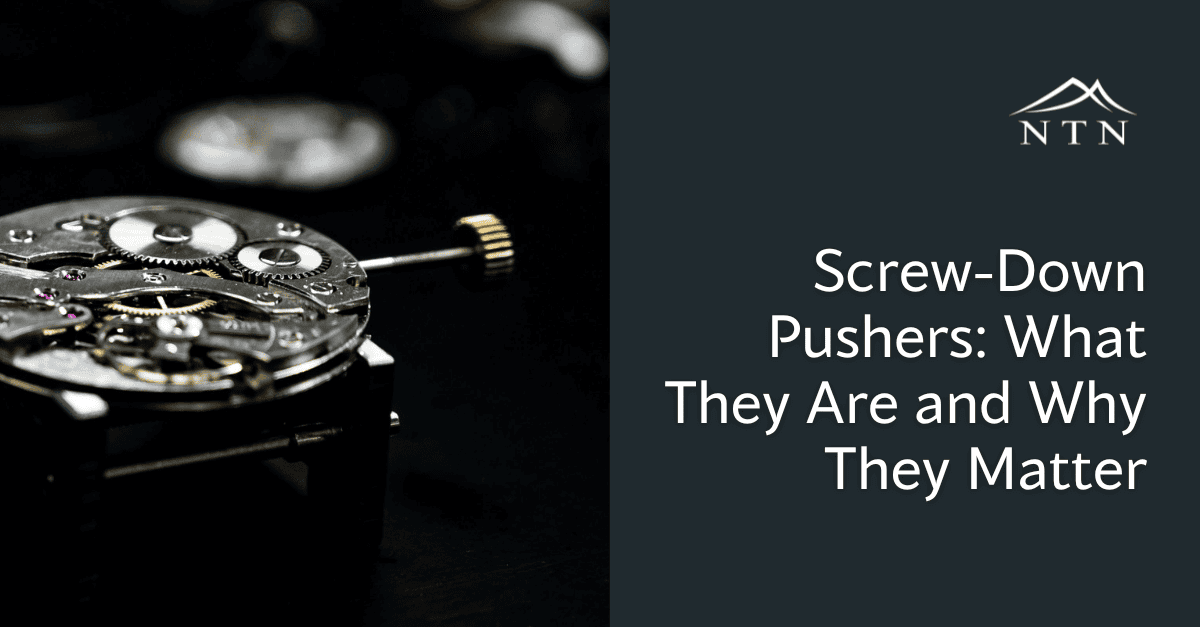
Among the many small details that set well-built watches apart, screw-down pushers are one of those features that often go unnoticed until you understand their purpose. They’re the small buttons flanking the crown on a chronograph—functional, precise, and quietly essential.
To someone new to watches, they might look like simple stopwatch controls. But for anyone who cares about durability, water resistance, or mechanical integrity, screw-down pushers are a subtle mark of engineering care.
This guide explains what they do, how they work, and why they’ve become a trusted feature in serious timepieces, whether for diving, aviation, or everyday wear.
What Exactly Are Screw-Down Pushers?
Screw-down pushers are chronograph buttons that can be locked into place by twisting them down toward the case.
In a regular chronograph, the pushers can be pressed anytime to start, stop, or reset the timer. In a screw-down system, the pushers must first be unscrewed before use. When locked, they form a tight seal against the case, keeping moisture, dust, and pressure from getting inside.
Typically, there are two pushers—one above and one below the crown—that control the chronograph functions. The crown itself often uses a similar screw-down mechanism, creating a consistent, water-resistant design.
Why Do Watches Use Screw-Down Pushers?
The main reason is protection.
Chronographs have additional openings, and each pusher is a potential entry point for water or debris. Screw-down pushers act as a physical barrier when sealed, keeping the internals safe from damage.
This feature is especially important for dive and sports watches, which are built to perform under pressure. By locking the pushers, the seals inside stay compressed and watertight, helping the watch maintain its rated water resistance.
Even outside of diving, they’re a smart safeguard. Whether you’re caught in the rain or washing your hands, screw-down pushers provide reassurance that your watch is built to handle it.
How Screw-Down Pushers Work Mechanically
The mechanism combines simplicity and precision.
Each pusher has three key parts: the button head, the stem, and a threaded sleeve. When you twist the pusher clockwise, the button tightens down into the sleeve, compressing small gaskets inside. These gaskets form a watertight seal.
Unscrewing it counterclockwise releases the button so it can move freely. That’s when you can start, stop, or reset the chronograph.
It’s a small piece of mechanical ingenuity—tactile, functional, and satisfying. That distinct twist-click motion is something many enthusiasts enjoy.
Can You Use the Chronograph Underwater?
Even though screw-down pushers improve water resistance, they don’t make the watch invincible.
You should avoid pressing the pushers underwater unless the manufacturer specifically says it’s safe. The moment you unscrew them, the seal is broken—and that’s when moisture can sneak in.
Some modern dive chronographs are designed for underwater use, but most aren’t. The best practice is simple: start the chronograph before you get wet and leave the pushers alone until you’re dry again.
When locked, they protect. When open, they expose. That’s the rule.
Everyday Advantages of Screw-Down Pushers
Even for non-divers, the benefits are clear.
They prevent accidental activation, so no unwanted stopwatch runs if your wrist bumps against something. They also keep dirt and sweat out, preserving the feel and function of your watch over time.
Structurally, the screw-down design adds rigidity to the case, improving shock resistance. Visually, it gives the watch a refined, purpose-built look that signals capability without shouting it.
Are Screw-Down Pushers Difficult to Use?
Not at all.
To operate them, twist each pusher counterclockwise until it’s free, press it like normal, and screw it back down afterward. It’s intuitive once you’ve done it a few times.
The only caution is to avoid overtightening. A snug twist is enough to keep the seal secure; forcing it risks damaging the threads or gaskets.
In daily use, this extra step becomes second nature, like fastening a clasp or winding a crown.
Do All Chronographs Need Screw-Down Pushers?
No. They’re not a requirement, just a design choice that reflects the watch’s purpose.
Dress chronographs and vintage-inspired models often skip them to keep the case slimmer and operation faster. Sports and dive chronographs, on the other hand, include them for added security.
So while they’re not essential, screw-down pushers are a clear indicator of a watch built with durability in mind.
How Screw-Down Pushers Affect Water Resistance Ratings
Water resistance ratings assume that all screw-down components are properly secured.
If the pushers are unscrewed, the rating no longer applies, even momentarily. Always ensure everything is locked before exposure to water.
After swimming, rinse the watch gently with clean water to remove salt or chlorine, dry it, and then unlock the pushers only when you’re back on dry land.
It’s a simple routine that keeps the seals in good shape and the movement safe.
Common Myths About Screw-Down Pushers
Myth 1: They make the watch waterproof.
No watch is completely waterproof. Even with screw-down mechanisms, gaskets age and need replacement over time.
Myth 2: They’re only for divers.
They’re useful for anyone who values protection, whether you’re a swimmer, traveler, or simply want added durability.
Myth 3: They’re hard to maintain.
Maintenance is minimal. During regular servicing, a technician checks the seals and lubricates the threads.
Myth 4: They’re purely decorative.
They look stylish, but their function is entirely practical; they genuinely protect the movement.
Maintenance Tips for Watches with Screw-Down Pushers
Keep them clean, dry, and properly locked when not in use.
If a pusher feels stiff or gritty when turning, it may just need lubrication—nothing major, but worth having checked during servicing.
After saltwater exposure, rinse with fresh water and dry before operating. Salt buildup can degrade the gasket material over time.
And as always, have your watch’s seals and water resistance tested every few years to ensure everything’s still functioning as intended.
The Appeal of Screw-Down Pushers to Watch Enthusiasts
There’s something undeniably satisfying about the tactile feel of unscrewing a pusher before timing something. It adds a sense of ceremony, a small interaction that connects you to the mechanical side of the watch.
Enthusiasts appreciate this balance of function and design. Screw-down pushers are not just about ruggedness; they’re about intention. They show that the watch was built to perform, not just to impress.
How Screw-Down Pushers Reflect Watchmaking Philosophy
Their presence says a lot about the priorities of the watchmaker.
Including screw-down pushers means valuing reliability, resilience, and precision. It’s a sign of thoughtful engineering where every part serves a purpose.
How to Identify Screw-Down Pushers at a Glance
Look closely at the sides of the chronograph buttons. If you see fine ridges or knurling—similar to what’s on a screw-down crown—that’s a giveaway.
Try gently twisting one counterclockwise. If it moves and slightly pops out, it’s a screw-down design. If it doesn’t budge, it’s a regular pusher.
This small detail tells you a lot about the watch’s construction and intended use.
Do Screw-Down Pushers Affect Comfort or Style?
Not in any negative way.
When locked, they sit flush against the case, so they don’t snag or feel bulky. The screw texture often adds a subtle technical look, complementing both sporty and refined designs.
They’re engineered for practicality first, but their symmetry and proportion often enhance the overall aesthetic.
Final Thoughts
Screw-down pushers might seem like a small detail, but they embody one of the core principles of good watchmaking—strength through simplicity.
They protect the movement, preserve water resistance, and add a reassuring sense of precision to every interaction.
For anyone who values reliability and thoughtful craftsmanship, understanding this feature deepens your appreciation for what makes a watch more than just a timekeeper.
And if you’re drawn to watches that blend that same engineering integrity with modern, versatile styling, NTN’s curated watch collection is a natural place to start exploring.


