


Blog
Early Explorers and Their Trusted Timepieces

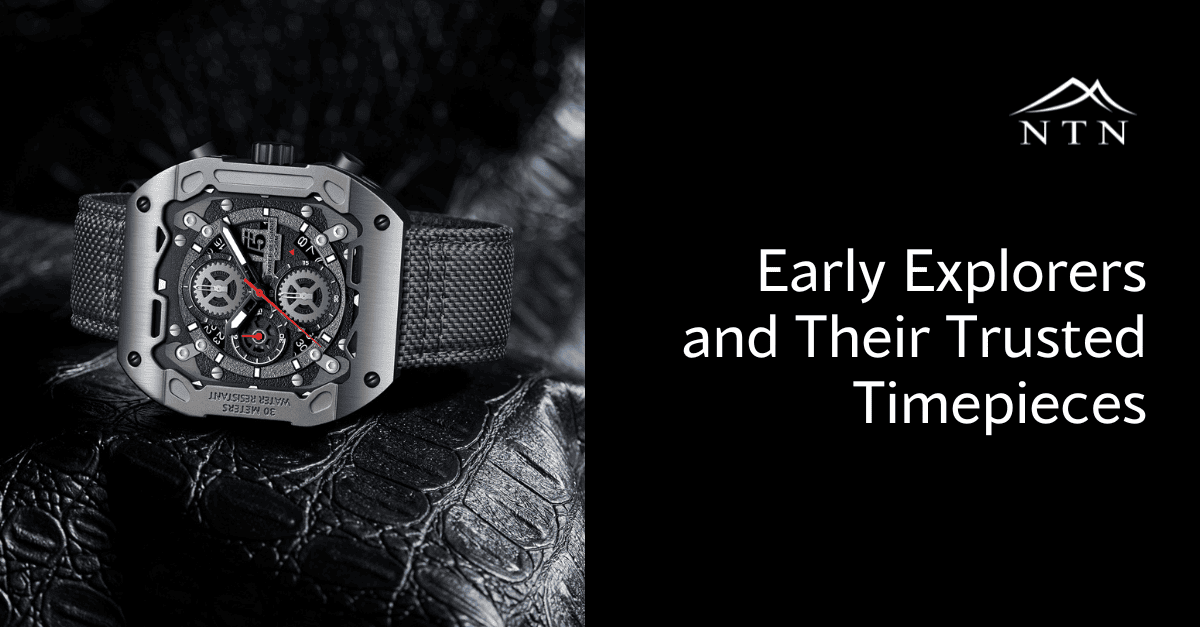
Before GPS, satellite tracking, and digital clocks, explorers relied on one of humanity’s most remarkable inventions—the watch. The early explorers and their trusted timepieces tell a story of courage, precision, and survival. These instruments didn’t just measure time; they measured life itself, determining success or failure in the harshest conditions on Earth.
For centuries, timepieces were as vital to navigation as maps or compasses. They helped sailors cross oceans, mountaineers conquer summits, and aviators chart the uncharted. The partnership between explorer and watch remains one of history’s most enduring relationships—a testament to human ingenuity and the relentless pursuit of discovery.
The Age of Exploration and the Birth of Precision
In the 17th and 18th centuries, exploration was as much about science as it was about adventure. Nations raced to chart new territories, but accurate navigation remained a challenge. Without precise timekeeping, calculating longitude—a ship’s east-west position—was nearly impossible.
The invention of the marine chronometer changed everything. This portable, highly accurate clock allowed sailors to determine longitude by comparing local time with a fixed reference point. Suddenly, exploration became safer and more reliable. Timekeeping had become a matter of life and death.
For early explorers, these chronometers were not just instruments but guardians of survival. In an era where one degree of error could mean hundreds of miles off course, precision was power.
Timepieces at Sea: The Navigator’s Lifeline
Maritime explorers were among the first to depend entirely on timepieces. Their journeys demanded instruments capable of withstanding humidity, temperature fluctuations, and the constant motion of the sea.
These early watches were large, mechanical, and often stored in shock-proof boxes to protect their delicate movements. They became the sailor’s silent companion, ticking steadily through storms and calm waters alike.
Every sunrise and sunset was judged against the chronometer’s rhythm. It guided ships through unknown waters, helping explorers map coastlines, discover continents, and connect the world like never before.
The marriage between horology and navigation symbolized trust—between human and machine, between precision and peril.
On Land: Watches That Conquered Extremes
As exploration expanded from oceans to deserts, jungles, and mountains, timepieces had to evolve. 19th-century adventurers demanded watches that were durable, accurate, and dependable in extreme conditions.
Mountaineers climbing uncharted peaks relied on watches to track their ascent and manage oxygen supply. Polar explorers used them to calculate distances and coordinate movements during endless days or nights. Desert travelers timed their marches to avoid the deadly midday sun.
These explorers didn’t wear luxury accessories—they wore survival tools. The watch was a lifeline, a constant reminder of both progress and peril.
As exploration grew more scientific, watchmakers refined designs for resilience. Cases became sealed against dust, water, and pressure. Movements grew more shock-resistant. The modern field and pilot watches we know today trace their roots to these early innovations.
The Advent of Aviation and Aerial Exploration
When humans took to the skies, the demands on timekeeping grew even more complex. Pilots needed watches that could withstand altitude shifts and help synchronize coordinates and fuel calculations.
Early aviators used pocket watches strapped to their wrists—a precursor to the wristwatch’s dominance. Timing became crucial for navigation and communication. In cloud-covered skies or during long-distance flights, the pilot’s watch was often the only reliable tool for tracking time and direction.
The early 20th century saw the rise of specialized aviation watches—large, legible, and built for quick reading in turbulence. These timepieces became symbols of bravery and precision, mirroring the daring spirit of flight pioneers.
The Polar Frontiers: Endurance in the Coldest Places
Among the most demanding environments for watches were the polar expeditions. Temperatures dropped so low that lubricants inside a watch could freeze, halting the mechanism. Explorers needed watches that could withstand brutal cold while maintaining accuracy.
In these frozen landscapes, explorers relied on timepieces to calculate distances traveled, manage rations, and maintain orientation when compasses failed. A reliable watch meant survival; a broken one could mean disaster.
The development of watches capable of enduring such extremes marked a milestone in horology. These innovations laid the groundwork for modern field and expedition watches—designed not for display, but for endurance.
The Spirit of Adventure and Engineering Precision
Every era of exploration pushed watchmakers to innovate. The partnership between explorers and horologists was a collaboration between necessity and artistry. Each new journey revealed new challenges: pressure, magnetism, temperature, vibration.
Watchmakers responded by strengthening cases, improving materials, and refining escapements. The result was a generation of timepieces capable of functioning flawlessly where humans barely could.
In many ways, exploration was a proving ground for watch design. Before laboratory testing, the Arctic, desert, and open sea were the ultimate laboratories. When a watch survived there, it earned its reputation.
Beyond Navigation: Watches as Symbols of Discovery
For explorers, a watch was more than an instrument—it was a symbol of purpose. It represented humanity’s desire to measure, understand, and master time in the pursuit of discovery.
These timepieces became emblems of endurance, courage, and precision. Many were passed down through generations, their scratches and patina telling stories of storms weathered and summits reached.
Even today, expedition watches carry that same heritage. They remind us of an era when adventure meant uncertainty, and when a single mechanical device stood between success and failure.
The Transition from Tool to Legacy
As technology advanced, the role of watches shifted. GPS devices replaced chronometers, and digital systems took over navigation. Yet, the symbolic and emotional connection between explorers and their watches remains strong.
Collectors and enthusiasts still value the design principles born from exploration—robust cases, luminous dials, rotating bezels, and precision movements. These features weren’t created for style; they were created for survival.
It’s this authenticity that continues to inspire modern watch design. The DNA of every field, diver, or aviation watch can be traced back to those early adventurers who demanded reliability above all else.
The spirit of exploration continues not just in travel, but in craftsmanship. Many watchmakers today still design with that same purpose—to create instruments that endure time, nature, and history.
The Human Element: Courage, Curiosity, and Time
What truly united early explorers wasn’t just their destinations, but their relationship with time. Every decision—when to set sail, when to rest, when to turn back—depended on it. Time was both an ally and an adversary.
Their watches served as constant companions, ticking reminders of the thin line between adventure and danger. Each second meant movement, progress, survival.
The lessons they left behind go beyond geography. They teach us that exploration is as much about inner resilience as outer discovery. To navigate the unknown—be it a vast ocean or a personal challenge—requires precision, patience, and respect for time itself.
The Legacy of Exploration in Modern Watchmaking
Modern horology still draws inspiration from those who came before. The rugged durability of a mountaineer’s watch, the clarity of a pilot’s dial, and the resilience of a diver’s case all trace their origins to the needs of early explorers.
These design elements endure because they represent reliability in uncertainty. They remind us that watches were born not from fashion, but from necessity.
Today, while many wear watches as expressions of style, their roots lie in survival, discipline, and exploration. That’s what gives a well-made watch its deeper meaning—it connects us to the explorers who relied on precision to push humanity’s boundaries.
If you’re drawn to that same spirit of endurance and discovery, explore the thoughtfully crafted selection at NTN’s official website.
Final Thoughts
The story of early explorers and their trusted timepieces is a story of progress and perseverance. It shows how human ambition and mechanical ingenuity combined to chart the unknown.
From the open seas to the frozen poles, from mountain peaks to the edge of the sky, watches guided history’s bravest individuals through their greatest challenges.
Though technology has evolved, the essence of that partnership remains timeless. A watch still represents more than time—it represents trust, precision, and the courage to venture into the unknown.


