


Blog
The Untold Story of Vintage Watch Restoration

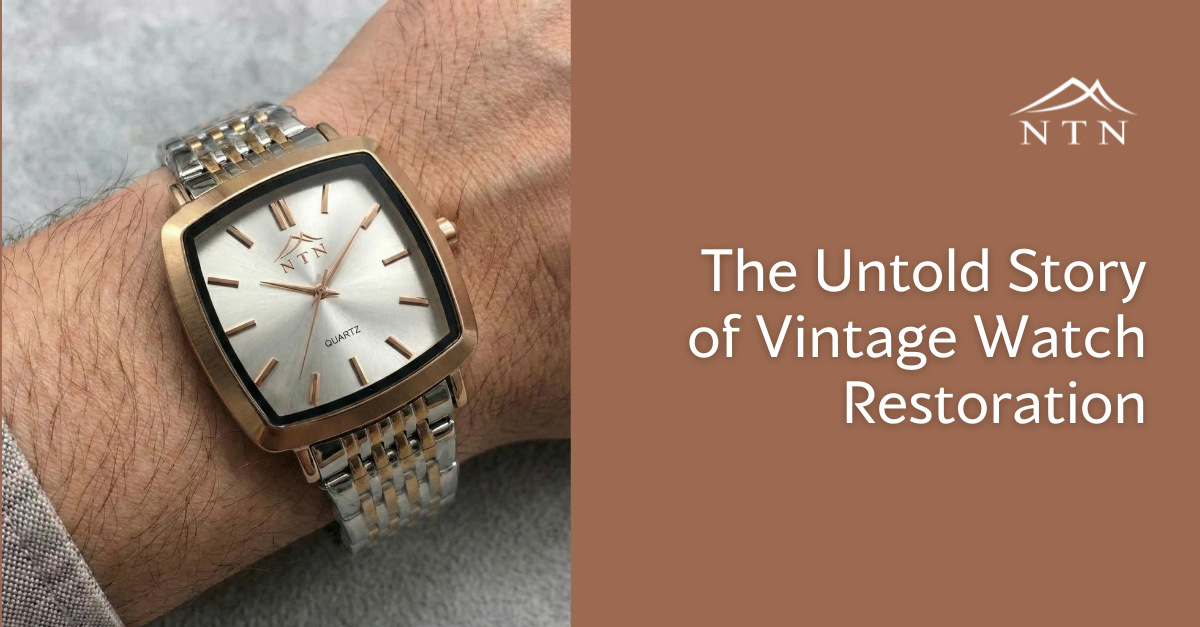
Every vintage watch has a story, but not all can tell it clearly until they’ve been given a second chance. Restoring an old watch is more than just fixing a broken mechanism—it’s about reviving history, emotion, and craftsmanship that might otherwise fade away.
Behind every restored timepiece lies patience, skill, and respect for the past. The process is delicate, sometimes emotional, and always deeply rewarding. This is the untold story of vintage watch restoration—where time, art, and memory meet.
Why Vintage Watches Deserve Restoration
Vintage watches are more than accessories. They’re living reminders of a different era—when craftsmanship was personal and every detail was made by hand.
When a watch stops ticking, it doesn’t lose its value; it simply pauses its story. Restoring it means keeping that story alive. Whether it’s a family heirloom or a rare collector’s piece, a well-restored vintage watch represents continuity—connecting generations through something tangible and timeless.
For many owners, a restored watch is not about luxury but meaning. It’s about holding on to the moments the watch has witnessed.
The Art and Science of Restoration
Watch restoration is both technical and artistic. It requires understanding how every component works and how time has affected it.
Each piece that arrives on a watchmaker’s bench tells its own story—of wear, environment, and sometimes neglect. The goal of restoration is not to erase that history but to honor it while bringing the watch back to reliable working condition.
Expert restorers carefully assess the movement, dial, case, and crystal before making any repairs. Some parts may be cleaned or adjusted, while others are painstakingly recreated to match the original. The process demands precision and restraint—every decision matters.
Restoration vs. Repair: Knowing the Difference
Repairing a watch means fixing what’s broken. Restoring one means reviving its soul.
A repair might replace damaged parts or adjust the mechanism so it runs again. Restoration, however, goes deeper. It aims to preserve originality while improving function and appearance.
An experienced watch restorer takes great care not to over-polish or replace too many original components. The goal is to maintain the watch’s authenticity—the gentle aging, known as patina, that gives vintage pieces their unique charm.
The Emotional Side of Restoration
Restoring a vintage watch is often an emotional journey. For many, it’s about more than just a timepiece—it’s about memory.
A grandfather’s watch that’s been silent for decades can be brought back to life, ticking once more as if it never stopped. That sound can be profoundly moving. It’s a small piece of the past that continues into the present.
Every watch that’s restored carries personal meaning. Some mark milestones—marriages, retirements, or achievements. Others represent family legacies. Each one holds a story worth preserving.
The Skills Behind the Craft
True restoration work demands patience and mastery. Watchmakers must understand not only mechanics but also materials, finishes, and design from different eras.
A restorer’s hands must be steady, their eyes sharp, and their judgment refined. They often work with tools smaller than a grain of rice, adjusting parts that can’t even be seen without magnification.
Many vintage watches use discontinued parts or designs, so restorers often create components by hand. This combination of technical precision and artistry is what makes restoration such a respected craft.
Challenges in Vintage Watch Restoration
Restoring vintage watches isn’t easy. Time leaves its mark in ways that can’t always be reversed. Corrosion, worn pivots, cracked dials, or missing parts can make the process complex.
Finding authentic replacement parts is one of the biggest challenges. Many components are no longer produced, and substitutes must be custom-made to match the original design.
Balancing authenticity with functionality is another challenge. A restorer must decide when to replace a part and when to preserve it, ensuring the watch remains both beautiful and true to its origin.
Preserving the Original Character
A key principle in restoration is respect for the watch’s original character. The goal is not to make the watch look brand new, but to make it look alive again.
A perfectly polished case might look nice, but it can erase decades of history. The faint scratches, the softened edges—these are marks of a life lived and should remain where possible.
Good restoration is about balance: making the watch reliable and attractive while retaining its soul.
Why Vintage Watch Restoration Matters
Vintage watch restoration is important because it preserves history in motion. Every restored watch tells a story about the era it came from—the design trends, the materials used, and the craftsmanship of its maker.
Without restoration, many of these stories would be lost forever. Museums, collectors, and families rely on skilled artisans to keep these mechanical memories ticking.
Restoring a watch is also an act of sustainability. Instead of discarding something old, restoration gives it new life—proof that quality craftsmanship can outlast time itself.
The Role of Emotion in Craftsmanship
Behind every successful restoration is emotion. Watchmakers don’t just fix—they connect. When they work on a vintage piece, they’re handling someone’s memory, someone’s story.
That awareness shapes every decision. It’s why restorers often say their work is as much about empathy as it is about engineering.
To restore a vintage watch is to care for something that once mattered, and will matter again.
Modern Technology Meets Traditional Skill
Today’s restorers often combine traditional watchmaking techniques with modern tools. Microscopic cameras, ultrasonic cleaners, and 3D modeling allow them to see and repair details that were once impossible to reach.
Still, the heart of restoration remains unchanged. No machine can replace the sensitivity of a skilled craftsman’s hand or the intuition built from years of experience.
This blend of old and new keeps the art of restoration both relevant and alive.
When Restoration Becomes Legacy
Every restored watch becomes a bridge between generations. A grandfather’s timepiece can now be worn by his granddaughter, connecting the family’s past to its future.
The restored watch doesn’t just tell time—it tells their story. It becomes part of a living legacy.
That’s why many people choose to have vintage watches restored instead of replaced. It’s not about collecting—it’s about remembering.
Choosing Who Restores Your Watch
Restoring a vintage watch is a delicate process that should always be handled by a trained professional. Skilled restorers understand how to preserve both form and function without compromising authenticity.
When choosing a restorer, look for experience, transparency, and respect for originality. A good restorer will explain what can and cannot be done, ensuring your watch remains true to itself.
The Quiet Satisfaction of a Restored Watch
When a vintage watch finally ticks again after years of silence, there’s a quiet satisfaction that words can’t describe. The sound feels familiar, comforting, almost human.
For the owner, it’s not just about seeing the hands move—it’s about feeling a connection to time itself. The past and present merge in that single, steady rhythm.
Each restoration represents hope, patience, and the belief that beauty doesn’t fade—it just waits to be rediscovered.
The Future of Vintage Watch Restoration
As appreciation for mechanical watches grows, so does the demand for skilled restoration. New generations are learning to value craftsmanship and sustainability over disposability.
Vintage watch restoration ensures that timekeeping traditions remain alive. It teaches respect for detail, patience, and heritage—all qualities that modern life often overlooks.
More people today are seeing watches not just as instruments, but as works of art that deserve to be preserved.
Final Reflections
Restoring a vintage watch is an act of devotion—to history, to craftsmanship, and to the passage of time itself. Each screw, gear, and spring carries a story waiting to be revived.
When that story is brought back to life, it doesn’t belong to the past anymore—it becomes part of the present.
Vintage watch restoration reminds us that some things are worth saving, not replacing. The ticking of a restored watch is more than sound—it’s a heartbeat from another era, still alive today.
And for those who appreciate watches that carry both heritage and precision, exploring NTN’s official collection is a thoughtful first step. Because true craftsmanship, like time, never really stops—it just keeps moving forward.


