


Blog
The Psychology of Collecting Watches

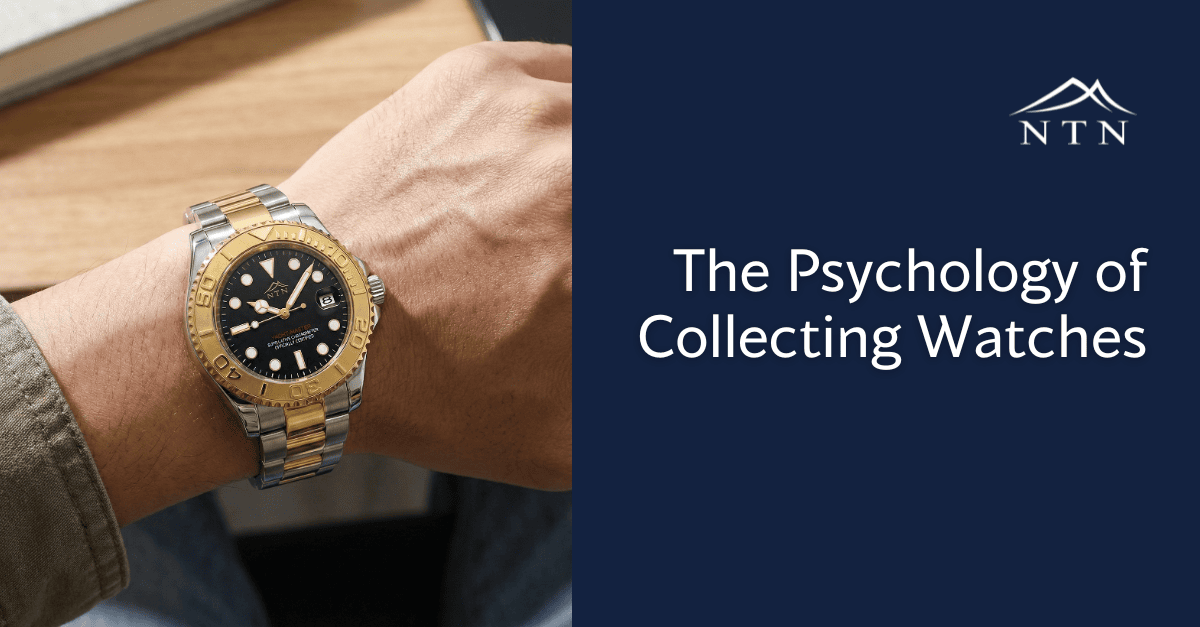
For many, collecting watches isn’t about keeping time—it’s about collecting stories, emotions, and moments. A timepiece is much more than a tool; it’s a reflection of personality, taste, and even philosophy.
The psychology of collecting watches reveals something deeply human: our desire to connect with time, beauty, and meaning. Whether it’s the thrill of discovery, the appreciation of craftsmanship, or the emotional pull of nostalgia, every collector has a reason that goes beyond the dial.
The Emotional Core of Watch Collecting
At the heart of every collection lies emotion. Watches evoke feelings of pride, memory, and belonging. For some, wearing a watch gifted by a parent or mentor keeps that relationship alive. For others, acquiring a new piece marks a milestone—a promotion, an anniversary, or a personal achievement.
Each watch becomes a vessel of emotion, holding the story of when and why it was acquired. This emotional attachment transforms timepieces into personal artifacts, creating a bond that deepens over time.
Psychologists call this object attachment—the tendency to link memories and identity to physical possessions. But with watches, that attachment is amplified because they represent the passage of time itself.
The Symbolism of Time and Control
Time is one of the few things humans can’t control, yet we spend our lives trying to measure and manage it. Watches give us a sense of order in a chaotic world. They make time visible and, in a way, tangible.
Owning and collecting watches provides an illusion of mastering time. The precise movement of gears, the rhythm of ticking hands—it all mirrors our desire for structure, reliability, and permanence.
For collectors, this control extends beyond function. They choose watches that reflect how they want to experience time—whether through the elegance of a mechanical movement or the practicality of quartz precision.
The Connection Between Personality and Collecting
Watch collecting often reflects personality types. Some individuals are drawn to technical perfection—those who find satisfaction in accuracy, movement complexity, and mechanical innovation. Others lean toward aesthetics, seeking harmony in design, texture, and proportion.
Collectors with adventurous spirits might prefer rugged field watches or diver models, while minimalists gravitate toward clean, understated dials. Each choice becomes an expression of identity—a form of nonverbal communication that says, “This is who I am.”
Psychologically, collecting allows people to build a narrative of self. The watches they choose, wear, and preserve become chapters in that story.
The Pursuit of Meaning and Legacy
Collecting watches is not just about acquisition—it’s about legacy. Many collectors view their timepieces as heirlooms, objects meant to outlast them and carry their stories forward.
This pursuit of permanence resonates with a fundamental human need: to leave something meaningful behind. A well-curated collection represents not just taste, but thoughtfulness and continuity.
When a collector passes down a watch, it’s not merely a gift—it’s a transfer of history, values, and emotion. The act satisfies both sentimental and existential desires: to be remembered and to mark one’s time on earth.
The Role of Nostalgia and Memory
Nostalgia plays a powerful role in the psychology of collecting watches. Many collectors are drawn to vintage or heritage designs because they evoke eras of craftsmanship and style that feel timeless.
A vintage watch connects its owner to the past—perhaps a parent who wore a similar model, or a historical moment that defined an age. This connection creates comfort, a sense of continuity between generations.
The tactile act of winding a watch or feeling its weight on the wrist can trigger memory. These small rituals transform watches into emotional anchors, grounding us in a world that moves too fast.
The Thrill of the Hunt
Every collector knows the excitement of finding a rare or meaningful piece. The hunt is as rewarding as the acquisition itself. Searching for a watch—researching models, comparing movements, waiting for the right opportunity—releases dopamine, the brain’s chemical of anticipation and reward.
This psychological pattern explains why collecting can become so deeply satisfying. It’s not just the possession that brings joy, but the journey of discovery. Each new watch represents curiosity fulfilled and passion reignited.
In a sense, collectors chase moments of awe. They appreciate the rarity not only of the watch itself but of the feeling it brings.
The Allure of Craftsmanship
Behind every timepiece lies human ingenuity. Collectors are often drawn to watches because they embody both art and engineering. The balance between precision and beauty fascinates the human mind.
Mechanical watches, in particular, appeal to those who value authenticity and complexity. They represent the culmination of centuries of innovation—tiny machines built to measure something abstract yet essential.
Owning such craftsmanship connects collectors to a tradition of meticulous design. It’s a celebration of patience and skill in a fast-paced, disposable world.
This appreciation for artistry often extends beyond mechanics. The curve of a case, the finish of a dial, the rhythmic sweep of a second hand—all engage aesthetic pleasure and intellectual admiration.
The Psychology of Rarity and Desire
Scarcity fuels passion. Limited editions or discontinued models often trigger a stronger emotional response because they feel exclusive. Psychologically, humans value what is rare—it signals distinction, identity, and belonging to a select group.
For collectors, owning something few others have provides satisfaction that goes beyond material pride. It’s about finding meaning in uniqueness.
This desire for rarity also drives community. Collectors bond over shared interests, forming networks where stories, knowledge, and respect are exchanged. The watch becomes a common language among those who understand its deeper significance.
The Impact of Community and Connection
Collecting watches is rarely a solitary pursuit. Many enthusiasts find belonging through watch clubs, forums, and social gatherings. These communities offer validation, learning, and shared excitement.
The psychology here is rooted in social identity theory—the idea that people define themselves partly through the groups they belong to. Within the watch-collecting world, members share values like appreciation for design, respect for tradition, and curiosity about innovation.
These connections create friendships that often outlast the watches themselves. The community becomes part of the joy, transforming a personal hobby into a shared passion.
The Balance Between Logic and Emotion
One of the reasons watch collecting is so fascinating is that it engages both sides of the brain. It satisfies logic through technical understanding—movement types, complications, materials—and emotion through beauty, nostalgia, and personal meaning.
This balance is rare in modern life. Few pursuits combine science and sentiment so seamlessly. Collecting watches offers both intellectual stimulation and emotional fulfillment, making it uniquely rewarding.
A collector might appreciate the physics of an escapement mechanism one moment and admire the light on a dial the next. It’s the merging of precision and poetry that keeps the passion alive.
The Role of Ritual and Routine
Ritual plays an understated but powerful role in the psychology of collecting. Setting a watch, winding it, or choosing which one to wear each morning are all small acts of mindfulness.
These rituals create rhythm in daily life, offering calm and focus. They’re moments of connection between person and object—a reminder that time, though fleeting, can be experienced deliberately.
For many collectors, these routines are meditative. They transform the simple act of wearing a watch into a quiet form of self-expression.
Modern Collectors in a Digital World
In an age dominated by smartphones and smartwatches, traditional watch collecting might seem outdated. Yet, it’s thriving more than ever.
This resurgence reflects a cultural shift toward authenticity and tactile experience. People crave objects that feel real—crafted, imperfect, and lasting. A mechanical watch offers precisely that: a human-made tool in a world of automation.
Owning a watch today isn’t about utility. It’s about resistance to disposability. It’s a statement that you value craft, patience, and meaning in an era of instant gratification.
If you’re someone who appreciates that timeless intersection of art and engineering, you can explore thoughtfully designed collections at NTN’s official website. Their philosophy reflects the same passion that drives collectors—the pursuit of precision and beauty that endures.
The Evolution of a Collector’s Mindset
Collectors often describe their journey as evolving over time. It begins with curiosity, then turns to passion, and eventually becomes appreciation.
At first, you might chase popular models or iconic designs. Later, you start valuing subtler qualities—balance, craftsmanship, heritage. Eventually, you collect not just watches but meanings.
This psychological evolution mirrors personal growth. As collectors mature, their focus shifts from quantity to quality, from trend to timelessness. The collection becomes a mirror of their own development.
The Deeper Meaning of Time
Ultimately, the psychology of collecting watches circles back to one profound truth: we are all trying to make sense of time.
Each watch represents a conversation with mortality—a reminder that moments matter. Collectors, in their own way, preserve time not by stopping it, but by honoring it.
Watches remind us that while time moves forward relentlessly, it can still be measured beautifully. They turn something intangible into something we can hold, admire, and pass on.
Final Thoughts
The psychology of collecting watches blends emotion, intellect, and identity into a single, timeless pursuit. People collect not just for value or aesthetics, but for meaning—for the way a watch can make them feel seen, connected, and grounded in time.
In a world that changes by the second, collecting watches is an act of permanence. It’s about cherishing craftsmanship, celebrating milestones, and finding joy in every tick.
Because in the end, a collector doesn’t just own watches—they own moments.


