


Blog
Why Quartz Watches Are the Better Choice

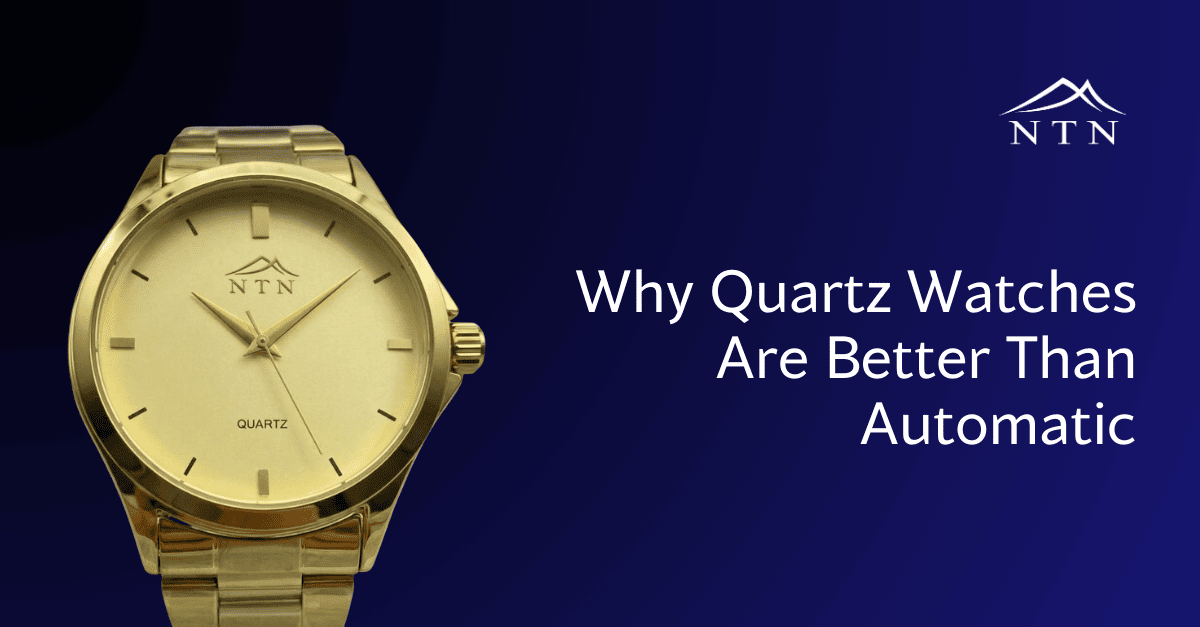
If you’re choosing between quartz and automatic, the most helpful question isn’t which is more “prestigious.” It’s which will serve you better, day in and day out.
For most people, quartz wins on accuracy, simplicity, and total cost of ownership. That doesn’t diminish the charm of mechanical watches—it just acknowledges how most of us actually live.
Below is a balanced, detailed look at why quartz watches are better than automatic for everyday use, with clear explanations and practical examples you can trust.
The Core Difference
An automatic watch is fully mechanical. A wound spring stores energy and releases it through a series of gears. Your wrist motion keeps it wound.
A quartz watch uses a battery to power a tiny circuit and a quartz crystal that vibrates at a highly stable frequency. Those vibrations are counted and translated into time.
That one technical difference changes almost everything about accuracy, maintenance, durability, and convenience.
Accuracy
Quartz watches are typically accurate to around ±15 seconds per month. Many do better in normal conditions.
Automatics are usually rated in seconds per day. Even well-tuned ones commonly vary by ±5–20 seconds daily, and changes in position, temperature, or activity can shift that.
If consistent, set-and-forget accuracy matters for work, travel, or fitness timing, quartz makes everyday life easier. No ritual, no margin of error creeping in, no guesswork after a weekend off the wrist.
Zero Hassle Ownership
With quartz, you don’t have to wear the watch daily to keep it running. You don’t have to wind it. You don’t have to adjust time as often.
Most of the time, the only recurring task is a battery replacement every few years. If you choose solar or kinetic quartz, even that task largely disappears for a very long time.
Automatics, by design, slow down and stop if they’re not worn or wound. You either keep them moving in a winder or reset them when you return. It’s part of the charm for some. It’s friction for most.
Better Performance in Real-World Conditions
Quartz movements are more resistant to shocks and daily jolts. Fewer moving parts and a regulated electronic oscillator mean minor impacts have less effect on timekeeping.
Temperature swings also tend to have a smaller impact on modern quartz movements than on mechanical escapements. Thermocompensated quartz takes this even further, adjusting for temperature shifts automatically.
In practice, this means jogging, commuting, and traveling with far fewer surprises.
Slimmer Profiles, Lighter on the Wrist
Because a quartz caliber can be more compact, cases are often thinner and lighter. That matters under a cuff, during long days at a desk, or when you just want a watch you forget you’re wearing.
Automatics can be slim, but the physics of rotors, springs, and gear trains limits how thin most everyday models can go without serious engineering trade-offs.
Lower Total Cost of Ownership
Quartz ownership costs are predictable and usually modest. Batteries last years, and routine servicing is minimal.
Automatics benefit from periodic servicing to clean, lubricate, and regulate the movement. That service is craft-intensive and can be meaningfully more expensive over a decade.
If you want a reliable timekeeper you don’t have to budget maintenance for, quartz is the financially calmer choice.
Quietly More Capable Complications
Quartz makes certain useful functions simpler and more accurate. Perpetual calendars can track months and leap years reliably for decades. Alarms and countdown timers are precise and consistent. Chronographs can measure fractions of a second without major variance.
Automatics can offer beautiful mechanical interpretations of these features, but they add thickness, complexity, and service needs. For daily practicality, quartz is the straightforward answer.
Travel-Friendly, Work-Friendly, Life-Friendly
Change time zones? A quartz with a quick-set hour hand or dual-time display is fast and exact. Park a watch for a week? Quartz is still running when you come back.
Automatics are rewarding if you love interacting with your watch. If you just need it to be right—today, tomorrow, next month—quartz aligns better with a tight schedule.
Strong Water Resistance With Less Drama
Case design and gaskets determine water resistance, not the movement alone. Still, the simpler mechanics of quartz reduce the risk that a minor impact or magnetism nudges the movement out of spec and compromises sealing.
Used within its rating, a good quartz watch is as dependable in rain, workouts, and casual swims as most people ever need.
Sustainability, Practically Considered
Mechanical watches are serviceable and long-lived, which is great. But modern solar quartz pushes longevity and low-waste habits in a different way.
If powered by light, a quartz watch can run for many years without a battery swap, needing only occasional gasket checks. It’s a quietly sustainable pattern: use, enjoy, wear, repeat.
The Feel Factor (And Why It’s Okay to Choose Function)
Many people love automatics for their sweep, the tactile click of the crown, and the idea of a tiny engine on the wrist. That affection is real and valid.
But if you don’t feel that tug, you’re not “missing something.” You’re prioritizing timekeeping and ease of use. Quartz is better for that job—plain and simple.
When Quartz Makes the Most Sense
- You need accurate, punctual time with minimal interaction.
- You rotate watches and don’t want to reset them constantly.
- You prefer thin, comfortable cases and lighter weights.
- You want predictable, low maintenance over years.
- You value practical complications like perpetual calendars, alarms, or precise chronographs.
If that list sounds like your everyday life, quartz isn’t a compromise. It’s alignment.
Typical Misconceptions, Cleared Up
“Quartz isn’t real watchmaking.”
Not true. Quartz engineering is rigorous—tight tolerances, smart circuits, and precise calibration. It’s a different kind of craft, built for consistency over contemplation.
“Quartz can’t last.”
A quality quartz movement can run for decades with basic care. Battery life and movement life are different; replacing a battery or using solar keeps the movement healthy.
“Quartz is boring.”
Design, proportion, finishing, readability—these are what make a watch engaging. A quartz movement simply frees the rest of the watch to be comfortable, slim, and dependable.
The Numbers That Matter Day to Day
If you correct a watch only when it’s off by a minute, here’s what you can expect in the real world.
A typical quartz might reach that threshold once or twice a year.
A typical automatic might reach it in a week or a month, depending on regulation and wear patterns.
That’s the gap you feel in commuting schedules, meeting times, and travel itineraries. It’s why quartz feels “easier.”
Care Is Simple
Quartz care boils down to a few habits. Replace the battery promptly rather than letting it die and sit. Keep gaskets healthy to maintain water resistance. Avoid extreme heat and strong magnets. Wipe the case and bracelet after heavy use.
Do that and you’re looking at a watch that just keeps going—reliably, quietly, accurately.
Why This Debate Persists
The automatic-vs-quartz discussion hangs around because it’s not just technical—it’s emotional. Automatics embody tradition and mechanical beauty. Quartz champions precision and practicality.
Both values are valid. The question is which value fits your life right now. For most people, most days, quartz is the better tool.
Buying With Confidence
When evaluating a quartz watch, focus on the basics that matter most:
- Movement reliability and accuracy.
- Case finishing and comfort on the wrist.
- Legibility in your typical lighting.
- Water resistance appropriate for your routine.
- A brand that supports simple, sensible care.
If you want a straightforward place to begin, explore a curated collection from NTN, a maker that prioritizes clean design and dependable movements.
The Balanced Take
Automatics are wonderful if you enjoy the interaction and the story. They can be objects of lasting affection.
Quartz is better if you want a watch to serve your schedule rather than becoming part of it. It’s the choice for accuracy without fuss, comfort without bulk, and ownership without a maintenance calendar.
That’s why quartz watches are better than automatic for most wearers, most of the time.
Final Thought
A good watch should add clarity to your day, not tasks to your list. Quartz does exactly that—quietly, consistently, and with enough versatility to suit work, travel, and everything in between.


