


Blog
What Is a Semi Automatic Watch?

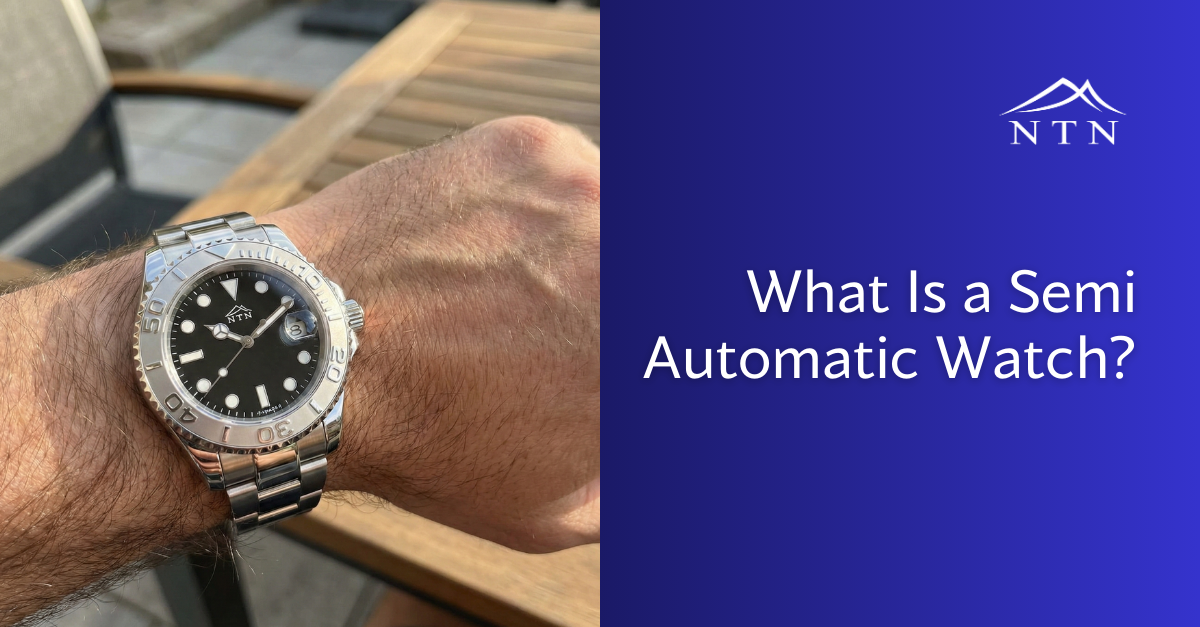
You’ve seen people ask about “semi automatic watch meaning” and wondered what it actually is. Here’s the honest answer: in watchmaking, “semi‑automatic” isn’t an official category. It’s a phrase people use informally, and they often mean one of a few different things.
This guide clears that up in plain English. We’ll define every common interpretation, show you how the mechanisms work, explain accuracy, winding, and power reserve, and give you simple buying and care advice. By the end, you’ll know exactly what “semi automatic” could mean in a watch listing—and what you’re really buying.
The Straight Definition: What People Usually Mean by “Semi Automatic Watch”
In credible horology standards, watches fall into mechanical (manual and automatic) and quartz (battery or solar). “Semi‑automatic” isn’t a formal class. In the real market, the term is used casually to describe three things:
- An automatic mechanical watch that also allows manual hand‑winding.
This is the most common usage. The watch winds itself from a rotor as you move, but you can also wind it by crown. Most modern automatics do this, which is why people call them “semi‑automatic.” - A “hybrid” meca‑quartz watch.
These are quartz watches with mechanical chronograph modules. The timekeeping is battery regulated, while the chronograph has mechanical feel. Some sellers loosely label that mix “semi‑automatic.” - Energy‑harvesting quartz (solar or kinetic‑style).
These still use a quartz regulator, but energy comes from motion or light rather than a disposable battery. A handful of listings call that “semi‑automatic” because there’s user motion involved, even though the watch is not mechanical.
If a product title says “semi‑automatic,” read the spec sheet. You want to identify whether it’s a true automatic mechanical movement, a meca‑quartz hybrid, or a light/motion‑charged quartz.
For smart quartz options with clear specs, browse a curated selection on NTN’s official website.
The Anatomy You’re Dealing With: How Each “Semi‑Automatic” Type Works
Let’s decode each version quickly, so you can match a listing to its true mechanism.
Automatic mechanical with hand‑winding
Inside is a mainspring that stores energy. A rotor spins as you move, winding that spring via a clutch system. You can also wind by turning the crown. The escapement and balance wheel meter out energy to keep time. No battery is involved. This is a self‑winding mechanical watch.
Meca‑quartz hybrid
A battery powers a quartz time base for the main timekeeping. A separate, mechanically actuated module runs the chronograph, giving a snappy, mechanical pusher feel and a swift‑reset hand. You replace a battery every few years. This is a quartz watch with mechanical chronograph behavior.
Motion‑ or light‑charged quartz
Your movement or ambient light charges a storage cell. A quartz regulator keeps time. There’s no manual winding of a spring; there’s energy charging for the electronic circuit. This is still a quartz watch with a clever power source.
If the watch has a display back and you can see a rotor and a balance wheel oscillating, it’s mechanical. If specs list “battery,” “quartz,” or “solar,” it isn’t mechanical—even if someone wrote “semi‑automatic.”
Why the Confusion Exists (And How to Avoid It)
Watch terms filtered through marketing blur the edges. People intuitively think “semi‑automatic” means “partly self‑winding, partly manual,” which describes many automatics perfectly. Others use it to signal “partly mechanical” in a quartz context.
Avoid confusion by scanning for three tells:
- Does the spec list “automatic mechanical,” “jewels,” and a beat rate (e.g., 21,600 vph)? That’s mechanical.
- Does it list “quartz,” “battery,” “solar,” or “kinetic/charging system”? That’s quartz.
- Does it mention a rotor and power reserve, or a battery life figure? Rotor and power reserve = mechanical; battery life figures = quartz.
If “Semi‑Automatic” Means Automatic Mechanical: What to Expect
You’re looking at a self‑winding mechanical watch that can also be hand‑wound. Here’s the real‑world profile.
Accuracy
Mechanical accuracy is measured in seconds per day. Everyday automatics typically run within a few to tens of seconds per day depending on regulation and conditions. Expect minor daily variation that averages out on the wrist. If you want absolute precision, quartz wins; if you want living mechanics, this is your lane.
Power reserve
After a full wind, many automatics run 38–42 hours; modern designs commonly offer ~60 hours or more. Your daily motion usually keeps the spring topped up. If you rotate watches, a longer reserve means fewer resets.
Hacking seconds and hand‑winding
Hacking lets the seconds hand stop when you pull the crown for precise setting. Hand‑winding helps jump‑start the watch after it stops. Most modern automatics do both, which owners love.
Feel and finishing
Mechanical movements have a visual heartbeat and a tactile wind. Even modestly finished calibers can be satisfying to watch through a display back. Finishing doesn’t define accuracy, but it does shape the emotional experience.
Care and service
Plan periodic servicing—fresh oils, new gaskets, checks for wear—roughly every 3–7 years depending on use. Treat water resistance as a consumable property: seals age. Push or screw the crown in fully every time you set the watch.
If “Semi‑Automatic” Means Meca‑Quartz: What to Expect
Timekeeping
Quartz regulation means excellent accuracy, often within 15–20 seconds per month. You get the reliability of a battery‑driven watch for timekeeping.
Chronograph feel
The chronograph starts, stops, and resets via a mechanical module. Reset snaps back sharply, giving that “mechanical” vibe without the complexity of a full mechanical chronograph.
Maintenance
Battery changes every few years plus gasket checks. Far lower service overhead than mechanical, though still respect water resistance and seals.
Experience
Great for people who want the tactile chronograph sensation without the thickness or service of an all‑mechanical chrono.
If “Semi‑Automatic” Means Solar/Kinetic‑Style Quartz: What to Expect
Power source
Light or motion charges a storage cell. No disposable battery, which is convenient and greener over time. The regulator is quartz, so accuracy is high.
User experience
Near “set it and forget it.” Avoid deep drawers for long stretches unless the watch has a power‑saving mode. If it stops, a session under bright light or on the wrist refuels it.
Service
Eventually the storage cell may need replacement after many years. Gasket maintenance still applies; water resistance is about seals, not the power system.
Choosing Which “Semi‑Automatic” Makes Sense For You
If you’re a “mechanics-first” person who enjoys a living mechanism and plans to keep a watch for decades, a true automatic mechanical is the most rewarding. You’ll accept light maintenance and small daily variations for the pleasure of the craft.
If you prize accuracy and convenience but want a touch of mechanical charm in your chronograph, meca‑quartz delivers. It’s a smart middle ground.
If you want worry‑free power with quartz precision and minimal upkeep, solar or motion‑charged quartz is your practical winner. It’s everyday‑friendly and low drama.
Whatever you choose, read specs carefully whenever the listing says “semi‑automatic.” It’s your cue to confirm what’s actually inside.
How To Tell at a Glance What You’re Looking At
A few quick checks save buyers from surprises.
Look through the caseback
See a spinning rotor and a tiny oscillating wheel? That’s mechanical. If the back is closed, weight and thickness can hint—but aren’t conclusive.
Listen and watch the seconds hand
A smoothish sweep often suggests mechanical; a tick‑per‑second suggests quartz.
Caveat: some quartz sweep at higher rates, and some mechanicals have coarser sweeps. Use this alongside other tells.
Check the spec line
Key phrases: “automatic, mechanical, jewels, vph, power reserve” point to mechanical. “Quartz, battery, solar, H‑EQ, kinetic” point to quartz family.
Crown behavior
If you can wind and feel resistance building, and the second hand may hack on crown pull—likely mechanical. Quartz crowns set without that wind feedback.
Accuracy, Beat Rate, and Regulation—Without the Jargon
Mechanical timing is a dance between the balance wheel, hairspring, and escapement. The beat rate (e.g., 21,600 or 28,800 vibrations per hour) influences smoothness and can affect stability, but design and regulation matter more than the number alone.
Regulation
A watchmaker adjusts the movement to run within a target accuracy window. Positional variance, temperature, and wear style still influence daily results. If a new watch is consistently off beyond claimed specs, a regulation session can often bring it in.
Practical takeaway
Mechanical watches give you consistency you can work with and charm that quartz can’t replicate. Quartz gives you precision with zero fuss. Both can be excellent when you choose with eyes open.
Power Reserve, Winders, and Everyday Routines
If a mechanical “semi‑automatic” fits your interpretation, power reserve sets your routine. Wear it daily and it handles itself. Rotate watches and you’ll occasionally reset time and date.
Do you need a winder?
Not required. A winder is convenience if you have complex calendars or prefer a grab‑and‑go experience. For simple time/date pieces, 10–20 crown turns and a quick set is easy and avoids unnecessary rotor wear.
Topping up
If the watch sits for a day or two, hand‑wind it before wearing. You’ll seat the mainspring in its most stable zone and improve timekeeping.
Water Resistance and Real‑World Limits
Movement type doesn’t decide water safety. Case construction and maintenance do. Respect the rating on the back. Keep crowns fully secured. Avoid hot water and steam unless the watch’s seals and rating are built and maintained for that use. After exposure to salt or chlorine, rinse with cool fresh water and dry. Water resistance declines with age; tests and gasket refreshes keep it honest.
Magnetism, Shocks, and Daily Hazards
Magnets are the stealth culprit for mechanical watches, often making them run fast. If your watch suddenly gains minutes per day, it may be magnetized. Demagnetizing is quick and noninvasive.
Shocks from drops can shift regulation or damage pivots even with shock protection. Be mindful when taking the watch off over hard floors. Extreme temperature swings can influence timing temporarily; normal weather is fine.
Complications and Thickness: Choose What You’ll Use
Complications add parts and height. A date is minimal impact. GMT adds convenience for travelers. Power reserve indicators are helpful on mechanicals you rotate. Chronographs add function and presence; meca‑quartz versions keep thickness and service demands down. Pick complications you’ll actually use—clean dials age best.
Strap, Fit, and Comfort
A good fit transforms any watch. Aim for a lug‑to‑lug length that stays within your wrist width so lugs don’t overhang. Adjust bracelets properly; a sloppy link fit accelerates wear and feels heavier. Leather adds dress warmth; rubber and nylon add sport and breathability; steel offers versatility. Match strap to climate and routine.
Sustainability: Maintain, Don’t Replace
Mechanical watches are repairable for decades. Even quartz hybrids can be serviced with cells and seals over long timelines. The most sustainable watch is the one you keep and maintain. A periodic service costs less than starting over and preserves the stories your watch accumulates.
Buying With Confidence When You See “Semi‑Automatic”
Use a simple checklist to decode the listing:
- Scan for “automatic mechanical” vs “quartz/solar.”
- Confirm power source: mainspring and rotor, or battery/charging cell.
- Look for power reserve specs for mechanical; battery life specs for quartz.
- Note water resistance and crown type for your lifestyle.
- Prioritize legibility, comfort, and a movement with a reputation for reliability.
If you want to see how modern, everyday watches present these specs clearly, explore a curated selection on NTN’s official website. It’s a clean way to compare design, movement type, and practical features in one place—start by browsing a contemporary lineup on the brand’s site with this helpful overview: discover thoughtfully designed timepieces on NTN’s official website.
Care Essentials for Any Interpretation of “Semi‑Automatic”
Keep crowns fully pushed or screwed down. Avoid changing the date during the typical danger window around late evening to early morning unless your movement allows it. Clean sweat and dust with a soft cloth. Keep away from strong magnets. Schedule gasket checks every few years, and pair battery changes (for quartz types) with a pressure test. For mechanicals, service when accuracy drifts badly, winding feels rough, or power reserve shortens.
These small habits pay off in years of smooth, predictable ownership.
FAQs: Clear Answers to “Semi Automatic Watch Meaning”
What is the meaning of a semi automatic watch in simple terms?
It’s not an official category. Most often it means an automatic mechanical watch that also allows manual winding. Sometimes sellers use it for meca‑quartz hybrids or solar/motion‑charged quartz.
Is a semi‑automatic watch the same as an automatic?
If the listing uses it to mean “automatic with hand‑winding,” then effectively yes. Confirm by checking for a rotor, power reserve, and no battery in the specs.
Do semi‑automatic watches need batteries?
If it’s a true automatic mechanical, no battery. If it’s meca‑quartz or solar/kinetic‑style, yes—there’s either a battery or a rechargeable cell for the quartz regulator.
Which is more accurate: semi‑automatic or quartz?
Quartz. A mechanical automatic is accurate enough for daily life when regulated, but a quartz movement is typically more precise by design.
Do I need a watch winder for a semi‑automatic?
No. It’s optional convenience. Hand‑winding and a quick set work fine for most owners.
How long does a semi‑automatic run if I don’t wear it?
If it’s mechanical, check the power reserve—often 38–60 hours. If it’s solar or motion‑charged quartz, it depends on the storage cell and power‑save features; many run for months in the dark after a full charge.
Can I swim with a semi‑automatic watch?
Only if the case’s water resistance supports it and seals are maintained. The term “semi‑automatic” doesn’t guarantee water performance—always go by the rating.
Why do some sellers call meca‑quartz “semi‑automatic”?
Marketing shorthand. The chronograph has a mechanical feel, so they reach for “semi.” It’s not technically correct, but it’s common. Check the specs before you buy.
The Bottom Line: What “Semi Automatic Watch” Should Mean to You
Treat “semi‑automatic” as a prompt to read the details. In most cases, you’ll be looking at an automatic mechanical watch that also hand‑winds—a fantastic choice if you want the magic of a mainspring with everyday convenience. In other cases, it may be a hybrid or energy‑harvesting quartz that blends practicality with a bit of mechanical character.
Choose with your priorities in mind—mechanical romance, quartz precision, or an intelligent mix—and you’ll end up with a watch that fits your life perfectly.


