


Blog
How Watchmaking Evolved Through the Industrial Age

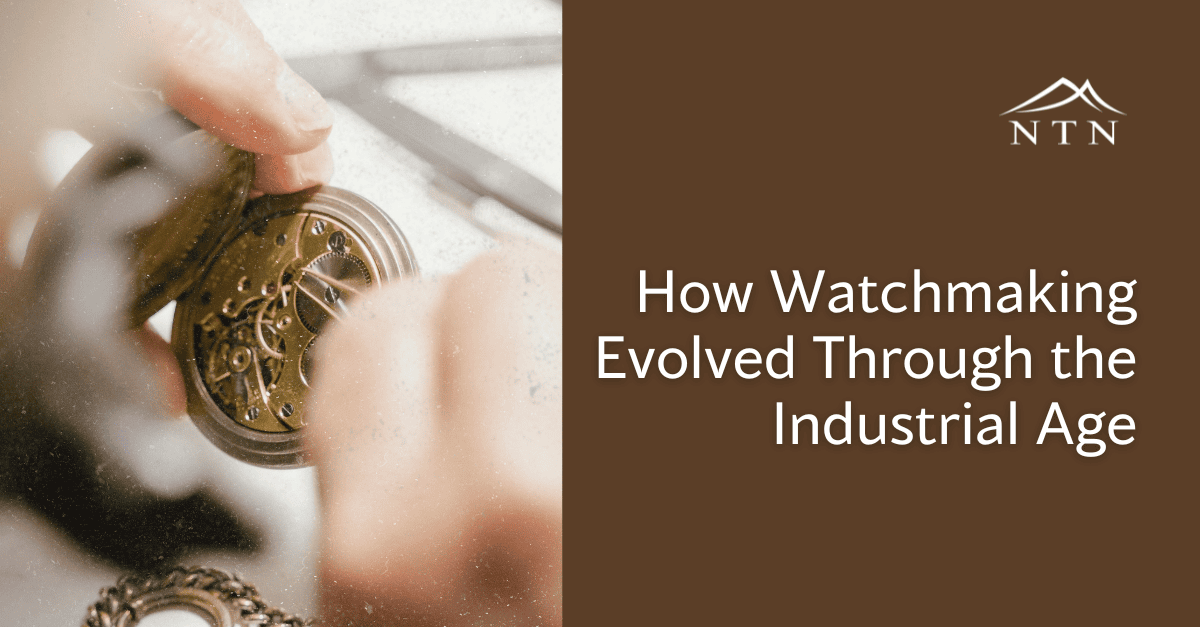
The story of watchmaking is a story of human ingenuity—of how the desire to measure time precisely transformed into an art form and an industry. While watchmaking began as a handcrafted pursuit in modest workshops, it was the Industrial Age that redefined it forever.
From the rise of factories to the birth of mass production, the Industrial Age turned watchmaking from a luxury craft into an accessible global enterprise. This transformation didn’t just reshape how watches were made—it changed how the world perceived time itself.
Watchmaking Before the Industrial Age
Before the 18th century, watches were made almost entirely by hand. Skilled artisans—often working alone or in small guilds—crafted each component meticulously. Every wheel, spring, and dial was unique.
These early watches were expensive and exclusive. Only the wealthy could afford them, and even then, they were often more decorative than reliable. Accuracy was a challenge—variations of several minutes a day were common.
The craft demanded patience, precision, and artistry. But it also had limits. Production was slow, costs were high, and consistency was nearly impossible. That all began to change with the dawn of the Industrial Revolution.
The Industrial Revolution: A Turning Point
The Industrial Revolution, beginning in the late 18th century, was a defining period for countless industries—and watchmaking was no exception.
Factories emerged, powered first by steam and later by electricity. Machines began replacing manual labor in many stages of production. This shift introduced a new concept that would change watchmaking forever: standardization.
For the first time, watch components could be produced in large quantities with identical specifications. This made assembly faster, repairs easier, and quality more predictable.
The idea of the watchmaker as a solitary artisan gave way to the image of the industrial craftsman—a worker operating precision tools, contributing to a collective process.
The Birth of Machine Precision
As machinery advanced, so did the precision of watch components. Lathes, milling machines, and stamping tools allowed manufacturers to cut gears, plates, and bridges with remarkable accuracy.
This mechanical precision meant that parts could be interchangeable—a revolutionary concept. Instead of making bespoke pieces for every repair, watchmakers could now swap out standardized components, saving time and cost.
It was the beginning of what we now recognize as modern manufacturing efficiency.
The Rise of Mass Production
By the mid-19th century, watchmaking had become one of the most technologically advanced industries of its time. Factories began producing thousands of watches each year—a scale unthinkable in previous centuries.
Mass production wasn’t just about quantity. It introduced a new focus on affordability and accessibility. Ordinary people could now own watches, not just the elite.
The pocket watch became a symbol of professionalism and punctuality—an essential accessory for workers, travelers, and businessmen. Timekeeping was no longer a privilege; it was part of everyday life.
Division of Labor and Specialization
Another major shift during the Industrial Age was the division of labor.
Instead of one craftsman building an entire watch, production was divided into specialized tasks. One worker might cut gears, another polish cases, and another assemble movements.
This specialization improved efficiency and consistency. Factories could train workers for specific roles, increasing productivity while maintaining quality control.
It also introduced a new relationship between craftsmanship and industry—a balance between human skill and mechanical precision that still defines watchmaking today.
Key Technological Breakthroughs
The Industrial Age brought several innovations that advanced watchmaking beyond craftsmanship alone.
- The Lever Escapement: This mechanism improved accuracy and durability, becoming a standard in mechanical watches.
- Jeweled Bearings: Synthetic rubies reduced friction in moving parts, extending movement lifespan.
- Keyless Winding: The introduction of the crown allowed users to wind and set their watches without separate keys.
- Improved Alloys: Stronger metals made springs and gears more resilient to wear and environmental changes.
These developments didn’t just refine timekeeping—they marked the transition from artistry to engineering.
The Role of Railroads in Watchmaking Progress
One of the most unexpected drivers of watchmaking innovation during the Industrial Age was the railroad industry.
As trains became central to commerce and travel, precise timekeeping became critical. Inconsistent watches could mean catastrophic scheduling errors and accidents.
This demand led to the creation of railroad-grade watches—highly accurate timepieces tested for precision and reliability. These watches set new standards for performance, inspiring improvements across the entire industry.
The Shift from Pocket Watch to Wristwatch
While pocket watches dominated the 19th century, the transition to wristwatches began in the early 20th century—an evolution built on the foundations of industrial manufacturing.
The efficiency of mass production made it possible to experiment with new designs and smaller movements. When soldiers in World War I started strapping watches to their wrists for convenience, manufacturers quickly adapted.
After the war, wristwatches became symbols of modernity and practicality. The industrial infrastructure was already in place to meet this growing demand.
The Globalization of Watchmaking
The Industrial Age also marked the start of globalized watchmaking.
Factories and suppliers began collaborating across borders. Components could be sourced from specialized workshops around the world, then assembled in central facilities.
This international exchange of ideas and materials accelerated innovation. The industrial watch became a truly global product—combining craftsmanship traditions from Europe with emerging manufacturing techniques from America and Asia.
The Balance Between Craft and Industry
As machines took over much of the production process, traditional watchmaking didn’t disappear—it evolved.
Master watchmakers turned their focus to finishing, assembly, and innovation. They became the guardians of artistry in an increasingly industrial world.
Even as automation made watches more affordable, handcrafted pieces remained symbols of prestige and skill. The Industrial Age didn’t replace craftsmanship—it redefined its purpose.
The Legacy of the Industrial Age in Modern Watchmaking
The influence of the Industrial Age is still visible in every modern watch.
Precision machining, interchangeable components, and scalable production all stem from industrial principles introduced more than two centuries ago.
Even digital and smartwatches owe their existence to the same lineage—devices built on the shoulders of industrial engineering and human craftsmanship.
In today’s world, watchmaking continues to balance technology and tradition. Factories use computer-controlled machines to achieve microscopic precision, while artisans still hand-assemble and finish movements with care.
Modern watches are living proof of what the Industrial Age made possible: the harmony between mass production and human artistry.
How the Industrial Age Shaped Watch Design
Beyond mechanics, the Industrial Age also influenced aesthetics.
The efficiency of production introduced simpler, functional designs—clean dials, legible numerals, and standardized sizes. This minimalist approach still defines many watch styles today.
At the same time, industrial materials like steel and glass replaced luxury metals in everyday models, making watches durable, practical, and stylish.
The idea of a “tool watch”—a rugged, functional timepiece designed for specific purposes—was born from this era’s engineering mindset.
The Social Impact of Accessible Timekeeping
Perhaps the most profound change brought by industrial watchmaking was social.
Timekeeping became democratized. Workers could manage their schedules, trains could run on time, and industries could coordinate production efficiently.
The watch became more than a personal accessory—it was a symbol of discipline, progress, and reliability. The Industrial Age didn’t just change how watches were made; it changed how society valued time itself.
From Industrial Precision to Modern Innovation
The Industrial Age laid the groundwork for everything that followed: quartz technology, digital watches, and today’s smartwatches.
Each new innovation builds on the same foundation—precision manufacturing, scalability, and the pursuit of accuracy.
Today’s watchmakers combine centuries-old craftsmanship with cutting-edge tools, continuing the legacy of innovation born during the Industrial Age.
Final Thoughts
The evolution of watchmaking through the Industrial Age is more than a story about machines—it’s a story about progress, creativity, and human ambition.
What began as handcrafted artistry transformed into a global industry that continues to push boundaries. From pocket watches in the 1800s to connected smartwatches today, every timepiece carries the spirit of that industrial innovation.
If you appreciate how craftsmanship and technology intertwine in modern watchmaking, explore NTN’s official collection.


