


Blog
The Influence of Space Exploration on Watch Design

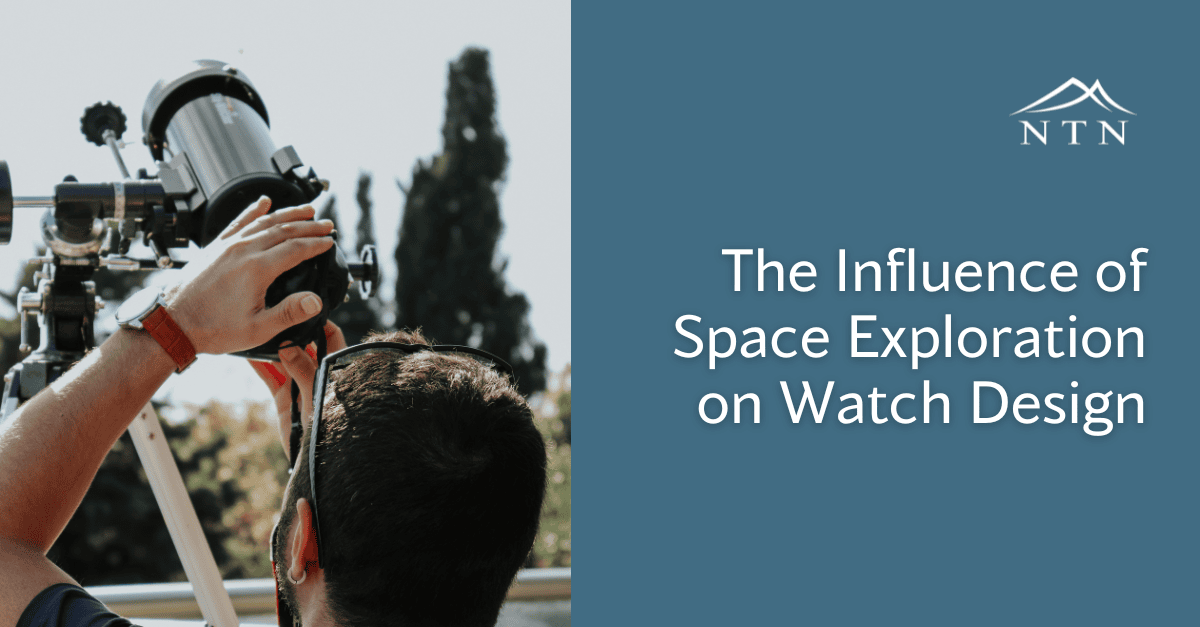
When humans first traveled into space, we didn’t just explore new worlds—we changed how we built the tools that helped us get there. One of those tools was the wristwatch.
Space exploration has had a big impact on watch design. It pushed watchmakers to make timepieces stronger, more precise, and more reliable than ever before. The lessons learned from space missions continue to shape how watches are made today.
How It All Began
The connection between watches and space started during the space race in the 1960s. Astronauts needed watches that could survive extreme conditions—intense heat, freezing cold, zero gravity, and total vacuum.
Normal watches couldn’t handle that. They fogged up, stopped running, or broke under pressure. So watchmakers began designing timepieces tough enough for space missions—watches that could keep perfect time in places where every second mattered.
These “space watches” became tools of survival, not just accessories.
Designing Watches for the Unknown
Building a watch for space is very different from building one for Earth. It must work in zero gravity, survive radiation, and handle huge temperature swings—from below freezing to over 100°C.
To do this, engineers changed how watches were made. They used special oils that wouldn’t dry up in a vacuum, created tougher cases, and improved seals to stop air leaks.
Automatic watches, which wind themselves using wrist movement, weren’t practical in space because astronauts float. So manual and battery-powered watches became the standard.
These challenges led to innovations that made watches more accurate and durable for everyone—not just astronauts.
Accuracy That Could Save Lives
In space, time isn’t just about keeping track—it’s about survival. Every maneuver and every mission step is timed down to the second.
This demand for precision pushed watchmakers to improve accuracy and reliability. They began testing watches more rigorously and adjusting movements to perform perfectly under stress.
Quartz technology, which uses a vibrating crystal to regulate time, became popular because of its stability and precision. It was ideal for space missions and eventually became standard for everyday watches on Earth.
Materials Made for Space
Space exploration also changed what watches are made of. Materials like titanium, ceramics, and sapphire crystal—now common in modern watches—were developed or perfected for aerospace use.
Titanium is strong but lightweight, perfect for both spacecraft and watches. Sapphire crystal is incredibly scratch-resistant and clear, while ceramics can handle heat and wear better than steel.
Even something simple like the strap changed. Astronauts used Velcro to secure their watches easily over bulky spacesuits. That idea inspired adjustable, durable straps that are now used in sports and outdoor watches.
Form Follows Function
Space exploration taught designers a key lesson: function comes first. Watches built for astronauts had to be easy to read, easy to use, and impossible to break.
This led to big, clear dials, bold numbers, and luminous hands that could be seen in darkness. Chronographs—watches that measure elapsed time—became essential for timing mission events.
These practical designs later influenced everyday watches, giving rise to the clean, professional styles we still see today.
Testing to the Extreme
Before a watch could be worn in space, it had to survive tough testing. Engineers put watches through vibration, shock, vacuum, and temperature trials to mimic the conditions of launch and orbit.
Only the strongest and most reliable watches passed. Those that did became legends in watchmaking, proving that mechanical craftsmanship could handle the harshest environments imaginable.
This level of testing continues today. Many modern watches are built and tested to standards first developed for space missions.
Technology That Came Back to Earth
The technology developed for space didn’t stay there. It changed the entire watch industry.
Advances in materials, precision engineering, and testing improved watches across the board. Digital and quartz watches benefited from aerospace research, using microchips and energy-efficient components originally designed for spacecraft.
Even features like anti-magnetic movements, shock protection, and temperature resistance have their roots in the demands of space travel.
Watches Inspired by the Cosmos
Space didn’t just influence how watches work—it also inspired how they look. Many modern watches borrow design elements from space exploration: dark dials that resemble the night sky, cases shaped like spacecraft instruments, and modern, futuristic finishes.
Collectors love these details because they capture the spirit of exploration. Wearing such a watch feels like wearing a piece of history—a reminder of how far human curiosity can take us.
Solving the Zero-Gravity Challenge
One interesting challenge was how watches behave in zero gravity. Mechanical watches depend on gravity to regulate movement, so engineers had to make adjustments to keep them accurate in space.
They redesigned balance wheels, improved shock protection, and tested movements on flights that simulated weightlessness. These improvements not only helped astronauts but also made watches on Earth more stable and reliable.
The Legacy of Space-Age Innovation
The space race left a lasting mark on watchmaking. The pursuit of perfection led to stronger cases, better materials, and movements that could survive anything.
Today’s watches still carry that legacy. Whether it’s a pilot’s chronograph, a diving watch, or a classic everyday piece, many of their features—durability, water resistance, legibility—come from lessons learned in space.
Even multifunction watches with sensors for altitude, pressure, and temperature owe their origins to the needs of astronauts.
Watches as Symbols of Exploration
Watches that went to space became more than tools—they became symbols. They represented human achievement, courage, and precision.
Collectors still seek out models linked to historic missions, not just for their design but for their story. These watches remind us that timekeeping is part of humanity’s greatest adventures.
When you wear a space-inspired watch, you wear a piece of that legacy.
The Continuing Connection Between Space and Watches
The bond between space exploration and watchmaking continues to grow. As we plan missions to the Moon, Mars, and beyond, watchmakers are once again preparing for the unknown.
They’re experimenting with new materials, smarter systems, and even watches that can withstand radiation and long-term space travel.
Brands like NTN share this same passion for precision and innovation—creating timepieces that are durable, dependable, and inspired by exploration.
Final Thoughts
The influence of space exploration on watch design is a story of human creativity and progress.
Every challenge faced by astronauts pushed watchmakers to innovate—to make timepieces that could survive anywhere. The result is the modern watch: tough, precise, and timeless.
When we look at a well-crafted watch today, we’re seeing more than metal and gears. We’re seeing the spirit of exploration and the belief that even in the vastness of space, time still matters.
As humanity continues to explore beyond Earth, our watches will continue to evolve—following us wherever we go, one tick at a time.


