


Blog
Mechanical vs Automatic Watches: What Each Really Is and How To Choose

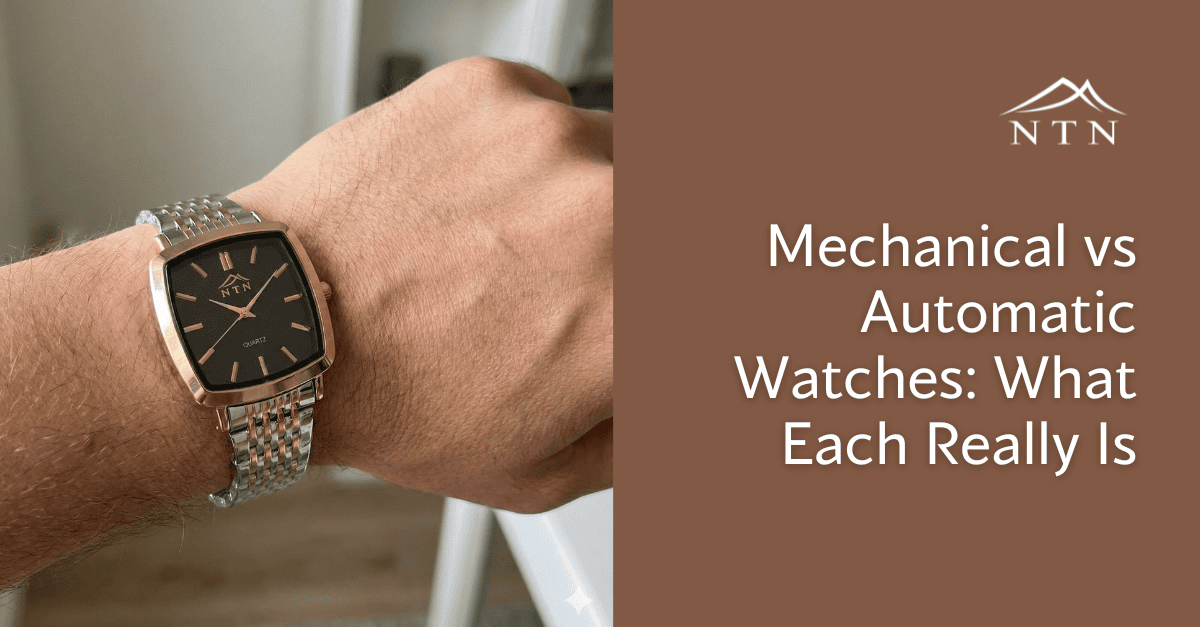
If you’ve searched for “mechanical vs automatic watch meaning,” you’re already asking the right question. The short version is simple: every automatic watch is mechanical, but not every mechanical watch is automatic. Mechanical describes the engine (a mainspring, gears, escapement, balance wheel). Automatic describes how that engine gets energy (by winding itself as you move, using a rotor).
The long version—the one that helps you buy with confidence—shows how each type behaves on the wrist, what accuracy you can realistically expect, how maintenance works, and which one fits your daily routine. Let’s keep it clear, factual, and practical.
Mechanical vs Automatic: The Definitions That Matter
A mechanical watch runs without a battery. You store energy in a coiled mainspring; the movement releases that energy in controlled pulses to drive the hands. It’s a miniature machine that turns potential energy into timekeeping.
- Manual‑Wind Mechanical: You turn the crown to wind the mainspring. The watch runs until the power reserve is used up—often a day or two—then you wind again.
- Automatic Mechanical: The same machine at heart, but a semicircular rotor spins with wrist movement to wind the mainspring automatically. Most modern automatics also hand‑wind for a quick start.
So when you compare “mechanical vs automatic,” you’re really comparing manual‑wind versus self‑winding mechanical. The heartbeat is the same; only the refuel system differs.
How the Mechanism Works (In Human Terms)
Inside the case, a mainspring stores energy. That energy passes through a gear train to the escapement, which meters it out in tiny steps. The balance wheel and hairspring oscillate back and forth, setting the pace. Each oscillation lets the escapement deliver a controlled push, advancing the hands.
In an automatic, the rotor spins on a pivot as you move. A clutch system turns that spin into winding while preventing overwinding when the spring is full. Wear the watch and it stays energized; set it down and it will run until the power reserve empties, then stop. Wind the crown or move your wrist to bring it back.
What You’ll Notice Day to Day
Manual‑wind invites a small, intentional routine. A dozen or so gentle turns each morning, a brief glance at the time, and you’re set. If you enjoy a tangible connection with your watch, this suits you.
Automatic prefers to disappear into your habits. Put it on and go. Your movement keeps it wound. If you rotate watches or leave it off for a weekend, it might stop; a quick wind or a few wrist turns revives it.
Neither is categorically “better.” Manual‑wind leans into engagement. Automatic leans into ease. Both deliver the craft and longevity of mechanical watchmaking.
Accuracy: Honest Expectations
Mechanical accuracy is measured in seconds per day. Well‑regulated movements can be impressively consistent, but they will not match quartz. Expect small daily variation that averages out with regular wear.
Several factors influence rate:
- Regulation quality and movement design
- Resting position overnight (dial up vs crown up)
- Temperature changes and daily activity
- Shocks from knocks or drops
The goal is stable behavior you can predict. If a watch consistently runs outside its expected window, a watchmaker can regulate it. That’s routine, not a red flag.
If set‑and‑forget precision is your priority, quartz is the practical answer. If you value the feeling of a living mechanism, mechanical is the category you want.
Power Reserve: The “Fuel Tank” That Sets Your Rhythm
Power reserve tells you how long the watch runs after a full wind. Many mechanicals sit around 38–42 hours; modern designs often deliver about 60 hours or more.
- Manual‑Wind: Reserve dictates your winding cadence—typically once a day, sometimes every other day.
- Automatic: Reserve decides how long it runs off the wrist during weekends or rotations. Longer reserves mean fewer resets.
If you wear one watch most days, reserve fades into the background. If you rotate often, a longer reserve is convenient.
Features That Change Usability and Feel
Hacking Seconds
This stops the seconds hand when you pull the crown, so you can set the time to the second. Not essential, but handy.
Hand‑Winding on Automatics
Even self‑winding watches benefit from a quick crown wind to jump‑start after a stop or to top up in the morning for stability.
Beat Rate (vph)
Common rates include 21,600 and 28,800 vibrations per hour. A higher rate can smooth the seconds hand and support stability, but it’s not an absolute quality score. Overall design and regulation matter more.
Water Resistance: Determined by the Case, Not the Winding Style
Movement type doesn’t decide water safety. Case engineering and gasket health do. The rating on the case back (e.g., 3ATM, 5ATM, 10ATM) defines the safe envelope. Keep the crown fully pushed or screwed down. Avoid hot showers and steam unless the watch and seals are explicitly built and maintained for it. Rinse with cool fresh water after salt or pool exposure.
Seals age. Pressure testing and gasket refreshes keep the rating honest—no matter the winding style.
Magnetism, Shocks, and Everyday Realities
Magnets are common in speakers, bag closures, laptop lids, and some phone cases. Magnetism often makes a mechanical watch run fast. The fix—demagnetization—is quick and noninvasive.
Shocks from drops can nudge regulation or damage pivots, even with shock protection. Normal daily wear is fine; repeated hard knocks are not.
Temperature swings are usually okay. Extremes can temporarily shift the rate until the watch returns to normal conditions.
Complications You’ll Actually Use
Complications are functions beyond hours, minutes, seconds. Choose deliberately:
- Date or Day‑Date: Practical for daily life.
- GMT/Dual Time: Useful for travelers and remote teams.
- Power Reserve Indicator: Especially helpful on manual‑wind.
- Chronograph: Adds utility and presence; consider thickness and service implications.
Each complication adds parts and often height. A clean, legible dial tends to wear best and age well.
Manual‑Wind vs Automatic: Pros You Can Feel
Manual‑Wind Advantages
Often slimmer because there’s no rotor, which helps under cuffs and improves comfort. The daily wind becomes a quiet, satisfying moment of control. Power reserve indicators are common and useful.
Manual‑Wind Considerations
You must wind regularly. If you forget, it stops, and you’ll reset time and date more frequently if you rotate watches.
Automatic Advantages
Convenience. Wear it and it winds. You still have hand‑winding for a quick start. A good option if you prefer a watch that simply gets on with the day.
Automatic Considerations
Typically a bit thicker due to the rotor. If you’re very sedentary, you may still want to hand‑wind in the morning. Some people notice rotor sensation; many enjoy that hint of life.
There’s no universal winner—only the one that fits your routine and preferences.
Service and Longevity: Built To Be Kept
Mechanical watches are designed for maintenance. Oils dry, seals flatten, parts wear. Servicing every 3–7 years (adjust for climate and use) refreshes lubricants, replaces gaskets, checks for wear, and restores performance. Treat a mechanical well and it can run for decades.
Signals it’s time for service:
- Noticeable accuracy drift beyond norms
- Shortened power reserve
- Rough or gritty winding
- Any moisture or fog under the crystal
Setting and Wearing: A Simple Routine That Works
If the watch has stopped, wind 10–20 turns to seat the mainspring. Set the time. If the seconds hand hacks, synchronize at the top of the minute. Push or screw the crown fully in—this is your primary seal against dust and moisture.
Avoid changing the date during the typical “danger window” (late evening to early morning) unless the movement allows it. When unsure, move the hands past 6 a.m., set the date, then set the time.
Store in a dry place away from strong magnets. A small watch box beats a desk surface.
Getting Your Best Accuracy
Mechanical watches show positional variance: dial‑up may differ slightly from crown‑down. You can “self‑regulate” by resting the watch at night in a position that nudges a small daily gain or loss back toward center. It’s an old trick that still helps.
If the watch is consistently outside expected performance, a watchmaker can regulate it. This is standard care, not a defect.
Do You Need a Watch Winder?
A winder is optional convenience. It’s useful for complex calendars you don’t want to reset. For simple time/date watches, restarting with a few crown turns is quick and gentle. If your day is very desk‑bound and your automatic tends to run low, a quick morning wind stabilizes the rate.
Comfort and Fit: The Part You Notice Every Hour
Comfort depends on more than diameter. Pay attention to:
- Lug‑to‑lug length so lugs don’t overhang your wrist
- Thickness for sleeve comfort
- Weight balance between head and strap/bracelet
Size bracelets to avoid flop; a stable watch winds more consistently and feels lighter. Choose strap materials for your climate and routine—leather for dress, steel for versatility, rubber or fabric for heat and activity.
When the fit is right, you’ll wear the watch more—and enjoy it more.
Sustainability and Ownership
A mechanical watch is repairable. That makes it a thoughtful choice in a world of disposable electronics. Maintaining it keeps waste down and continuity up. Quartz remains the accuracy leader; mechanical is the durable companion. Both have their place. The key is buying something you’ll keep.
Choosing Between Mechanical vs Automatic Watch Meaning for Your Life
Start with your routine. If you enjoy small rituals and like slim cases, manual‑wind is a natural fit. If you prefer minimal involvement and ease, automatic is straightforward.
Then sanity‑check the fundamentals:
- Legibility you like using, day and night
- Comfortable case size, thickness, and lug‑to‑lug
- Water resistance that matches your environment
- A movement with a reliability track record and accessible service
- A design you’ll still want next year
When the essentials are right, dial textures, finishing details, and color choices become the tie‑breakers.
If you want a clean way to compare thoughtful designs and practical specs side by side, explore a curated selection on NTN’s official website. It’s an easy way to see how self‑winding and manual‑wind approaches translate into everyday watches.
Common Myths, Clarified
“Automatic Is More Accurate Than Manual.”
No. Both are mechanical and regulated by the same principles. Movement design and regulation—not the winding method—drive accuracy.
“Automatics Are Safer in Water.”
Water resistance is about case construction and gasket condition. The rotor doesn’t change that equation.
“You Need a Winder for an Automatic.”
Not required. A winder is convenience, especially for complex calendars. For simple watches, hand‑winding and a quick set work well.
“Magnetism Permanently Ruins a Watch.”
Usually not. Demagnetization is fast and restores normal running in most cases.
“Manual‑Wind Is Outdated.”
It’s classic, not obsolete. The thinness and daily wind are advantages many owners enjoy.
Care That Adds Years With Minimal Effort
Keep the crown fully secured after setting. Avoid hot showers and saunas unless your watch is rated and maintained for heat and steam. After salt or pool exposure, rinse with cool fresh water and dry gently. Wipe sweat and sunscreen with a soft cloth. Avoid strong magnets. If you drop the watch and see accuracy change, have it checked.
Schedule gasket checks periodically. Plan full movement service when accuracy drifts notably, power reserve shortens, or winding feels rough.
Quick Answers to “Mechanical vs Automatic Watch Meaning”
Is an automatic watch mechanical?
Yes. Automatic is a type of mechanical watch. The difference is self‑winding via a rotor.
Which is more accurate—manual or automatic?
Neither inherently. Both rely on the same regulating system. Specific movement design and regulation decide performance.
Do mechanical watches need batteries?
No. They run on energy stored in a wound mainspring.
How often should I wind a manual‑wind watch?
Usually once a day, depending on power reserve. You’ll feel resistance increase as the spring fills.
How long will a mechanical run off the wrist?
Check the power reserve. Many run 38–42 hours; many modern movements reach about 60 hours or more.
Do I need a winder for my automatic?
No. It’s optional. Crown winds and a quick set are simple and gentle.
Can I swim with a mechanical watch?
Only if the case rating supports it and seals are maintained. Movement type doesn’t determine water suitability.
What is hacking seconds?
A feature that stops the seconds hand when setting the time, useful for precise synchronization.
Why does my mechanical gain or lose a few seconds daily?
That’s normal. Consistency is key. If drift becomes large or erratic, regulation helps.
When should I service?
Roughly every 3–7 years depending on use and climate, or sooner if you see condensation, rough winding, reduced reserve, or big accuracy changes.
Final Thoughts
Mechanical vs automatic isn’t a rivalry. It’s a choice between two expressions of the same craft. Manual‑wind offers a slimmer profile and a satisfying daily touchpoint. Automatic delivers the same mechanical heart with self‑winding convenience. Both reward simple care with decades of service.
Pick the one that fits your days. Wear it well. Keep it maintained. And when you want a straightforward place to compare movement types, water resistance, and everyday usability, browse contemporary pieces on NTN’s official site. It’s a clear, practical way to turn understanding into a confident choice.


