


Blog
How a Tachymeter Works in a Watch (and Why It Matters)

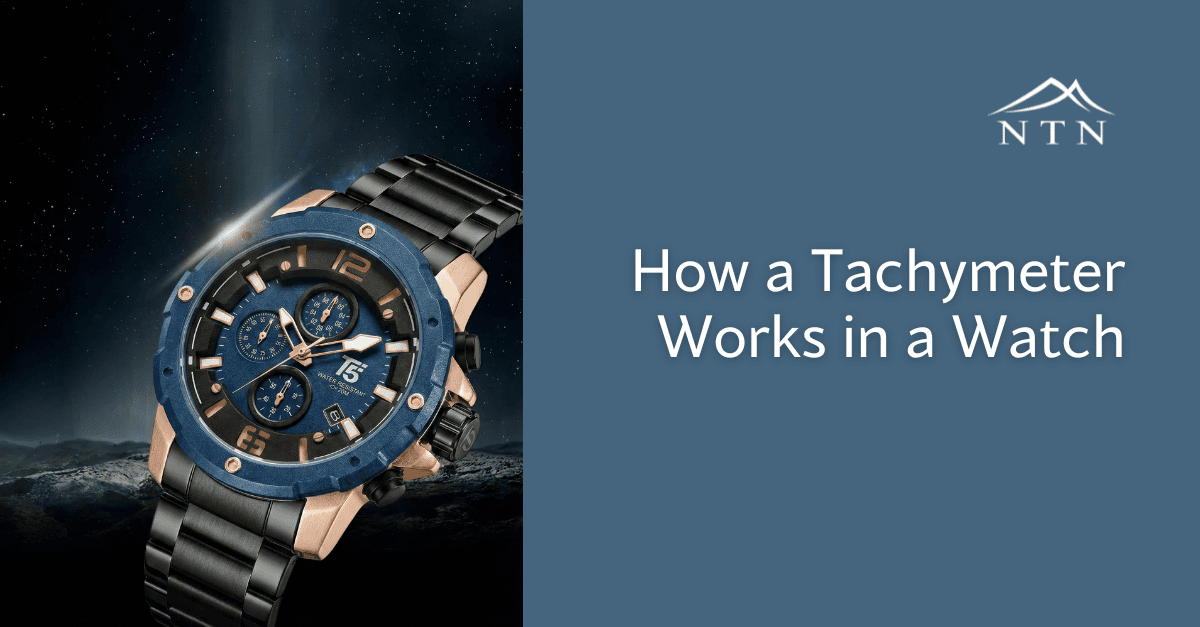
If you’ve ever admired a chronograph watch and noticed numbers circling the outer rim—like 60, 120, 400—you’ve been looking at a tachymeter scale. It’s one of the most fascinating and functional features ever added to a wristwatch, yet it’s also one of the least understood.
A tachymeter isn’t just decoration. It’s a tool—a simple but powerful way to measure speed, distance, or even production rate, all using the chronograph (stopwatch) function of your watch.
This article will explain how a tachymeter works in a watch, how it’s used in automatic tachymeter watches, and why this feature still matters in the age of smartphones and GPS.
What Is a Tachymeter?
In the simplest terms, a tachymeter is a scale found on the bezel or dial of a chronograph watch that converts elapsed time into speed.
It’s calibrated to show how fast something is moving over a fixed distance—typically one kilometer or one mile—based on how long it takes to cover that distance.
All you need is the chronograph hand (the stopwatch second hand) and the tachymeter scale. Together, they let you calculate speed without any additional tools or electronics.
While it might sound technical, the concept is elegantly straightforward.
The History Behind the Tachymeter
The tachymeter’s roots go back to the early 20th century, when chronograph watches became essential tools for pilots, race car drivers, and engineers.
Before digital instruments and radar, professionals needed a way to measure speed manually. The tachymeter scale was the answer—paired with a mechanical chronograph, it allowed precise, real-time calculations.
Its popularity soared in the 1950s and 60s during the golden age of motorsport, when drivers relied on tachymeter-equipped watches to track lap speeds and performance. Even today, it remains a hallmark of sporty chronographs and a symbol of mechanical ingenuity.
How a Tachymeter Works in a Watch
A tachymeter works by using a mathematical relationship between time and speed:
Speed = Distance ÷ Time
The scale is designed so that when you measure how many seconds it takes to travel one unit of distance (say one kilometer), the tachymeter reading directly shows your speed in units per hour (kilometers per hour or miles per hour).
Here’s the process in plain terms:
- Start the chronograph when the object begins moving.
- Stop it when it has traveled exactly one kilometer (or one mile).
- Read the number on the tachymeter scale where the seconds hand stopped.
That number is the average speed over that distance.
For example, if your car covers one kilometer in 30 seconds, the seconds hand will point to 120 on the scale—meaning your average speed is 120 km/h.
If it takes 20 seconds, it’ll point around 180, showing 180 km/h.
The scale is logarithmic, meaning the spacing between numbers changes to fit the entire range (typically from 60 to 400 or higher) around the bezel.
That’s the beauty of the tachymeter—it translates time into speed instantly, without any math.
Understanding the Calibration
Most tachymeters are calibrated for one-hour measurement intervals. This means the scale assumes the event being timed fits into one minute.
If an event takes longer than 60 seconds, the scale becomes less practical. However, you can still use the tachymeter creatively by adjusting what your “unit distance” means.
For example, if you measure how long it takes to produce 10 units of something, the tachymeter can tell you how many units per hour are being made.
It’s not limited to racing or travel—it can measure anything that happens repeatedly over time.
The Role of the Chronograph
A tachymeter doesn’t function on its own—it relies on the chronograph mechanism of the watch.
The chronograph is essentially a stopwatch built into the timepiece, operated by pushers on the side of the case. Press one button to start timing, another to stop, and a third (if present) to reset.
When you start the chronograph, the central seconds hand begins moving independently of the regular timekeeping hands. This is the hand you use with the tachymeter scale to take readings.
In mechanical or automatic tachymeter watches, the chronograph mechanism is powered by gears and levers rather than electronics. That’s part of what makes these watches so fascinating—they combine craftsmanship, precision, and functionality in one design.
Tachymeter Watches: Mechanical vs Automatic
Let’s clarify a common confusion: both mechanical and automatic watches can have tachymeter functions. The difference lies in how they’re powered.
A mechanical tachymeter watch must be manually wound by turning the crown to store energy in the mainspring.
An automatic tachymeter watch, on the other hand, winds itself using the motion of your wrist. Inside the case, a small rotor spins as you move, keeping the spring tensioned and the chronograph ready.
Functionally, both types perform the same tachymeter calculations. The automatic version simply offers more convenience—it keeps running as long as you wear it regularly.
That’s why many modern enthusiasts prefer tachymeter watch automatic models: they blend the traditional appeal of mechanical craftsmanship with the ease of daily wear.
How to Use a Tachymeter Step-by-Step
Here’s a practical example of how to use a tachymeter in everyday life:
Imagine you’re driving down a highway with kilometer markers.
- Start the chronograph as you pass the first marker.
- Stop it as you reach the next marker.
- Check the scale where the seconds hand points.
If it stopped at 20 seconds, the bezel reading of 180 means you’re averaging 180 km/h.
If it took 45 seconds, the reading of about 80 means 80 km/h.
You can apply the same method to cycling, sailing, or even running—any activity where you can measure distance and time.
Beyond Speed: Other Uses of a Tachymeter
Although designed for measuring speed, the tachymeter can do much more.
You can use it to calculate production rates (like how many units are made per hour), processing speeds, or flow rates—essentially any event that occurs repeatedly over time.
For example, if a factory machine produces 100 parts in 40 seconds, the tachymeter can tell you how many parts per hour that equals.
It’s a simple analog calculator, and that versatility is what keeps it relevant long after the invention of digital timers.
Why Tachymeters Still Matter Today
In an age of GPS tracking and smartphones, you might wonder why tachymeters still exist. The answer is part practicality, part heritage.
For many, the tachymeter represents a link to the golden era of mechanical engineering—when watches weren’t just accessories but essential instruments.
Even if you never use it to measure speed, the tachymeter reflects the spirit of precision and adventure. It’s a reminder that timekeeping is about more than just hours and minutes—it’s about understanding motion, distance, and purpose.
That’s why tachymeter watches remain popular among collectors, pilots, and motorsport enthusiasts. They’re timeless symbols of utility and design.
The Beauty of Automatic Tachymeter Watches
An automatic tachymeter watch embodies the best of both worlds: mechanical artistry and real-world function.
It runs without batteries, powered solely by motion, and yet performs complex calculations with a simple movement of your hand.
You can feel the mechanical heartbeat through the caseback, see the chronograph hands dance across the dial, and watch the tachymeter scale transform time into speed.
It’s a feature that turns a watch into an instrument of measurement—something alive, precise, and deeply human.
If you value craftsmanship that blends purpose with personality, exploring a brand like NTN’s official website is a good place to start. Their designs reflect this same philosophy of balanced engineering and elegance.
Common Misunderstandings About Tachymeters
One misconception is that a tachymeter can measure any speed instantly, regardless of distance or time. In reality, it only works correctly when measuring a fixed, known distance, typically one kilometer or mile.
Another is that it’s just decorative. While many modern watches include a tachymeter for aesthetic reasons, the scale still functions perfectly when paired with an accurate chronograph.
Lastly, some assume it’s complicated to use—but once you understand the relationship between time and speed, it becomes second nature.
Caring for Your Tachymeter Watch
Because tachymeter watches often feature intricate chronograph movements, they benefit from a bit of care.
Keep the pushers dry if the watch isn’t water-resistant, and avoid operating the chronograph underwater. Regular servicing—typically every 3 to 5 years—helps keep the timing mechanism and tachymeter calibration accurate.
Also, remember that an automatic tachymeter watch stays wound through movement. If you store it for long periods, consider using a watch winder to maintain the mechanism’s rhythm.
These small habits preserve both the accuracy and longevity of your watch.
The Timeless Appeal of the Tachymeter
A tachymeter is more than a scale—it’s a conversation between time and motion. It connects the wearer to an era when precision was measured by skill, not software.
Whether sitting on the wrist of a racing driver or a watch enthusiast, it represents the same thing: mastery of time through mechanical ingenuity.
Even as technology evolves, the tachymeter endures as a functional reminder of what makes analog watches special—the ability to turn raw time into something measurable, tangible, and deeply human.
Final Thoughts
Understanding how a tachymeter works in a watch reveals just how intelligently simple mechanical design can be. It transforms your watch from a timekeeper into a tool for measuring speed, efficiency, and rhythm.
And when paired with an automatic movement, it becomes even more meaningful—a mechanism powered by motion, designed to measure motion.
Whether you’re fascinated by horology or simply appreciate thoughtful engineering, a tachymeter watch reflects precision, purpose, and timeless style.


