


Blog
The Fascinating History of Wristwatches: From Pocket to Wrist

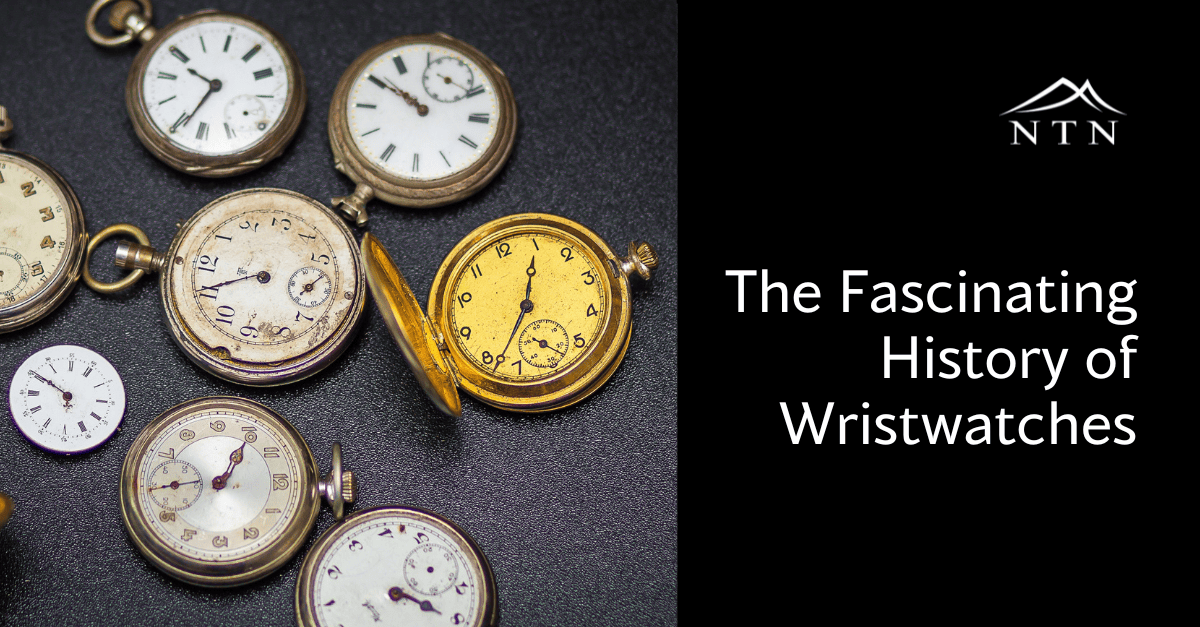
Every time you glance at your wrist to check the time, you’re looking at centuries of evolution in design, technology, and craftsmanship. Watches weren’t always worn on wrists. In fact, the history of wristwatches is a story of invention, war, fashion, and precision that transformed how humans measure and experience time.
This journey—from bulky pocket watches to sleek smartwatches—reveals how necessity and artistry worked hand in hand to create one of the world’s most enduring accessories.
From Sundials to Pocket Watches
Before wristwatches existed, people relied on sundials, water clocks, and pendulum mechanisms to track time. Portable timekeeping didn’t appear until the 16th century, when early clockmakers began miniaturizing clocks into small, spring-driven devices.
The first portable watches were worn as pendants or attached to clothing. By the 17th century, they became known as pocket watches—delicate, hand-wound instruments enclosed in protective cases. These were prized possessions, often carried by nobility and artisans who valued craftsmanship as much as function.
The pocket watch defined timekeeping for more than 300 years. It was a symbol of sophistication—a personal statement as much as a practical tool.
The Birth of the Wristwatch
The idea of wearing a watch on the wrist didn’t immediately gain popularity. In the 19th century, wristwatches were considered feminine accessories, often worn by women as jewelry rather than instruments of precision.
Men, on the other hand, continued to favor pocket watches, which were seen as more masculine and traditional. That changed dramatically in the early 20th century, thanks to one key influence: war.
Wristwatches in Military History
During the late 1800s and early 1900s, soldiers and aviators found pocket watches impractical in battle. Retrieving a watch from a vest pocket while handling a weapon or aircraft was inefficient and dangerous.
To solve this, soldiers began strapping pocket watches onto their wrists using leather bands. These makeshift wristwatches allowed them to check the time quickly while keeping their hands free.
By World War I, the wristwatch had become standard military equipment. Armies realized synchronized timing was critical for coordinated attacks and navigation. Manufacturers began producing rugged, luminous wristwatches specifically designed for soldiers.
What started as a battlefield necessity soon became a global trend. After the war, returning soldiers continued wearing their wristwatches, cementing their image as practical, masculine, and modern.
The Wristwatch Becomes a Fashion Essential
By the 1920s, wristwatches had transitioned from military tools to mainstream fashion. Watchmakers began creating smaller, more elegant cases for both men and women.
The designs became more refined—rectangular cases, slim profiles, and decorative dials reflected the Art Deco style of the era. Wristwatches were no longer just about telling time; they became symbols of taste and status.
Technological innovation also accelerated. The 1920s and 1930s saw the rise of waterproof cases, shock-resistant designs, and luminous paint for visibility in the dark.
The Rise of the Automatic Movement
Before the 1930s, most wristwatches required manual winding. That changed with the invention of the automatic (self-winding) movement, which used the motion of the wearer’s wrist to wind the mainspring.
This breakthrough made watches more convenient and reliable, especially for people who wore them daily. It also paved the way for more durable and complex mechanical designs that dominated much of the 20th century.
The automatic wristwatch became a symbol of mechanical ingenuity, blending traditional craftsmanship with practical innovation.
The Quartz Revolution
The next major shift happened in the 1970s, when quartz technology entered the scene. Instead of relying on mechanical gears and springs, quartz watches used a vibrating quartz crystal powered by a battery to keep time.
Quartz watches were far more accurate, affordable, and required little maintenance. They triggered what became known as the Quartz Revolution, reshaping the global watch industry.
Mechanical watches—once seen as the pinnacle of precision—faced fierce competition from these new electronic timepieces. However, the shift also pushed watchmakers to refine craftsmanship and focus on artistry, leading to a new era of horological excellence.
The Digital Age
As technology advanced, watches continued to evolve. The 1980s introduced digital displays, LED screens, and multifunction watches capable of showing calendars, alarms, and even calculators.
For the first time, watches were not just instruments of time—they became compact computers for the wrist. This era democratized timekeeping further, making watches accessible to a new generation of users.
Digital watches emphasized practicality, but traditional analog designs never disappeared. Many enthusiasts continued to prefer the enduring beauty and mechanical soul of analog craftsmanship.
The Smartwatch Era
The latest chapter in the history of wristwatches arrived with the smartwatch. Combining wireless connectivity, sensors, and touchscreen displays, these modern devices do far more than tell time.
Smartwatches track fitness, monitor heart rate, display notifications, and integrate seamlessly with smartphones. They represent the intersection of horology and digital innovation—a blend of technology and personal utility.
Yet, even in an age dominated by screens, traditional watches haven’t lost their appeal. Mechanical and quartz watches continue to symbolize precision, style, and heritage, proving that craftsmanship still holds value in a digital world.
How the Wristwatch Changed Culture
Wristwatches have always been more than tools—they’re reflections of culture, status, and identity.
In the early 20th century, a wristwatch signified progress and practicality. In the mid-century, it represented sophistication. Today, it’s a statement of personal style and technological preference.
Giving a watch as a gift remains deeply symbolic. It marks milestones—graduations, careers, anniversaries—and represents the idea of shared time and enduring connection.
The wristwatch, in every form, captures humanity’s desire to measure, manage, and appreciate time itself.
Key Milestones in Wristwatch Evolution
| Era | Innovation | Impact |
16th–17th Century | Early spring-driven pocket watches | Portable timekeeping becomes possible |
19th Century | Wristwatches emerge as jewelry for women | Early experimentation with form and wearability |
Early 20th Century | Wristwatches adopted by soldiers | Practical use leads to widespread acceptance |
1920s–1930s | Art Deco design and automatic movement | Blends style and mechanical innovation |
1970s | Quartz technology introduced | Increases accuracy and affordability |
1980s–1990s | Digital watches gain popularity | Expands functionality beyond timekeeping |
2000s–Present | Smartwatches enter the market | Merges technology and lifestyle in wearable form |
This timeline shows how the wristwatch evolved from a simple mechanical marvel to a digital companion that connects time with technology.
The Enduring Appeal of Wristwatches
Despite advances in technology, wristwatches remain timeless. Their appeal lies in their ability to combine function, fashion, and tradition in one small object.
Mechanical watches embody craftsmanship and heritage. Quartz watches represent precision and reliability. Smartwatches symbolize connectivity and innovation.
Each reflects a different era of human ingenuity, yet all share the same core purpose—to keep us connected to time.
Final Thoughts
The transition from pocket watches to wristwatches wasn’t just a change in design—it was a cultural shift. It mirrored society’s move toward mobility, efficiency, and self-expression.
Today, whether you wear a smartwatch or a finely crafted analog piece, you’re participating in a tradition that spans centuries. The wristwatch continues to evolve, but its essence remains the same: a companion that quietly measures moments, achievements, and stories. If you appreciate the craftsmanship and history behind timepieces, explore NTN’s official collection—a showcase of design that bridges tradition and modernity.


