


Blog
Chronograph Watches 101: Ultimate Guide to an Iconic Timepiece

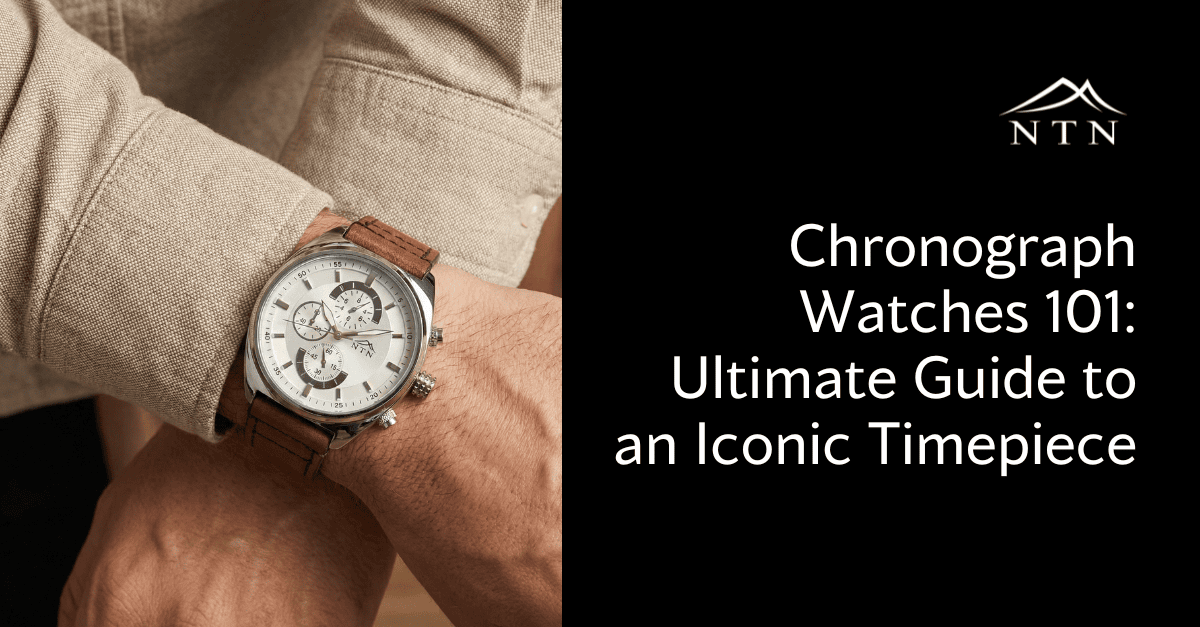
If you’ve ever browsed through watches, you’ve probably noticed some models with extra sub-dials, pushers on the side, and a slightly busier face. Those are chronographs — one of the most popular and functional types of watches ever made.
But what exactly is a chronograph watch? Is it just a stopwatch? A style choice? Or something more technical?
Let’s unpack what makes a chronograph tick, how it works, and why it continues to hold such appeal — decades after it first appeared on the wrists of aviators, drivers, and adventurers.
The Basics: What Is a Chronograph Watch?
A chronograph watch is essentially a timepiece that combines two functions: standard timekeeping and a built-in stopwatch.
The word chronograph comes from the Greek chronos (time) and graphein (to write). Early chronographs literally “wrote” time — marking elapsed seconds with ink on a dial. Modern ones are far more elegant, using mechanical or electronic systems to measure elapsed time precisely.
In simple terms:
- The main dial tells regular time.
- The chronograph mechanism measures intervals — like timing a race, a workout, or even your morning coffee brew.
Chronographs can measure anything from a few seconds to several hours, depending on the watch design.
How a Chronograph Works
A chronograph may look complex, but the operation is surprisingly intuitive once you know what each part does.
Most models feature two or three pushers (buttons) on the side of the case and sub-dials (small circles) on the watch face.
Here’s the basic flow:
- Start – Press the top pusher to begin timing.
- Stop – Press it again to stop.
- Reset – Use the bottom pusher to return all the hands to zero.
The sub-dials display elapsed time, typically showing seconds, minutes, and sometimes hours. Some watches even include a tachymeter scale on the bezel, which lets you calculate speed or distance based on elapsed time.
Despite looking complicated, this layout is designed for clarity and usability. Once you’ve used a chronograph a few times, it becomes second nature.
A Brief History of the Chronograph
Chronographs have a fascinating history rooted in precision and performance.
The first known chronograph was created in 1816 by Louis Moinet, designed for astronomical observation. Later, watchmakers refined the concept for practical use — timing horse races, scientific experiments, and eventually, motorsports and aviation.
By the mid-20th century, the chronograph had become a staple for pilots, engineers, and explorers. It was even worn in space — famously on the wrists of astronauts.
That mix of technical utility and adventurous spirit is still part of the chronograph’s charm today. It’s a blend of heritage, craftsmanship, and purpose that continues to attract collectors and casual wearers alike.
Types of Chronograph Watches
All chronographs perform the same fundamental function — measuring elapsed time — but they come in several variations, each with a unique feel and mechanism.
1. Mechanical Chronograph
Powered by intricate gears and springs, mechanical chronographs are the traditional form. They often feature column-wheel or cam-actuated systems, representing the pinnacle of watchmaking craftsmanship.
They require manual winding or are powered automatically by wrist movement.
2. Quartz Chronograph
A quartz chronograph uses a battery and electronic oscillator (regulated by a quartz crystal) to keep time. These are often more affordable and more accurate than mechanical versions.
They combine classic chronograph style with modern reliability.
3. Automatic Chronograph
An automatic chronograph is a mechanical type that winds itself automatically through wrist motion. It offers the tactile satisfaction of a mechanical watch without the need for daily winding.
4. Flyback and Split-Second Chronographs
Some high-end chronographs add advanced features:
- Flyback chronographs let you reset and restart timing instantly with one press.
- Split-second (rattrapante) chronographs measure two events simultaneously — useful for timing laps or competitors.
While these are more specialized, they show just how refined and complex chronograph engineering can become.
Why Chronographs Remain So Popular
At first glance, a chronograph might seem like an old-school tool in a digital world. But its popularity endures for good reasons.
Functionality meets style. A chronograph is practical — it can time a run, a commute, or even a steak on the grill. Yet it’s also aesthetically striking. The sub-dials and pushers give it a sporty, technical look that pairs well with both casual and formal outfits.
Symbol of craftsmanship. For many, the chronograph represents precision engineering. Even in quartz form, the layout and function nod to mechanical mastery.
Heritage appeal. Chronographs carry a sense of history — from aviation to motorsports. Wearing one connects you to that lineage of performance and purpose.
Everyday versatility. Most chronographs are built to be robust, making them reliable companions for work, travel, or adventure.
How Accurate Is a Chronograph Watch?
Accuracy depends on the movement type.
A mechanical chronograph typically varies by a few seconds per day — well within the range of high-quality mechanical watches. An automatic chronograph performs similarly.
A quartz chronograph, on the other hand, is extremely precise — often accurate to within 15 seconds per month.
Regardless of type, a well-maintained chronograph offers dependable performance for everyday timing needs.
Chronograph vs. Regular Watch: What’s the Difference?
The difference lies in complexity and capability.
A regular watch tracks time — hours, minutes, and seconds — and sometimes the date.
A chronograph watch adds an independent timing function, allowing you to measure short intervals without affecting the main timekeeping.
Think of it like your phone’s stopwatch app, but built mechanically or electronically into your wristwatch — elegant, tactile, and always ready.
Understanding the Sub-Dials on a Chronograph
Those small dials on a chronograph’s face are more than decoration. Each serves a purpose:
- Running seconds: Usually one sub-dial continuously tracks seconds.
- Elapsed minutes: One records minutes when the chronograph is active.
- Elapsed hours: Some include a third dial for longer timing intervals.
Together, these sub-dials create an intuitive layout that lets you read elapsed time at a glance.
When and How to Use a Chronograph
Using a chronograph is straightforward, but its versatility makes it surprisingly useful in daily life.
You can use it to:
- Track cooking or exercise time.
- Measure commute durations.
- Time meetings or presentations.
- Record lap times or intervals during training.
The chronograph’s tactile pushers make it satisfying to use — a mechanical interaction that feels timeless in an age of screens and touch sensors.
Caring for Your Chronograph Watch
Like any precision instrument, a chronograph benefits from care and attention.
For mechanical or automatic models, regular servicing every few years helps keep the movement clean and lubricated. Avoid exposing the watch to strong magnets or extreme temperatures.
Quartz chronographs require less maintenance, but it’s smart to replace the battery promptly when it runs low. Leaving a dead battery inside can cause corrosion.
Water resistance is another key factor — always respect the rating indicated on the case, and avoid pressing the pushers underwater unless the watch is specifically designed for it.
Keeping your chronograph clean, dry, and properly stored will ensure it performs accurately and lasts for many years.
Are Chronograph Watches Worth It?
Absolutely — though the reasons go beyond simple functionality.
A chronograph is more than a timekeeper. It’s a piece of engineering art that reflects precision, purpose, and personality.
Even if you rarely use the stopwatch function, the design and history make it a rewarding piece to own. It’s one of the few watch types that balance practical utility with enduring aesthetic appeal.
For people who appreciate subtle technicality and timeless design, a chronograph watch offers both — without the need for extravagance or excess.
Choosing the Right Chronograph
When selecting a chronograph, think about what matters most to you:
- Movement type – Do you prefer the craftsmanship of mechanical movements or the precision and convenience of quartz?
- Design style – Clean and minimal, or bold and detailed?
- Size and comfort – Chronographs can be larger due to their mechanisms, so find one that feels right on your wrist.
- Features – Basic timing or advanced options like flyback or tachymeter?
Ultimately, the best chronograph is the one that fits your lifestyle and makes you enjoy wearing it every day.
If you’re interested in exploring thoughtfully designed timepieces that combine practicality with refined craftsmanship, you can discover more at NTN’s official website. Their collection highlights how timeless design and modern reliability can coexist beautifully.
Final Thoughts
The chronograph has survived centuries of innovation for one simple reason — it remains both useful and inspiring.
It’s a tool that connects us to a time when precision mattered deeply, yet it still fits seamlessly into modern life. Whether you wear it for its engineering, its heritage, or its bold aesthetics, a chronograph watch brings character to your wrist.
Understanding what a chronograph watch is helps you see it not just as a timepiece, but as a symbol of human ingenuity — a testament to how form and function can coexist gracefully.
In a world full of fleeting trends, a chronograph remains a steady companion — precise, purposeful, and quietly enduring.


