


Blog
A Beginner’s Guide to Watch Winders: What They Do and Why You Need One

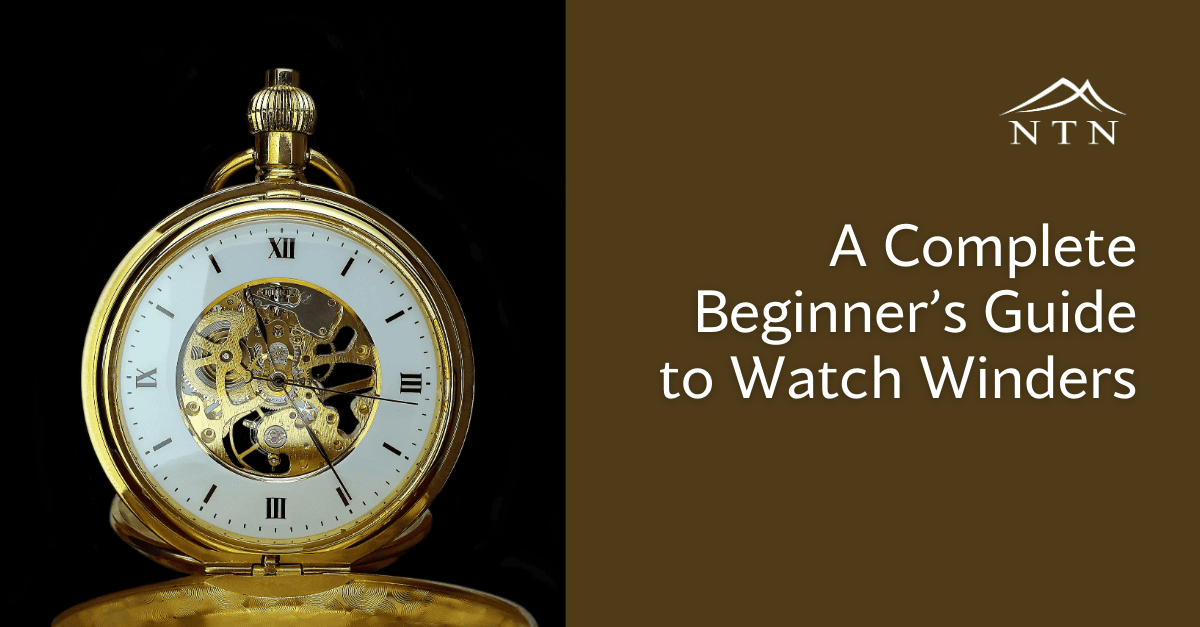
Automatic watches are marvels of micro-engineering, intricate machines that keep time powered by the natural motion of your wrist. They represent a blend of tradition, craftsmanship, and enduring style.
However, for those who own more than one automatic timepiece, or perhaps don’t wear their automatic watch every single day, a question often arises: how do you keep these sophisticated watches running when they’re not being worn?
This is where the humble yet essential watch winder comes into play. Think of a watch winder as a dedicated resting place for your automatic watch, one that mimics the motion of your wrist to keep the internal movement ticking.
For collectors and enthusiasts, understanding what a watch winder does and why it’s a valuable accessory for automatic watch care is key to preserving the longevity and accuracy of their cherished timepieces.
The Heart of an Automatic Watch: Understanding the Movement
Before we delve into the specifics of watch winders, it’s crucial to appreciate the inner workings of an automatic watch. Unlike quartz watches that rely on a battery, automatic watches are powered by a mainspring.
This spring is wound through the kinetic energy generated by the wearer’s movement. As you move your arm, a rotor (a weighted, semi-circular component) spins, tightening the mainspring.
This stored energy is then gradually released, driving the gears that move the watch hands and power any additional complications like date displays or chronographs.
This elegant self-winding mechanism means that as long as the watch is worn regularly, it will continue to keep accurate time. However, if an automatic watch is left stationary for an extended period—days, weeks, or even months—the mainspring will eventually unwind.
When this happens, the watch will stop, and the time and date will need to be manually reset. This is where the necessity for a watch winder becomes apparent, particularly for those with a varied collection.
What Exactly Does a Watch Winder Do?
At its core, a watch winder is a device designed to keep an automatic watch wound and running when it’s not being worn. It typically consists of a motor, a rotating cradle or cushion to hold the watch, and a power source (either a plug-in adapter or batteries).
The motor rotates the watch at specific intervals and in controlled directions, simulating the natural motion of the wrist and thus winding the mainspring.
Modern watch winders offer a surprising degree of customization. You can often set the number of rotations per day (TPD) and the direction of rotation (clockwise, counter-clockwise, or bi-directional).
These settings are important because different automatic watch movements have varying winding requirements. Over-winding is generally not an issue with modern automatic movements, as they are designed with a clutch mechanism that prevents the mainspring from being damaged if it’s fully wound.
However, providing the correct number of turns ensures the watch remains powered and ready to wear at a moment’s notice.
Why Do You Need a Watch Winder? Automatic Watch Care Explained
The primary reason for using a watch winder is convenience. It ensures that your automatic watch is always ready to be worn.
Imagine reaching for your favorite timepiece only to find it has stopped, requiring you to reset the time, date, and any other complications. For watches with complex movements, such as perpetual calendars or annual calendars, this resetting process can be time-consuming and intricate.
A watch winder eliminates this hassle, keeping your watch perfectly wound and synchronized.
Beyond convenience, watch winders can also contribute to the long-term health of your automatic watch’s movement. While modern automatic movements are robust, constant stopping and starting can, over very long periods, potentially lead to increased wear on certain components.
By keeping the movement gently ticking, a winder can help maintain a consistent state of operation. This is particularly beneficial for high-end or vintage automatic watches where preserving the original condition and minimizing stress on the mechanism is paramount.
Furthermore, for collectors with multiple automatic watches, a winder is almost a necessity. It allows you to rotate through your collection without the need to reset each watch every time you decide to wear it. This ensures that all your automatic timepieces receive some operational time, which can be seen as a form of proactive care.
Choosing the Best Watch Winder for Your Needs
With a variety of options available, selecting the best watch winder involves considering a few key factors:
1. Capacity: Watch winders come in single-watch units up to multi-watch units capable of holding several timepieces. Consider how many automatic watches you own or plan to acquire. For a small collection, a single or dual winder might suffice. For a more extensive collection, a larger unit would be more practical.
2. Rotation Settings: As mentioned, different watch movements have different winding needs. Look for winders that offer programmable TPD and rotation direction settings. Many manufacturers provide recommended settings for their movements, which you can then input into your winder. Some high-end winders even feature built-in motion sensors or app connectivity for precise control.
3. Power Source: Winders can be powered by AC adapters, batteries, or a combination of both. If portability is a concern, a battery-powered or dual-powered option is ideal. For a permanent fixture on a dresser or in a safe, an AC-powered unit is usually more convenient.
4. Noise Level: The motor in a watch winder can produce noise. If you plan to keep the winder in a bedroom or a quiet office, opt for a model known for its quiet operation. Many manufacturers emphasize silent motors in their designs.
5. Build Quality and Aesthetics: Watch winders are not just functional; they can also be display pieces. Consider the materials used, the design, and how well it will complement your watches and home decor. Options range from sleek, modern designs to classic wooden finishes.
6. Brand Reputation: While not strictly necessary, choosing a winder from a reputable brand can offer peace of mind regarding quality, durability, and customer support. Exploring options from established watch accessory makers can guide your decision.
How to Set Up and Use Your Watch Winder
Once you’ve chosen a watch winder, setting it up is generally straightforward.
- Power: Connect the winder to a power source, either by plugging in the AC adapter or inserting batteries.
- Watch Placement: Secure your automatic watch onto the winder’s cushion or cradle. Ensure it’s snug but not overly tight, and that the watch is positioned correctly within the unit.
- Programming Settings: Consult your watch manufacturer’s recommendations for TPD and rotation direction. Most winders have simple buttons or dials to adjust these settings. If unsure, starting with a moderate setting (e.g., 650-800 TPD, bi-directional) is often a safe bet for many automatic movements.
- Operation: Turn on the winder. It will begin its programmed rotation cycles. Many winders operate in intermittent bursts, meaning they rotate for a period, rest, and then rotate again, mimicking natural movement patterns and conserving energy.
It’s worth noting that while watch winders are excellent for maintaining automatic watches, they are not necessary for manual-wind watches or quartz watches. They are specifically designed for automatic timepieces that rely on movement to stay wound.
The Future of Automatic Watch Care
As automatic watches continue to be appreciated for their mechanical complexity and timeless appeal, accessories like watch winders are becoming increasingly sophisticated. Innovations in motor technology have led to quieter, more energy-efficient units.
Smart features, such as app control for remote programming and monitoring, are also emerging, offering a higher level of convenience and precision for the modern watch collector.
For anyone who cherishes their automatic watches, a quality watch winder is a worthwhile investment. It’s not just about keeping time; it’s about ensuring your timepieces are always ready, always accurate, and always at their best.
You can find beautifully crafted watches designed for longevity and performance by visiting NTN’s official online store.
In conclusion, a watch winder is an elegant solution to a common challenge faced by automatic watch owners. It provides the convenience of a ready-to-wear watch, contributes to the well-being of the movement, and allows collectors to manage and enjoy their entire range of automatic timepieces with ease.
It’s a small device that makes a significant difference in the life of an automatic watch.


