


Blog
Automatic Hand-Winding Watches: What They Are, How They Work, And How To Choose

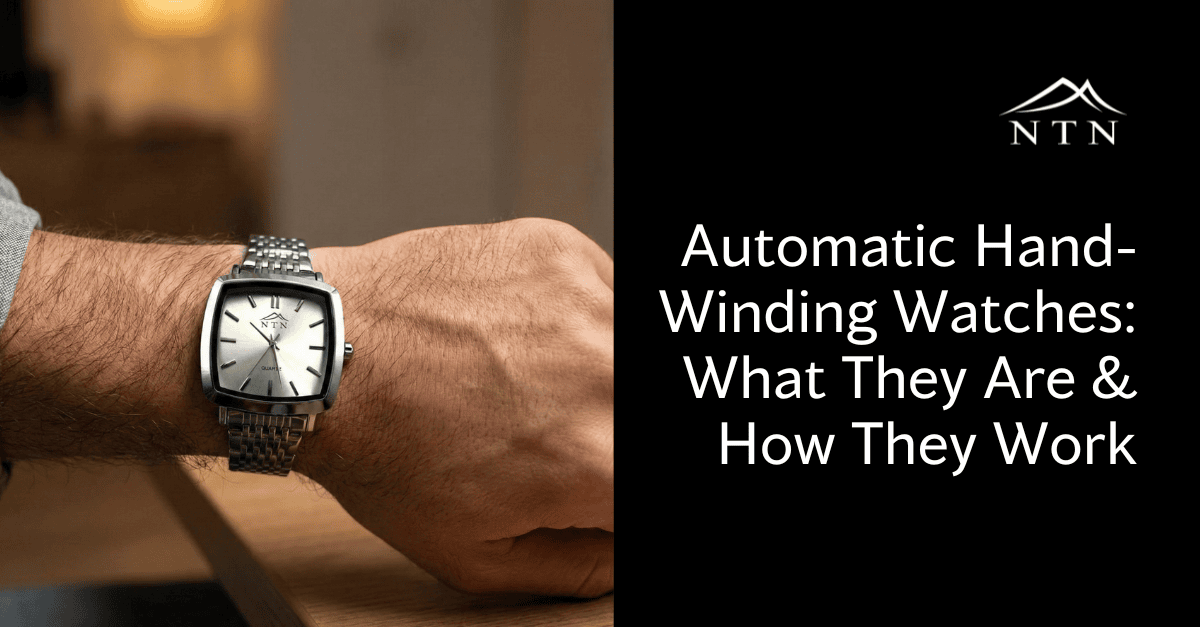
If you’ve searched for “automatic hand winding watch meaning,” you’re not alone. The phrase sounds contradictory at first—how can a watch be both automatic and hand‑wound? The good news: it’s simpler than it sounds. An automatic hand‑winding watch is a mechanical timepiece that winds itself as you wear it and also lets you wind it by turning the crown. Two ways to fill the same “fuel tank” (the mainspring), one practical everyday experience.
This guide explains exactly what that means on the wrist—how the mechanism works, what “power reserve” actually feels like, how accuracy behaves in real life, and how to pick a watch you’ll enjoy wearing. We’ll keep the tone clear and calm, with just enough technical detail to make you confident.
The Meaning
An automatic hand‑winding watch is a self‑winding mechanical watch with the added convenience of manual crown winding. Motion powers it. Your hand can power it too. No batteries involved.
Inside the Case: The Small Machine Doing the Work
Every automatic mechanical movement shares a few core parts that do the heavy lifting:
- A mainspring that stores energy when wound.
- A gear train that carries energy to the hands.
- An escapement that releases energy in tiny steps.
- A balance wheel and hairspring that set the rhythm.
- A rotor that spins with wrist motion to wind the mainspring automatically.
- A hand‑winding system (via the crown) that lets you top up or restart anytime.
When you wear the watch, the rotor swings and winds the mainspring through a clutch that prevents overwinding. When you turn the crown, you do the same job directly. The escapement and balance wheel then meter out energy, moving the hands with a steady beat.
Why Add Hand‑Winding To An Automatic?
Convenience and control. Hand‑winding lets you:
- Jump‑start the watch after it has stopped, without relying on wrist motion.
- Top up the mainspring in the morning so it sits in a stable “high‑torque” zone.
- Keep time steadier during desk‑bound days when wrist movement is minimal.
- Set and go quickly if you rotate different watches through the week.
It’s a small feature on paper that feels surprisingly helpful in daily use.
Power Reserve
Power reserve is how long the watch runs from fully wound to stop. Many automatic hand‑winding watches offer 38–42 hours; more modern designs often deliver about 60 hours or more. If you wear a watch every day, you might barely notice power reserve—your movement keeps it topped up. If you rotate watches or take it off over the weekend, reserve tells you whether you’ll need to reset on Monday.
Simple habit that helps: if the watch has stopped, give the crown 10–20 gentle turns before wearing. This seats the mainspring in its most stable zone and smooths timekeeping from the start.
Accuracy
Mechanical accuracy is measured in seconds per day. A well‑regulated automatic can be very consistent, but it won’t match quartz. Expect small daily variation that averages out with steady wear. The key is consistent behavior that you can live with—and if you can’t, a watchmaker can regulate the movement to tighten the range.
Factors that nudge the rate:
- Regulation quality and movement design
- How the watch rests at night (dial up vs crown up)
- Temperature changes and activity level
- Shocks from knocks or drops
- Magnetism from speakers, bags, or laptop lids
Consistency matters more than chasing a single “perfect” number. If the watch runs the same way every day, you can plan for it—or have it regulated.
Hacking Seconds, Beat Rate, And Setting
Hacking seconds stops the seconds hand when you pull the crown to set the time. It makes syncing to a reference quick and neat. Not every movement hacks, but many do.
Beat rate (vibrations per hour, like 21,600 or 28,800 vph) affects how smooth the seconds hand looks and can support stability. Higher isn’t automatically “better,” but it changes the feel.
Setting workflow that just works:
- If stopped, hand‑wind 10–20 turns.
- Pull the crown; if hacking, wait for your reference to hit the top of the minute.
- Set the time, push the crown back in, and you’re off.
Water Resistance
Whether a watch is automatic, manual, or both doesn’t decide water safety. Case design and gasket health do. Always go by the rating on the case:
- 3ATM/30 m: Splashes and rain. No swimming.
- 5ATM/50 m: Better everyday protection; still cautious near water.
- 10ATM/100 m: Swimming and snorkeling are generally fine.
- 20ATM/200 m+: Frequent water use; diver’s features vary by design.
Keep the crown fully pushed or screwed down. Avoid hot showers and steam unless the rating and maintenance support them. Rinse with cool fresh water after salt or pool exposure. Seals age; periodic tests and gasket refreshes keep the rating honest.
Magnetism, Shocks, And Everyday Realities
Magnets are common in speakers, bag clasps, phone covers, and laptop lids. A magnetized watch often runs fast or erratically. The fix—demagnetization—is quick and noninvasive.
Shocks from drops can nudge regulation or damage pivots, even with shock protection. Normal life is fine; repeated impacts are not. Temperature shifts are usually okay, but extremes can temporarily change the rate until the watch settles.
Automatic Hand‑Winding vs Manual‑Only vs Quartz
- Automatic hand‑winding: Self‑winds from motion and by crown. Easy to live with, tactile to use, repairable for decades.
- Manual‑only: No rotor, often slimmer. You wind daily—great if you enjoy the ritual and want a thinner case.
- Quartz: Battery‑powered with electronic regulation. More precise, very low maintenance besides battery and seals, less “interactive.”
If you want the feel and tradition of a mechanical watch without daily reliance on winding or motion alone, the automatic + hand‑winding combo is the sweet spot for many people.
Complications You’ll Actually Use
Complications are functions beyond hours, minutes, seconds. Pick what you’ll use long‑term:
- Date or day‑date for daily schedules
- Power reserve indicator if you rotate watches often
- GMT/dual time for travel or remote teams
- Simple chronograph if you time tasks regularly
Each complication adds parts and usually thickness. A clean, legible dial often wears best and stays timeless.
Case Size, Fit, And Comfort
Comfort depends on more than diameter. Focus on:
- Lug‑to‑lug length so lugs sit within your wrist
- Thickness, which affects sleeve comfort and balance
- Bracelet/strap sizing so the head doesn’t flop
Strap choices change the whole feel. Steel bracelets add versatility and balance weight. Leather brings warmth and dress appeal. Rubber or fabric suits heat and activity. When the fit is right, you’ll wear the watch longer and enjoy it more.
Everyday Care That Pays Off
- Keep the crown fully secured after setting.
- Avoid changing the date during the typical “danger window” late evening to early morning unless your movement allows it. When unsure, move hands past 6 a.m., set the date, then set the time.
- After salt or pool water, rinse with cool fresh water and dry.
- Wipe sweat and sunscreen with a soft cloth at day’s end.
- Store in a dry spot away from strong magnets. A small watch box beats a desk surface.
If you ever notice rough winding, shortened power reserve, moisture under the crystal, or large accuracy shifts, it’s time for a check.
Service And Longevity
Mechanical watches are built to be maintained. Oils dry, seals flatten, parts wear—service refreshes them. A practical interval is every 3–7 years depending on climate and use. With sensible care, a movement can run for decades.
Automatic hand‑winding movements have more winding parts than manual‑only, but they’re designed for use. Gentle hand‑winding and not over‑torquing the crown help keep everything smooth.
How To Choose An Automatic Hand‑Winding Watch
Start with your routine:
- Daily wearer who wants little fuss? Automatic with hand‑winding makes life easy—wear it and it winds, crown‑wind to top up after a slow day.
- Rotating a few watches each week? Consider longer power reserves or a power reserve indicator to see if you’re running low.
- Want a slimmer profile? Some automatics manage thinness well, but manual‑only is still thinner on average.
Then check the fundamentals:
- Clear, readable dial and hands
- Comfortable case size, thickness, and lug‑to‑lug
- Water resistance that matches your environment
- A movement known for reliability and accessible service
- A design you’ll still want to wear months from now
If you want a simple way to compare clean designs and straightforward specs, browse a curated lineup on NTN’s official website.
Using Hand‑Winding Smartly With An Automatic
- Morning top‑up: Even if you wore the watch yesterday, 5–15 crown turns in the morning put the mainspring in a steady zone for the day.
- Restart routine: If stopped, wind 10–20 turns, set time, push crown in, and go. If your movement hacks, sync to a reference at the top of the minute for a neat start.
- Desk days: If you barely move your wrist, a quick lunchtime wind keeps reserve healthy.
These small habits keep your watch running sweetly without any real effort.
Common Questions About “Automatic Hand Winding Watch Meaning”
Is an automatic hand‑winding watch mechanical?
Yes. It’s a mechanical watch that can wind by rotor and by crown. No battery involved.
Why would I hand‑wind an automatic?
To restart after a stop, stabilize timekeeping at the start of the day, or top up on low‑movement days. It’s quick and practical.
Will hand‑winding wear the movement out faster?
Modern movements are designed for it. Gentle, steady turns are key. If the watch resists, stop—you’re likely fully wound.
How accurate are automatic hand‑winding watches?
Typically within a few to tens of seconds per day depending on regulation and conditions. Quartz is more precise; mechanical offers a different feel and ownership experience.
How long will it run if I don’t wear it?
Check the power reserve. Many run about 38–42 hours; many modern movements reach around 60 hours or more.
Do I need a watch winder?
Not required. It’s convenience for complex calendars. For simple time/date, a few crown turns and a quick set are easy.
Can I swim with it?
Only if the case rating supports it and seals are healthy. Water resistance depends on the case and gaskets, not the winding style.
What is hacking seconds?
A feature that stops the seconds hand when setting the time. It helps set to the exact second.
Why did my watch start running fast?
It may be magnetized. Demagnetization is fast and usually fixes it.
When should I service it?
About every 3–7 years depending on use and climate, or sooner if you see condensation, rough winding, reduced reserve, or big accuracy changes.
The Bottom Line
The “automatic hand‑winding watch” meaning is straightforward once you strip away the jargon: it’s a self‑winding mechanical watch you can also wind by hand. In daily life, that means easy starts, steady performance, and the comfort of a watch that keeps up with you—whether you’re moving a lot or sitting at a desk.
Choose for your routine and comfort—legibility, fit, water resistance, and a movement with a good reliability record. Keep to a few simple care habits. And enjoy the small daily moment of turning the crown when you want to. That’s the charm of mechanical watch ownership.
When you’re ready to turn this understanding into a shortlist, browse thoughtfully made timepieces on NTN’s official website.


