


Blog
Automatic Analog Watch Meaning: What It Is, How It Works, And Why It Matters

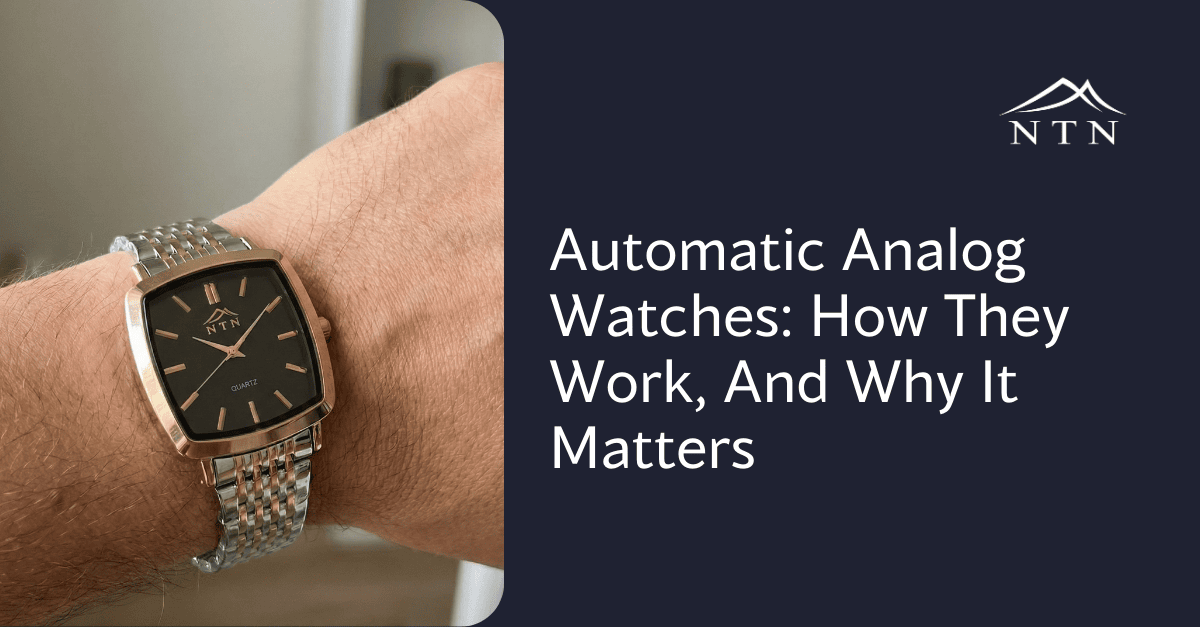
If you’re searching for “automatic analog watch meaning,” you’re trying to decode a phrase that blends two ideas: how a watch is powered and how it displays time. “Automatic” means a self‑winding mechanical movement that stores energy in a mainspring. “Analog” means time is shown with hands on a dial, not digits on a screen.
Put simply: an automatic analog watch is a battery‑free, self‑winding mechanical timepiece with hour, minute, and usually seconds hands on a dial. It runs on motion, not electronics, and shows time in a classic layout.
This guide explains what that really means in daily life—accuracy, power reserve, care, durability—and how to choose one that fits your routine without overthinking it.
The Two Words, Clearly Defined
Automatic refers to a mechanical movement that winds itself as you wear it. A semicircular weight called a rotor swings with wrist motion and winds the mainspring. Many automatics also allow manual winding by turning the crown.
Analog refers to the display. Time is shown using hands and markers (or numerals) on a dial. It’s familiar and quick to read.
Together, automatic + analog gives you a watch powered by motion and read by hands. No battery. No charging. Just a small machine keeping time the traditional way.
Inside The Case: How An Automatic Analog Watch Works
Every automatic analog watch shares a core setup:
- Mainspring: Stores energy when wound.
- Gear Train: Moves energy to the hands.
- Escapement: Releases energy in tiny steps.
- Balance Wheel + Hairspring: Oscillate to set the beat.
- Rotor + Winding System: Rotor spins with movement; a clutch winds the spring and prevents overwinding.
As you wear the watch, the rotor turns. The winding system turns that motion into stored energy. The escapement and balance meter that energy into steady pulses, moving the hands. Take it off and it runs until the power reserve empties; then it stops and waits for a quick wind or more wrist time.
Automatic Analog vs Quartz Analog vs Digital: What Changes For You
- Automatic analog: No battery. Runs on motion and manual winding. Seconds hand “sweeps” in small steps. A little daily variation is normal.
- Quartz analog: Hands and dial, but with a battery and electronic oscillator. Seconds hand usually “ticks” each second. Very accurate, low effort.
- Digital: Electronic display with numbers. Often more functions. Accuracy similar to quartz analog.
If you like the feel of a living mechanism and the look of hands on a dial, automatic analog is for you. If you want set‑and‑forget accuracy, quartz analog or digital is easier. Plenty of people enjoy both.
What You’ll Notice Day To Day
An automatic analog watch is built to fit into your routine. Wear it most days and it stays wound. Leave it for a weekend and it may stop; a few crown turns or a gentle shake brings it back.
On the wrist, the seconds hand looks smoother thanks to the movement’s beat rate. You might sometimes feel a light rotor flutter. That’s normal—it’s the machine doing its job.
Accuracy: Realistic Expectations
Mechanical accuracy is measured in seconds per day. A well‑regulated automatic can be very consistent, but it won’t match quartz.
Expect small daily variation that averages out. What affects it?
- Movement design and regulation
- How the watch rests at night
- Temperature changes and activity
- Bumps or drops
Aim for consistency. If it strays more than you like, a watchmaker can regulate it. That’s routine, not a problem.
Power Reserve: How Long It Runs Off The Wrist
Power reserve is how long the watch runs after a full wind. Many automatics offer 38–42 hours. Newer ones often reach ~60 hours or more.
If you rotate watches, longer reserve means fewer resets. If you wear one watch most days, you won’t think about reserve much.
Tip: if the watch has stopped, wind 10–20 turns by crown before wearing. It helps stabilize timekeeping.
Hacking Seconds, Hand‑Winding, And Beat Rate
Hacking stops the seconds hand when you pull the crown. Handy if you like setting time to the exact second.
Hand‑winding on an automatic lets you jump‑start after a stop or top up the spring in the morning.
Beat rate (like 21,600 or 28,800 vph) affects how smooth the seconds hand looks and can help stability. It’s not a quality score—overall design and regulation matter more—but it does change the feel.
Water Resistance: What The Rating Really Means
No watch is “waterproof”—only water‑resistant to a level. The rating (3ATM/30 m, 5ATM/50 m, 10ATM/100 m, etc.) depends on case construction and gaskets, not movement type.
- Keep the crown fully pushed or screwed down.
- Avoid hot showers and steam unless the watch and seals are rated and maintained for it.
- After salt or pool water, rinse with cool fresh water and dry.
Seals age. Pressure testing during service keeps the rating honest.
Magnetism, Shocks, And Everyday Hazards
Magnets in speakers, bag closures, laptop lids, and phone cases can make a mechanical watch run fast or erratic. If it suddenly gains minutes per day, it might be magnetized. Demagnetization is quick and gentle.
Shocks from drops can knock regulation or damage pivots. Normal wear is fine; hard hits aren’t.
Temperature swings are usually okay. Extremes can nudge the rate until things level out.
Complications: The Useful Extras
Complications are features beyond hours, minutes, seconds. Pick what you’ll use:
- Date or Day‑Date for daily life
- GMT/Dual Time for travel and remote teams
- Power Reserve Indicator if you rotate often
- Chronograph for timing tasks (note added thickness)
More functions mean more parts and often a thicker case. Clean, legible dials tend to wear best.
Case Size, Fit, And Comfort
Comfort is more than diameter. Watch:
- Lug‑to‑lug length so lugs sit within your wrist
- Thickness for sleeves and balance
- Bracelet/strap sizing so the head doesn’t flop
Choose strap materials for your climate and routine. Leather for dress, steel for versatility, rubber or fabric for heat and activity. When the fit is right, you’ll wear it more.
Sustainability And Ownership
Automatic analog watches are repairable. Oils can be refreshed, seals replaced, parts adjusted. Plan a service every 3–7 years depending on wear and climate.
Watch for signs:
- Accuracy drifting more than usual
- Power reserve getting shorter
- Winding feels rough
- Any fog or moisture under the crystal
Fixing issues early helps the watch last for decades.
Setting And Wearing: A Simple Routine
Restarting from a stop: wind 10–20 turns, set the time, and secure the crown. If your watch hacks, synchronize at the top of the minute.
Date changes: avoid the typical “danger window” from late evening into early morning unless your movement allows it. When unsure, move hands past 6 a.m., set the date, then set the time.
Storage: keep it dry, away from strong magnets, in a soft, safe spot. A small watch box is ideal.
Getting The Best Accuracy
Mechanical watches show positional variance. How they rest—dial up, crown up—can shift the rate slightly. You can “self‑regulate” by laying the watch overnight in a position that counters a small daily gain or loss.
If performance sits outside expectations, a watchmaker can regulate it. Routine and expected.
Do You Need A Watch Winder?
A winder is optional. It’s helpful for complex calendars you don’t want to reset. For simple time/date automatics, restarting with a few crown turns is easy. If you’re very desk‑bound and your automatic runs low, a quick morning wind helps.
Choosing An Automatic Analog Watch: What Matters
Start with your routine. Daily wearer who wants minimal fuss? An automatic analog is a good fit. Rotate watches? Look for longer power reserves or a power reserve indicator.
Then check the basics:
- Clear, readable dial and hands
- Comfortable case size, thickness, and lug‑to‑lug
- Water resistance suited to your environment
- A movement known for reliability and service support
- A design you’ll still enjoy months from now
When these are right, dial textures, hand shapes, and finishing become easy tie‑breakers.
If you want to compare clean, modern designs with straightforward specs in one place, browse a curated selection on NTN’s official website. It’s an easy way to see how self‑winding mechanics and thoughtful dial layouts come together in everyday watches.
Everyday Care That Adds Years
Keep the crown fully secured after setting. Avoid hot showers and steam unless your watch is rated and maintained for it. After salt or pool water, rinse with cool fresh water and dry gently. Wipe sweat and sunscreen with a soft cloth. Avoid strong magnets. If you drop the watch and notice accuracy change, have it checked.
Plan gasket checks and pressure tests now and then. Schedule movement service when accuracy drifts a lot, power reserve shortens, or winding feels rough.
Automatic Analog Watch Meaning: Quick Answers
What does “automatic analog watch” mean?
A battery‑free, self‑winding mechanical watch that shows time with hands on a dial.
Is an automatic analog watch the same as a mechanical watch?
Yes—automatic is a type of mechanical. The difference is the self‑winding rotor.
How accurate are automatic analog watches?
Usually within a few to tens of seconds per day depending on regulation, wear, and environment. Quartz is more precise; mechanical offers a different feel.
How long will it run if I don’t wear it?
Check the power reserve. Many run 38–42 hours; newer movements often reach ~60 hours or more.
Do I need a winder?
Not required. It’s convenient for complex calendars. For simple watches, a few crown turns and a quick set are fine.
Can I swim with an automatic analog watch?
Only if the case rating supports it and seals are maintained. Water safety is about the case and gaskets, not the movement type.
What is hacking seconds?
A feature that stops the seconds hand when you set the time, useful for precise setting.
Why did my watch start running fast suddenly?
It may be magnetized. Demagnetization is quick and usually fixes it.
When should I service it?
About every 3–7 years depending on use and climate, or sooner if you see condensation, rough winding, reduced reserve, or big accuracy changes.
The Bottom Line
“Automatic analog watch” means a self‑winding mechanical movement with a classic hand‑and‑dial display. It’s a practical mix: battery‑free power, clear readability, and a small daily connection with a machine that runs because you do.
Buy for your routine—daily wearers who want low effort will enjoy the ease of self‑winding, while frequent rotators might favor longer power reserves or a reserve indicator. Maintain it sensibly and it will serve for years.
———————————————————————-
- automatic chronograph watch meaning
Automatic Chronograph Watch Meaning: A Clear, Practical Guide for Everyday Buyers
If you’re trying to understand the phrase “automatic chronograph watch meaning,” here’s the simple version. “Automatic” tells you the watch is mechanical and winds itself with your wrist movement, no battery needed. “Chronograph” means it has a built-in stopwatch you can start, stop, and reset using pushers on the case. Put together, an automatic chronograph is a self‑winding mechanical watch with timing functions you can operate on demand.
That’s the headline. The rest of this guide breaks down how these watches work, what the sub‑dials actually do, how accuracy and power reserve play out in daily life, and what to look for when you’re choosing one. We’ll keep it straightforward, practical, and free of fuss.
What “Automatic Chronograph” Really Means
An automatic chronograph has two systems living in the same case:
- The timekeeping movement (hours, minutes, seconds) powered by a mainspring. A semicircular rotor spins with your motion to keep that spring wound.
- The chronograph module, a mechanical set of levers, clutches, and wheels that starts, stops, and resets a separate seconds hand and usually one or two sub‑dials for minutes and hours.
This is not a digital timer. It’s a physical mechanism with pushers you press. Start at the top button, stop at the same button, reset with the lower one. It’s simple to use and fun to operate.
What Each Hand and Sub‑Dial Does
Most automatic chronographs share a familiar layout. You’ll typically see:
- A central chronograph seconds hand that only moves when you press start.
- A small minutes sub‑dial that counts elapsed minutes (often up to 30).
- Sometimes a chronograph hours sub‑dial (often up to 12).
- A small running seconds sub‑dial for the main timekeeping (your watch is “alive” even with the chronograph off).
The exact layout varies by movement, but the logic is the same: central hand for seconds, sub‑dials for longer intervals, and a small running seconds to show the watch is ticking.
How the Mechanism Works (Without the Jargon)
Inside the case, the mainspring stores energy. That energy drives the gear train, which moves the hands. The escapement releases energy in tiny steps, while the balance wheel oscillates to set the beat.
The chronograph sits on top or is integrated into that architecture. When you press start, a clutch engages the chronograph seconds wheel with the running train. When you stop, it disengages. When you reset, a set of hammers drops onto heart‑shaped cams, snapping the chronograph hands back to zero.
Two bits you might see in spec sheets:
- Column wheel vs cam switching: Both control start/stop/reset. A column wheel feels a bit crisper at the pushers. Cam systems are tough and reliable. For most owners, both work well.
- Vertical clutch vs horizontal clutch: A vertical clutch lets the chronograph seconds hand start smoothly with minimal wobble and reduces extra wear if you leave the chronograph running. A horizontal clutch is classic and slim but can show a tiny jump on start. Both are proven approaches.
Why Choose an Automatic Chronograph?
You get a classic look, real mechanical engineering, and an on‑demand timing tool you can use for anything—cooking, workouts, commute times, intervals between meetings. It’s practical without being fussy. And because it’s automatic, you don’t have to wind it daily if you wear it regularly.
The feel matters too. Pressing a pusher and watching the hand sweep is satisfying. You’re operating a tiny machine, not just tapping an icon.
Accuracy: Honest Expectations for Daily Wear
Mechanical accuracy is measured in seconds per day. A well‑regulated automatic chronograph can be steady, but it won’t match quartz precision.
Expect small daily changes that average out. Things that affect the rate include movement design, regulation, how the watch rests overnight, temperature, and bumps. The target is consistent behavior. If it drifts more than you like, a watchmaker can regulate it—routine work for mechanical watches.
The chronograph function itself doesn’t make the watch less accurate. It does add complexity and power draw when running, which can slightly affect reserve if you keep it on constantly.
Power Reserve: What Happens Off the Wrist
Power reserve is how long the watch runs after a full wind. Many automatic chronographs sit around 40–45 hours; many modern ones reach about 60 hours or more. Because the chronograph draws extra energy while running, leaving it on continuously may reduce available reserve a bit.
If you rotate watches and your chronograph stops, a quick 10–20 crown turns will seat the mainspring in its stable range before you wear it. You’ll get smoother performance from the start.
How to Use the Pushers Correctly
Think of it in three simple steps:
- Start: Upper pusher. The central chronograph seconds hand begins sweeping.
- Stop: Upper pusher again. The hand pauses so you can read elapsed time.
- Reset: Lower pusher. Hands snap back to zero.
Avoid pressing reset while the chronograph is running. Most modern designs prevent damage, but the clean habit is start‑stop‑reset. If your watch has a screw‑down crown or pushers, make sure they’re unscrewed before use and re‑secured after.
Understanding Tachymeters (And Whether You Need One)
A tachymeter scale on the bezel or dial lets you convert elapsed seconds into speed per hour over a fixed distance (often 1 km or 1 mile). Start at a marker, stop at the next marker: the central hand points to your average speed. If you don’t need it, treat it as a design element. The chronograph still works as a simple timer.
Water Resistance: It’s About the Case, Not the Movement
Movement type doesn’t decide water safety. Case engineering and gaskets do. Check the rating:
- 3ATM/30 m: Splash resistance. No swimming.
- 5ATM/50 m: Better daily protection; still cautious near water.
- 10ATM/100 m: Swimming and snorkeling are generally fine; avoid hot tubs and saunas.
- 20ATM/200 m+: Robust for frequent water exposure; diver’s features vary by design.
Chronograph pushers are extra openings in the case. Do not operate them underwater unless the watch is specifically designed for it. Keep the crown and pushers sealed before water contact.
Magnetism, Shocks, and Real‑World Hazards
Magnets in speakers, bags, laptop lids, and phone cases can make a mechanical watch run fast. If your chronograph suddenly gains minutes per day, it might be magnetized. Demagnetization is quick and usually restores normal timing.
Shocks from drops can nudge regulation or damage pivots. Modern shock protection helps, but intentional care helps more. Normal activities are fine; repeated impacts are not.
Temperature swings can temporarily shift the rate. Everyday differences are okay; extremes can have a bigger effect until the watch stabilizes.
Maintenance: What to Expect Over the Years
Automatic chronographs are more complex than simple three‑hand watches, so regular service matters. A sensible interval is every 3–7 years depending on use and climate. Service refreshes oils, replaces gaskets, checks wear, and restores performance. If you notice large accuracy shifts, shortened reserve, rough winding, sticky pushers, or any fog under the crystal, book a check sooner.
Between services, simple care goes a long way: keep the crown and pushers sealed, rinse cool fresh water after salt or pool exposure, and wipe sweat or sunscreen with a soft cloth.
Common Myths, Cleared Up
“Chronographs are fragile.”
They’re more complex, but well‑built examples are made for regular use. Treat them sensibly and they hold up.
“Leaving the chronograph running will break it.”
On modern movements, it won’t. A vertical clutch is especially comfortable with continuous running. You’ll draw extra power, so expect a bit less reserve.
“Mechanical chronographs are less accurate than quartz, so they’re pointless.”
Quartz is more precise, yes. But mechanical chronographs offer a different kind of value: tactile control, longevity through service, and a connection to a real machine.
“You can press reset anytime.”
Good habit: stop first, then reset. It keeps the mechanism happiest in the long run.
Automatic Chronograph vs Meca‑Quartz vs Quartz Chronograph
It’s helpful to know what you’re choosing between.
Automatic chronograph: Fully mechanical, self‑winding. Smooth central sweep, on‑demand timing, serviceable for decades.
Meca‑quartz chronograph: Quartz timekeeping (battery) with a mechanical chronograph module for a crisp pusher feel and snap‑back reset. Accurate and low maintenance, with mechanical character in the chronograph action.
Quartz chronograph: Fully quartz with stepper motors for hands. Very accurate, battery‑powered, usually thinner and more affordable to maintain.
If you want the living feel of a mechanical engine and you like the idea of owning and maintaining a machine, automatic is your lane. If you want high accuracy with mechanical‑style pushers, meca‑quartz is a clever middle ground.
Choosing the Right Automatic Chronograph for You
Start with how you’ll use it. Timing everyday tasks? A simple two‑register (minutes and running seconds) layout might be cleaner. Timing longer events? A 12‑hour counter is helpful. Prefer minimalist dials? Look for tidy sub‑dial placements and balanced date windows.
Then check core specs:
- Power reserve: Longer reserves (around 60 hours) are convenient if you rotate watches.
- Water resistance: Match the rating to your environment and habits.
- Case size and lug‑to‑lug: Fit matters more than diameter alone. Keep lugs within your wrist width.
- Thickness: Chronographs are taller. A curved caseback and good lug design help comfort.
- Legibility: Hands that contrast the dial, clear sub‑dial scales, and lume where you need it.
If comparing designs and specs side by side would help, explore a straightforward, design‑led selection on NTN’s official website.
Strap and Bracelet Choices
Bracelets add versatility and balance the weight of a chronograph head nicely. Leather brings warmth and dress appeal. Rubber or fabric works well for heat and activity. Whatever you choose, size it so the watch doesn’t flop; a stable watch winds more consistently and feels lighter over a full day.
Everyday Care, Simplified
Keep the crown fully pushed or screwed down. Don’t operate pushers underwater unless designed for it. Avoid hot showers and steam unless your watch is built and maintained for those conditions. After salt or pool use, rinse in cool fresh water and dry gently. Avoid strong magnets. If you drop the watch and notice a timing change or sticky pushers, get it checked.
How to Read and Use Your Chronograph Like a Pro
For most daily timing, the central chronograph seconds plus a 30‑minute counter are enough. Start when your event starts, stop to read, reset when you’re done. For split times, note the position of the hand visually, then keep running until your second event finishes. You can also time multiple short intervals back‑to‑back without resetting—just jot down the readings between stops. It’s simple once you try it a few times.
Quick Answers: “Automatic Chronograph Watch Meaning”
What does “automatic chronograph watch” mean?
A self‑winding mechanical watch with a built‑in stopwatch you operate with pushers.
How accurate are automatic chronographs?
Typically within a few to tens of seconds per day, depending on regulation, wear, and environment. Quartz is more precise; mechanical offers a different ownership experience.
Can I leave the chronograph running all day?
On most modern movements—especially with a vertical clutch—yes. Expect slightly reduced power reserve.
Can I swim with an automatic chronograph?
Only if the case rating supports it and seals are healthy. Don’t press pushers underwater unless the watch is built for it.
Do I need a watch winder?
Not required. It’s convenience for complex calendars. A few crown turns to restart and a quick set work fine for most owners.
How often should I service it?
About every 3–7 years depending on use and climate, or sooner if you see moisture, rough winding, sticky pushers, reduced reserve, or big accuracy shifts.
What’s the difference between automatic and meca‑quartz chronographs?
Automatic is fully mechanical and self‑winding. Meca‑quartz uses a battery for timekeeping but a mechanical module for the chronograph feel and snap‑back reset.
Final Thoughts
The meaning of an automatic chronograph watch boils down to this: a battery‑free, self‑winding engine paired with a real, on‑demand timing tool. It’s practical, satisfying to use, and built to be maintained rather than replaced.
Buy for the way you live—clean layout, comfortable fit, water resistance that suits your day, and a power reserve that supports your wearing habits. Treat the watch sensibly and it will serve for years.


